Sunday, October 21, 2018

Young Adult: EVERY DAY; LOVE, SIMON; THE MISEDUCATION OF CAMERON POST; THE HATE U GIVE

If I was in the market for a corny opening line to frame this piece, I'd probably say 2018 is the year the YA adaptation finally grew up. After a decade devoted to chasing dystopian and monster metaphors of adolescent interactions with society's ills to increasingly tepid results -- the drop off from Twilight and The Hunger Games to this year's rote The Maze Runner: The Death Cure (though it had the series' best action scenes, for what that's worth) and The Darkest Minds (a disappointingly sluggish live-action debut for Kung Fu Panda 2's Jennifer Yuh Nelson) is stark -- they've started to turn away en masse from the superteens-save-the-world tropes. What started as novel became tired, and, The Fault in Our Stars aside, drifted further and further away from how teens actually live their lives. But this year serves to correct the trend. Even the most fantastical of the bunch, Every Day, director Michael Sucsy (The Vow) adapting David Levitan's book about a teenager who wakes up every day in a new body, stakes out new territory as a metaphor not just for the surging uncertainty of teen life in a troubled world, but for gender fluidity and the malleability of a person's physical presentation. After all, the young character falls in love with a sweet high schooler (Angourie Rice), but has to meet her again every day as a new sixteen-year-old -- a variety of races and sexes, each fleeting connection beaming with the same soul behind the eyes. The film works rather improbably, and at least is consistently trying something high concept and new. When it works, it really works. The same can be said of three other adaptations, even stronger for digging deeper, and hewing closer to the lived experiences of a variety of teens struggling to make sense of a very real world around them. 
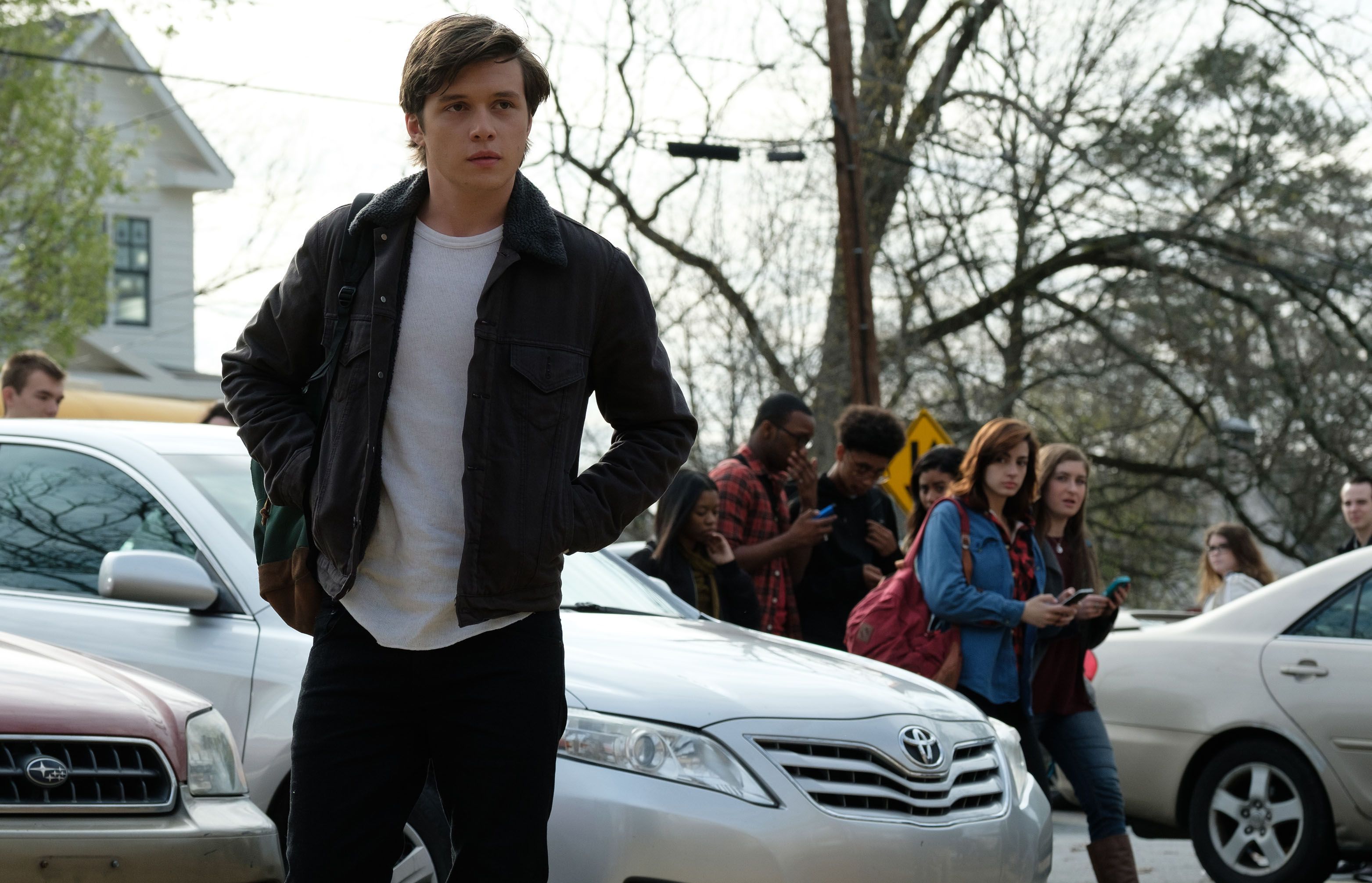
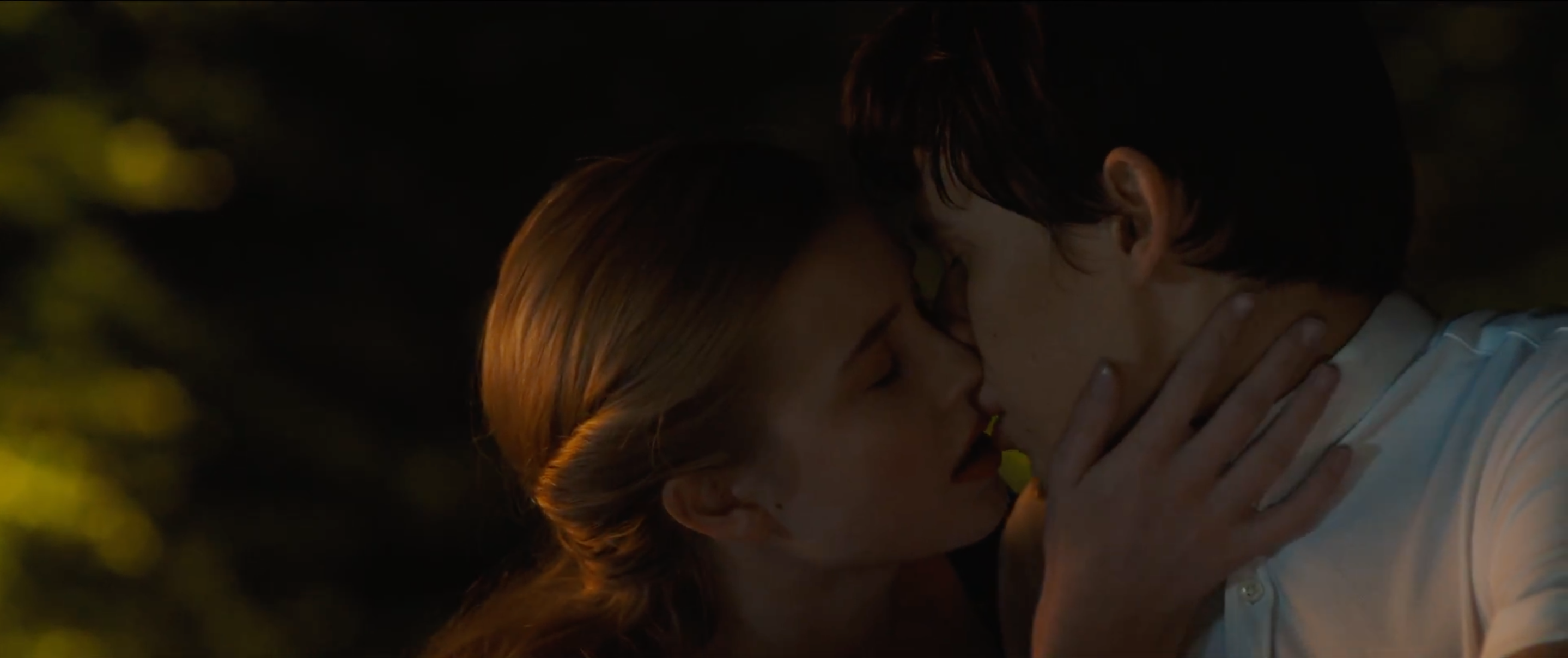
Take Greg Berlanti's adaptation of Becky Albertalli's Love, Simon, for instance. It got some positive notice for being a rare major Hollywood studio film about a gay romance, but that's not the full extent of what's driving this film. It's not as simple as a rom-com with one partner gender-swapped. The movie, light and bouncy, but with a direct, sentimental line to a receptive audience's swoons, builds a whole gimmick of storytelling architecture around a boy's struggle to come out. Simon (played with every ounce of white suburban normality Nick Robinson can bring) leaves a reply on a schoolmate's anonymous student gossip blog, writing the words of the big reveal without appending his name. Then, to his surprise, he gets a reply to his reply, from another closeted gay boy at his school. They enter an email pen pal relationship, so now the boy spends his normal procession of teen movie scenes -- classes, lunch hours, parties, dances, football games, the school play -- wondering which cute guy he is secretly falling in love with. The mystery has a pure and exhilarating feeling of first love, and captures the mood of any romantic high schooler whose affections are as strong as they are fickle. He is convinced he's in love with a handful of guys in turn, but as they reveal information that disqualifies them as a suspect, Simon cautiously backs out before coming out to them. It's a movie cut with the pop feeling of a big glossy teen movie complete with wall-to-wall syrupy narration and soft-rock soundtrack, a blackmail subplot, a gaggle of lovable friends (like BFF Katherine Langford, who may have a secret crush of her own), warmly supportive parents (Jennifer Garner and Josh Duhamel), and twinkly perfect upper-middle-class set design. There's an undeniable pull of emotion to the social pretzels into which Simon must twist himself before finally deciding to just be himself. It's a movie that strives in every second to make coming out seem at once something that makes Simon different, and yet exactly like everyone else. It makes the movie a comfortable and agreeable entertainment, immensely satisfying in its warm, funny, heartfelt coziness.
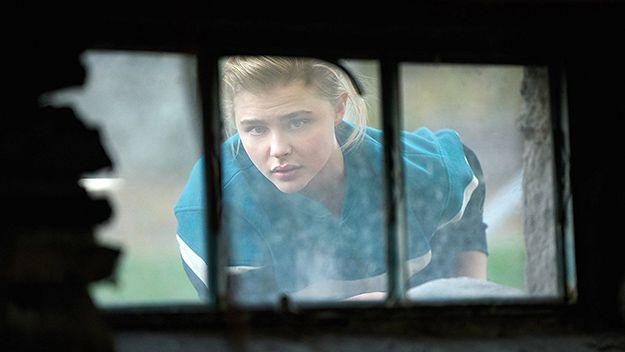
But if Love, Simon ultimately finds its emotions by making them specific yet widely applicable in a situation of discomfort but relative safety, The Miseducation of Cameron Post takes discovering sexual identity to a place more frank and more dangerous. It's set in the early 1990s, where high schooler Cam (Chloe Grace-Moretz) is caught in romantic fumblings with her girl friend (Quinn Shephard). She's not just struggling with coming out. Cam's struggling with survival, as her harshly religious family sends her to a Christian camp for gay conversion therapy, where she's told her desires are sinful and unnatural, something for which she deserves punishment and from which she needs to be cured. There amid the casual cruelty of the camp she finds many kids (played by the likes of Emily Skaggs and Christopher Dylan White) who earnestly wish to rid themselves of same-sex attraction, and a pair of friends (Sasha Lane and Forrest Goodluck) who are torn between wanting to wait out their time here and break free to be who they are. Written and directed by Desiree Akhavan, following up her small, chatty debut Appropriate Behavior, the adaptation of Emily M. Danforth's novel is practically trembling with empathetic insight. The young cast is shown in patient, direct shots that hold long enough to see their eyes melting with sympathy for one another. They're trying to stay supportive, and stay true to themselves, even though they can barely speak, let alone furtively act on, what they'd most like to admit. They can hardly explain or express what they really feel in this setting, and so they grow close through small talk, through singing along to the radio, through jazzercise, and mock-therapy sessions where truth sneaks in between the cracks of the propaganda of self-loathing they're fed. These kids aren't always insecure, but are feeling strong rushes of emotion, of connection, they can't parse in time to meaningfully express. It's a movie of characters whose confusions are deliberately perpetuated in a misguided attempt at correction, the disjunction between who they are and who they'll be. Because Akhavan is so attuned to the inner lives of her characters, giving the terrific ensemble space to grow and breathe at a natural rhythm, in a film so carefully modulated and shorn of easy melodrama or careless shock, the developments in interpersonal dynamics within the camp bubble up organically out of what we know of how these people think and behave. Even the camp's employees (Jennifer Ehle and John Gallagher, Jr.) are played tough and fair, shown as honestly committed to what they see as right, despite clearly being in the wrong. This character-focused approach, so tender and particular and kind, makes the film neither screed nor sermon. It's simply a clear-eyed look at these specific characters in this particular time and place. Satire and scorn -- which would, in the hands of a less confident and capable filmmaker, be entirely understandable, if less impactful, approaches -- are here eschewed for the simple patient power of observation. That's what makes it both persuasive and deeply moving. I rarely feel so close to characters as I did to these. 

Like Cameron Post, George Tillman, Jr's thoughtful adaptation of Angie Thomas's The Hate U Give approaches a sensitive subject from the characters out. It stars Amandla Stenberg as Starr, a 16-year-old girl growing up in a predominantly black neighborhood where poverty and its ill effects -- drugs, crime, violence -- are the reasons why her mother (Regina Hall) wants to send her kids to the white private school on the other side of town. A sense of duty to provide for their community is the reason why her father (Russell Hornsby) doesn't want them to move. He teaches his children to respect their blackness, to stand up for what's right, and to stay safe. Starr holds these truths to be self evident, though she is, like so many, an expert on code switching, shifting her slang and behavior when in her high school around her white upper class friends (all TV-actor pretty, like Riverdale's K.J. Apa and Girl Meets World's Sabrina Carpenter). She tells us she doesn't want to look "ghetto" to them, all the while cringing as they compliment her lit shoes and get down to R&B beats in the halls between classes. The movie builds a persuasive case about the indignities of racism and class -- about systemic injustice and staggering inequality -- by simply drawing out the facts of this girl's life. It's smartly situated in the personal, an undeniable understanding built from lived experience. Eventually there is conflict, as Audrey Wells screenplay efficiently reveals Starr's community to be constrained by the gangs that control her neighborhood. To get involved, even accidentally, with either one of them could spell disaster for her parents' big dreams of a better life. Both are groups of (mostly) men who will unfailingly protect one another, even in the face of an associate's over-the-line criminality, even and especially at the expense of the community. One is a gang of drug dealers (led by Anthony Mackie) who provide the illusion of easy money for so many disenfranchised youth in the neighborhood. The other is the police force, who circle the wagons when an officer kills an unarmed black man. Starr is caught between them, as a witness who could implicate both groups. The film plays out its smart, engaged, political story in an empathetic and emphatic style, not falling into easy message movie moralizing, but sitting squarely in the effect society's failings are having on one girl, on one family. Here's a movie set against the backdrop of a variety of ills -- racism, police brutality, poverty, addiction, disease, incarceration -- that never gets stuck in the misery. Tillman makes a film bursting with life, crackling with the warmth of a family and the complications of modern living. It's about a potential court case and a troubled community in mourning, but also about everyday parent-children discussions, and teen concerns about who is friends with whom and who is going to prom. Its big heart and studio movie gloss may lead it to state loudly and didactically some of its most important theses, but surely there are some things too important to risk not speaking clearly in a movie this generous, compelling, and widely accessible. It's a great entertainment with a lot on its mind.
Tuesday, October 16, 2018

Pulp Fiction: BAD TIMES AT THE EL ROYALE

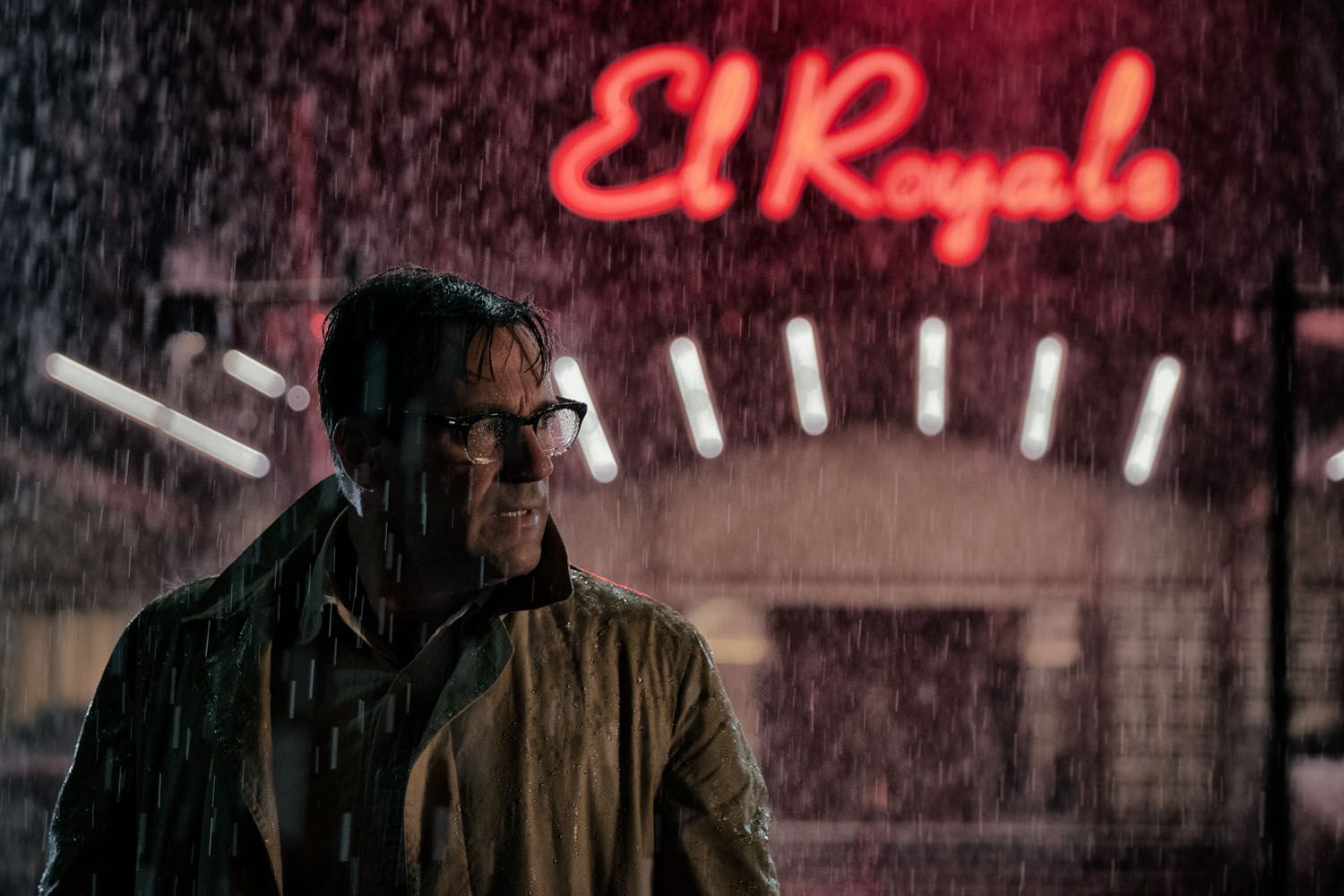
There's nothing quite like seeing a movie that's tingling with the joy of being a movie. Take Drew Goddard's Bad Times at the El Royale for example. The Cabin in the Woods filmmaker is obviously interested in self-consciously cinematic experiences, movies that know they're movies and take supreme satisfaction in loving every second of their own artifice. His new film is a big, broad, swaggering crime movie in love with the possibilities of its great ensemble trapped in the cleverly knotted structure of an intricately plotted and self-reflexive clockwork screenplay. It's a capital-M Movie, swooning to the sweep of an unbroken take, a theatrical bit of blocking, a chewy pulp patter of dialogue, a perfectly curated needle drop -- literally punctuated by a whirling Wurlitzer -- of period aural mood. He makes a past-its-prime gimmick hotel his stage. Here, during the bleak Nixon yeas, in a once-popular tourist trap small-town casino on the California/Nevada border, a handful of unlikely characters arrive one dark and stormy night. A priest, a backup singer, a hippie, and a vacuum salesman walk into a sleazy hotel. Sounds like a joke. It mostly isn't. The story is about how almost none of these people are who they seem. The likes of Jeff Bridges and Jon Hamm and Dakota Johnson and Cynthia Erivo have fun playing the slipperiness of their secrets, eying the others warily and prepping for their ultimate goals. They're arch types who are are, in fact, other, different, arch types. Mostly. 

With crackling self-conscious dialogue, and a slick, fussy, slightly scrambled, partially-chronological structure punctuated by chapter titles named after the hotel's various rooms, the movie gleefully, patiently doles out exposition. Each scene is shot with clear loving care to the wide screen and perfectly anamorphic lensing, lapping up style and savoring its cast's every flourish and gesture. Goddard's taking his cues from Tarantino, sure, and the Whedons and Andersons who made the late 90's so chatty and genre and laconic and ironic. But it also generously grubs around in the Hard Case Crime catalogue of inspirations, with some early Flannery O'Connor and late Gay Talese for good measure. Clipped and quipped, in scenes shaped with pleasant pop dynamics to build and loop back and slink, and sink, and wink, the movie builds sly humor and mounting mystery with equally enjoyable ease. What's it all about, but the fun of the telling? Not much. But where else can Chris Hemsworth saunter in and chew apart the scenery as a cult leader? Or find a man get knocked out with a wine bottle to the head as a Motown classic gets to the exact part of the song that dramatically yelps "Bernadette!"? A hall of voyeuristic mirrors, a crime movie about crime stories inside cover stories, a capable ensemble wound up and smashed together, it's a cool, smooth, surprising faux-vintage thrill.

Monday, October 15, 2018

Moon Flight: FIRST MAN

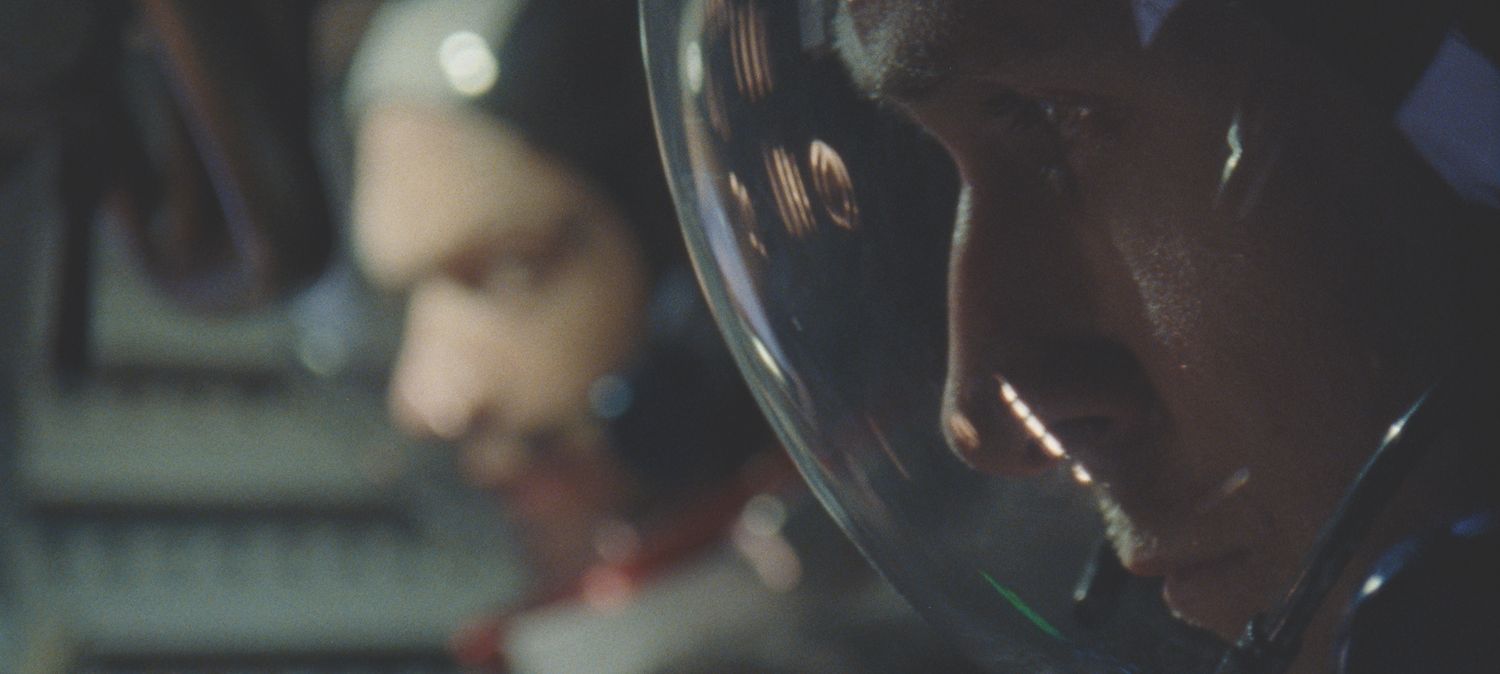
First Man restores the majesty to a now-familiar historical feat by taking the mythmaking away. It tells the story of the early days of the space race through a focus on Neil Armstrong, first man on the moon, without overt triumphalism, Great Man hero worship, or blind hagiography. Here even the eventual, historically inevitable shots of the lunar landscape is scored with a rolling music cue as theremin eerie as it is orchestral fanfare. In the hands of screenwriter Josh Singer (Spotlight, The Post) it is another of his period pictures of professional process. In the eyes of director Damien Chazelle (Whiplash, La La Land) it is another of his pictures of lonely, single-minded ambition. Together, it's a story of a group of square-jawed engineers and test pilots determined to make it to the moon, almost no matter the cost. This makes the movie one of vulnerability and frailty, of risk and fear, of rickety rides and stifling odds. The whole thing is as emotionally distant and buttoned-up as its vision of Armstrong -- terse, determined, resisting overt sentimentality, bearing the stress and strain of life internally as the job's methodical danger bears down upon him. 

After countless reenactments of the space race over the last several decades -- Countdown and The Right Stuff, and Apollo 13, and From Earth to the Moon, and Hidden Figures, and, and, and... -- the craft of First Man nonetheless avoids feeling overfamiliar. It finds a visceral, intense, scary perspective. With a shaking camera, grainy film stock, and overwhelming sound design, the emphasis is on groaning metal sheets and straining bolts, the head-splitting roar of rocket engines and howling headwinds. The images quake and smear. The speakers hammer with rattles and hums. As the film patiently catalogues NASA's early tests and training, each step of the journey to the moon tested and tried before all coming together for the seemingly improbable goal, it quickly and crisply falls into a patter of stoic silences and storms of jargon. A large ensemble of character actors -- Kyle Chandler, Ciaran Hinds, Christopher Abbott, Ethan Embry, Corey Stoll, Jason Clarke, Shea Whigham, and more -- congregate in scenes crackling with verisimilitude. But it's not about any one man. It's about the effort, the group, and the ways in which they work and work upon Armstrong. They're just another factor in the process by which one man gets to his destination. 

Ryan Gosling plays Armstrong as the troubled quiet in the middle of the ensemble and the noise. He's a square figure, a prototypical mid-century all-American white bread family man, lost in his work, distant from his home life, uncommunicative about his deep feelings, uncomfortably wrestling to keep his psychology resolutely hidden behind a tough masculine idea. His tension-wrecked family feels the strain of his work's enormous risks, and feels the incessant tug of mourning. There's a haunted feeling to the distance between the evocative broad strokes and needling Malickian suburban expressionism and the crisp drumbeat of NASA protocol. Armstrong's wife (Claire Foy, doing more than could be expected with a very thinly drawn role) does what she can to support him and hold the family together. (Their dopey boys run through oblivious, until a tense family meeting pre-final flight.) But the family is firmly ensconced in a narrative that turns them up at funerals with grim regularity. As the film begins, they lose a child. Throughout, they lose friends to crashes and botched launch tests. There's a constant reminder of how fragile a human life is in the best of circumstances, and it's a fragility that only grows when launching into the air on the tip of a spewing machine's searing flames and billowing smoke. 

In its final sequence, Chazelle and Singer draw the film's preoccupations together in one clear, clean, confident evocation of the small step for man, the giant leap for mankind. It's a success, though the telling restores some of the suspense. The astonishing recreation feels more humbling and miraculous for how small and cold the careful setup. The film resists easy triumph. The way there injects more than a dose of contemporary skepticism, not just from the engineers who are problem-solving, a man writing a potential obit speech for the president to read, and babbling congressmen blathering about taxes, but from Gil Scott-Heron's "Whitey on the Moon," too. By the time Armstrong contemplates his feet on the powdery lunar surface, a moonwalk is a much an act of mourning as professional catharsis. Here he is, accomplishing a scientific marvel, as far from Earth as anyone has ever been, where he finally can, in some small way, find himself closer than ever to his interior life. Is that the case? Who knows? But it makes a certain metaphoric sense for humanity. Getting to the moon took extraordinary cooperation, timing, and luck. Would that we get to that place again. In its improbability, its beating the long odds for the sake of it, is its greatest beauty. And that is the majesty. 

Bumpy Ride: GOOSEBUMPS 2: HAUNTED HALLOWEEN

There is a scene about two-thirds of the way through Goosebumps 2: Haunted Halloween that's perfectly indicative of the amount of thought put into the project. Two boys have to sneak into the school bully's grandmother's house to steal back a magic manuscript written by R.L. Stine. (Long story.) As they crawl in through a side window, much silly suspense is made from cutaways to the old lady sleeping on the couch, complete with cartoon snoring and the old shifting-around-but-not-waking-up trick. Even when one of the kids accidentally activates a battery-operated Halloween decoration when reaching into a bowl of gummy bears, we get the expected hushed cut to the lady stirring slightly before settling back into a deathly slumber. Just a few moments later, book in hand, the boys stumble down the stairs and fall into a goofy, rubbery action beat wherein the gummy bears come to life and attack them. They flail all over the foyer, dodge falling dishes, shout at one another, take a phone call, and finally use the magic book to suck up the demon candy. One of the bears even squeaks "You'll never take me alive!" as it is flung back to the dark magic from whence it came. The old lady? Nah, we never see her again. No reaction. No punchline. No cutaway. No payoff. No acknowledgement that she ever existed in the first place, let alone was in the next room during this chaos.

Not to make a mountain out of a molehill, but the whole movie is of a piece with that scene. It's a slimmer, thinner, cheaper, dumber, and all around less satisfying version of 2015's Goosebumps. That clever, kid-friendly, brightly-colored horror-lite adventure inspired by Stine's beloved books had fun with a premise that was reasonably thought-through and buoyed by a fun star turn from Jack Black as the author himself. There his creations came to life and plucky neighborhood teens got drawn into the drama of putting them back in his manuscripts before the town was torn apart. But he still had time to nurse his jealous ego -- cursing King in a fun running gag -- and side-eye a suitably weird YA boy-meets-girl twist. It was pretty delightful. The sequel, however, picks up with almost no returning characters aside from Slappy, the chatty evil ventriloquist dummy who served as ringleader last time, and whose return here tees him up to be a new horror movie icon. (His PG self would fit right in next to his R-rated cousin Chucky in the villain hall of fame.) He torments first a trio of teens (Madison Iseman, Jeremy Ray Taylor, and Caleel Harris), then their whole town. A few of the adults are funny character actors Wendi McLendon-Covey and Ken Jeong. She plays the mom, and gets two agreeable laughs. He plays a Halloween superfan neighbor whose every line sounds like it should get a laugh, but doesn't. They're hardly in it, though. The feature hurries and scurries through a series of colorful child-friendly spooky effects (like decorations coming to life, or a bully's pants falling down) tied to a basic kids-cause-the-problem-that-they-alone-can-solve kid movie plot, serving up basically what you'd want out of a sequel to this property, but less of it. That's almost enough. It's just competent enough that the time clicks by at a decent, harmless pace. It's just disappointing enough to hope the next one is better. 

Sunday, October 7, 2018

Goo Who: VENOM

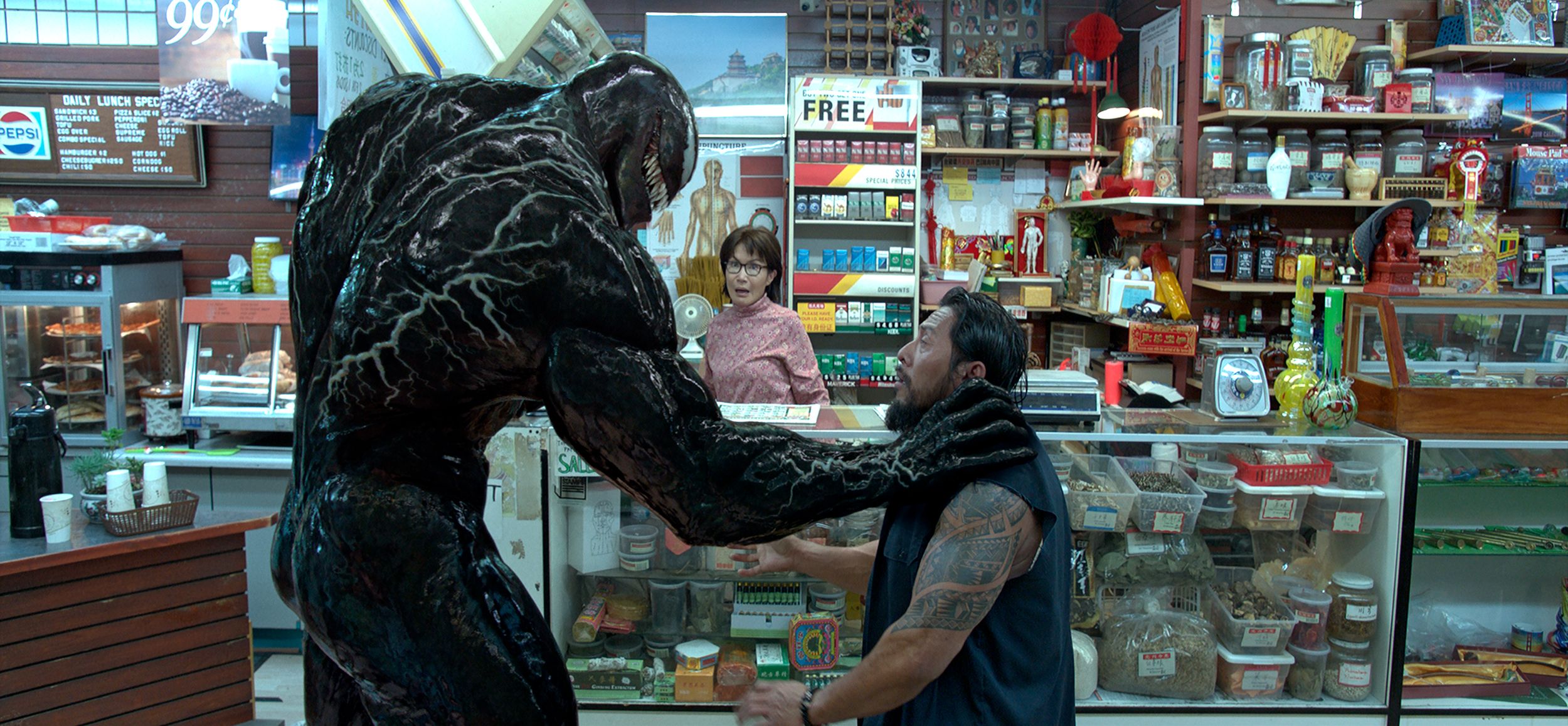
Venom is enjoyably bad, a formulaic blockbuster superhero widget that's at least of a different flavor than we've gotten lately. Unlike the interlocking fizz of the mainline Marvel Cinematic Universe and the dark bloat DC Universe, this villain-centric Spider-man offshoot is small and constrained in the ways we took as normal ten or fifteen years ago. Only implicitly, and aspirationally, connected to the larger Spider-verse, this movie about alien goo coming to earth and attaching itself to down-on-his-luck muckraking journalist Eddie Brock has small stakes, a generic bad guy, sludgy CGI, no worldbuilding to speak of, and a catchy Eminem theme song. If it had been made exactly like this sometime between Ben Affleck's Daredevil and Nicolas Cage's Ghost Rider, no one would have batted an eye. The plot is generic early-2000's origin story, with Brock (Tom Hardy) a put-upon guy who loses his job for asking tough questions of a local science tycoon (Riz Ahmed). Of course, the very same shady experiments that he's trying to uncover are related to the goo, and the chain of events set off by his reporting ends up infecting him with the substance. The aggressive alien glop calls itself Venom, and -- wouldn't you know it? -- can encase its human host in a rubbery CG mud suit, toothy and slobbering, that makes them basically invincible. It comes in handy when dodging bullets and climbing buildings. Unfortunately, when not suited up, it also makes Brock look crazy, with a growling alien voice in his head (also Hardy, sounding like he's halfway to a Triumph the Insult Comic Dog impression) yelling at him to "feed," calling him a coward (in filthier colloquialism), and compelling him to take wild risks when fleeing the paramilitary forces of the aforementioned tycoon who is seeking to get the goo back to his lab. Is this a metaphor for mental illness? Groundwork for a larger interconnected franchise cliffhanger? Nah, it's just effects doodling on an eccentric performance in a cliche plot. 

The movie proceeds exactly as you'd expect, with Brock and Venom learning to use their powers before being inevitably drawn into a climactic confrontation with the bad guys that swirls with explosive computerized combat. (Then there's a tease for a sequel to leave fans chattering on their way out the door.) Hardy gives it his all, a rubbery schizophrenic performance that's as goofy as it is tormented, like a lite version of what Logan Marshall-Green did in the far superior Upgrade earlier this year. The filmmaking by Rueben Fleischer (Zombieland) is competent -- you can't mess up a car chase up and down San Francisco hills too badly, after all -- and workmanlike. The screenplay is full of would-be quips and faux-edgy humor of a type that wouldn't be out of place in the toxic nerdy machismo of 90's comics. The violence is loud, but visualized mostly off-screen, and muddied by the gloopy effects when shown. The cast is filled with stock types and thin caricatures inhabited by over-qualified actors -- from antihero and villain to a love interest (Michelle Williams), a whistleblower (Jenny Slate), a doctor (Reid Scott) -- and there's hardly any cleverness or surprise to be found. And yet it's not a bad time at the movies. At least it's a pleasant throwback to a time when this is all a superhero could be -- a recognizable comics creation thrown on screen with a reasonably goofy/serious performance, a functional thin thriller plot, a half-successful visual idea, basically competent hectic motion passing for action at regular intervals. It's a movie made because Sony had the rights and could convince a star to do it, so why not? Do they hope it spawns sequels? Sure. Do they hope, fingers crossed, that Kevin Feige will invite their Venom into the MCU? Sure. Do they hope they made a good movie? Well, they hope you see it. Isn't that enough? It's predictable and hokey and small and undercooked, but it's not the worst superhero movie you'll see. Last time a studio tried to do a supervillains-only outing we got the nearly unwatchable Suicide Squad. It's all down to what you compare.

Sunday, September 23, 2018

Net Negative: ASSASSINATION NATION

It is only natural that there would be movies attempting to rise and meet our turbulent moment. Take Sam Levinson's Assassination Nation, for example. The movie is supremely unpleasant in the particularly smug way that comes from taking evident satisfaction in holding up a funhouse mirror to everything ugly and nasty in the cultural climate. In zazzy style, with frequent cross-cutting, split-screening, extreme-close-upping, and slow-motion-montage-ing, the movie engineers a small town digital apocalypse. In this worst-case scenario, the citizens of a sleepy suburb in anywhere America find their accounts hacked and secrets dumped online for all to see. It starts with the mayor, a homophobe whose affairs with men become public. Then the high school principal is the victim, smeared by contextless outrage. Soon enough, though, there are thousands of vulnerable people exposed for their neighbors to judge and loathe with virulent hate speech and even violence. Cyber bullying returns to the analog kind, becomes a contagion in the behavior of all ages. 

Our main character is an intentionally provocative 18-year-old senior (Odessa Young) who is gossiping with her pals (Hari Nef, Suki Waterhouse, and Abra), arguing with authority, and exploring her desires. That she becomes increasingly vulnerable as her secrets, like an ongoing sexting affair with a married man twice her age, unravel in public spaces is frightening enough. That the movie pushes and pushes and pushes, with leering close-ups and thunderous sound design, gooses the discomfort. It revels in its danger and disgust, having opened with flashes of depravity to come accompanying trigger warnings. People get lost in the murk. The large cast (including bit parts for Joel McHale, Bill Skarsgard, Anika Noni Rose, Maude Apatow, and Bella Thorne) is energetic and loose inhabiting thinly sketched arch types (the snooty girls, the bro jocks, the sniveling nerds, the prudish parents, the drooling misogynists), but can't entirely sell them as believable people. They're all pawns moved around for the movie's sharp-elbowed points. Concept is constantly privileged over character, making it heavy but sparse no matter the intensity of the subject matter and energy of the filmmaking. 

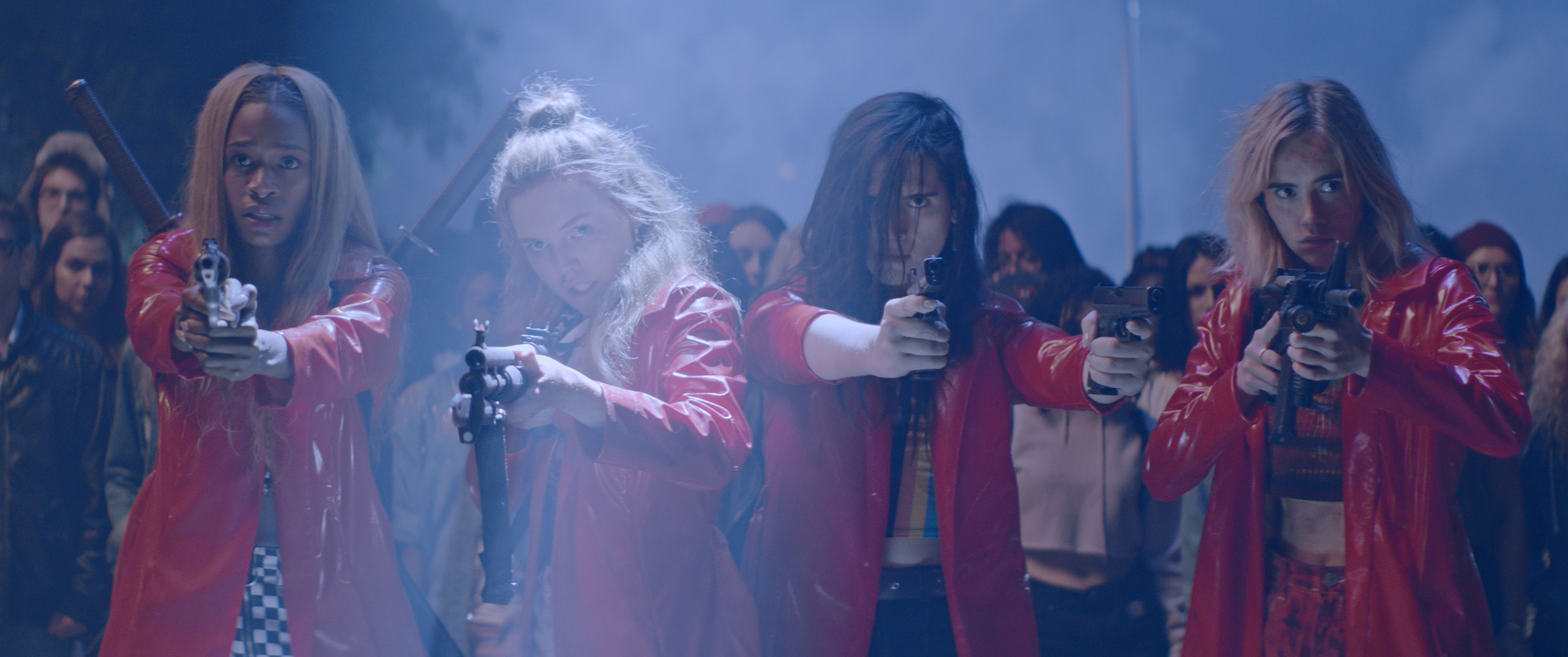
There's no attempt at subtlety; the movie is at once a horror movie and a social satire, a potentially potent mix, but the strong flavors are sloppily blended, as absurd as it is disgusting, as exhausting as it is exaggerated. In its punkish, prankish, raw approach to teen speech and bad behavior, and in its high concept calamity slowly escalating into a Purge-adjacent nightmare, the movie is lurid, upsetting, cruel, overwritten, hyperbolic misanthropy. I spent most of the movie unsettled and unsatisfied, bristling at its overstuffed soul-sick disgust at everyone and everything. By the end, though, it all clicked together for me. I can't recommend it. I'm not eager to revisit it. Nevertheless, it has my begrudging respect. It's an unapologetically gnarly modern exploitation movie, maybe too clever for its own good most of the time (like when the teens talk about Straw Dogs right before a lengthy home invasion sequence), but undeniably forceful in its bloody evocation of our society's worst tendencies taken to frightening extremes. (The pseudo-empowering anime/comic book/supermodel poses struck by heavily-armed young ladies in slick red raincoats in the gory finale are a striking capper to the film's giddily aggressive excesses.)

Here’s a town living a digital self-destruction that spills the mob mentality and casual cruelty of the internet onto the real life streets. The death of privacy is scary enough when the mobs are digital and the consequences are real life. Patterns of abuse and manipulation cross the line — people lose their minds — lives are ruined — context is lost — nuance is dead. Here it goes further. bodies pile up. Character assassination via social media turns real, with a bat swung to bludgeon a girl at cheerleading practice, and machine guns sprung in shootouts in the cul-de-sacs. There are lynch mobs in the streets and assaults on the sheets. Self-loathing becomes homicidal. And why is this town in turmoil? An anonymous creep, safe behind his keyboard, creates the upheaval for the lolz and lets the crowds' hypocrisy rear up to squash whomever is most conveniently scapegoated. Innocents are destroyed. Overreaction rules the day. The natural conclusion, the film says, is bloodshed when a comment section flamewar goes IRL. We may hate what the worst of online culture has done to our society. And yet here we stay. We can’t stop.

Saturday, September 15, 2018

Us Versus Alien: THE PREDATOR

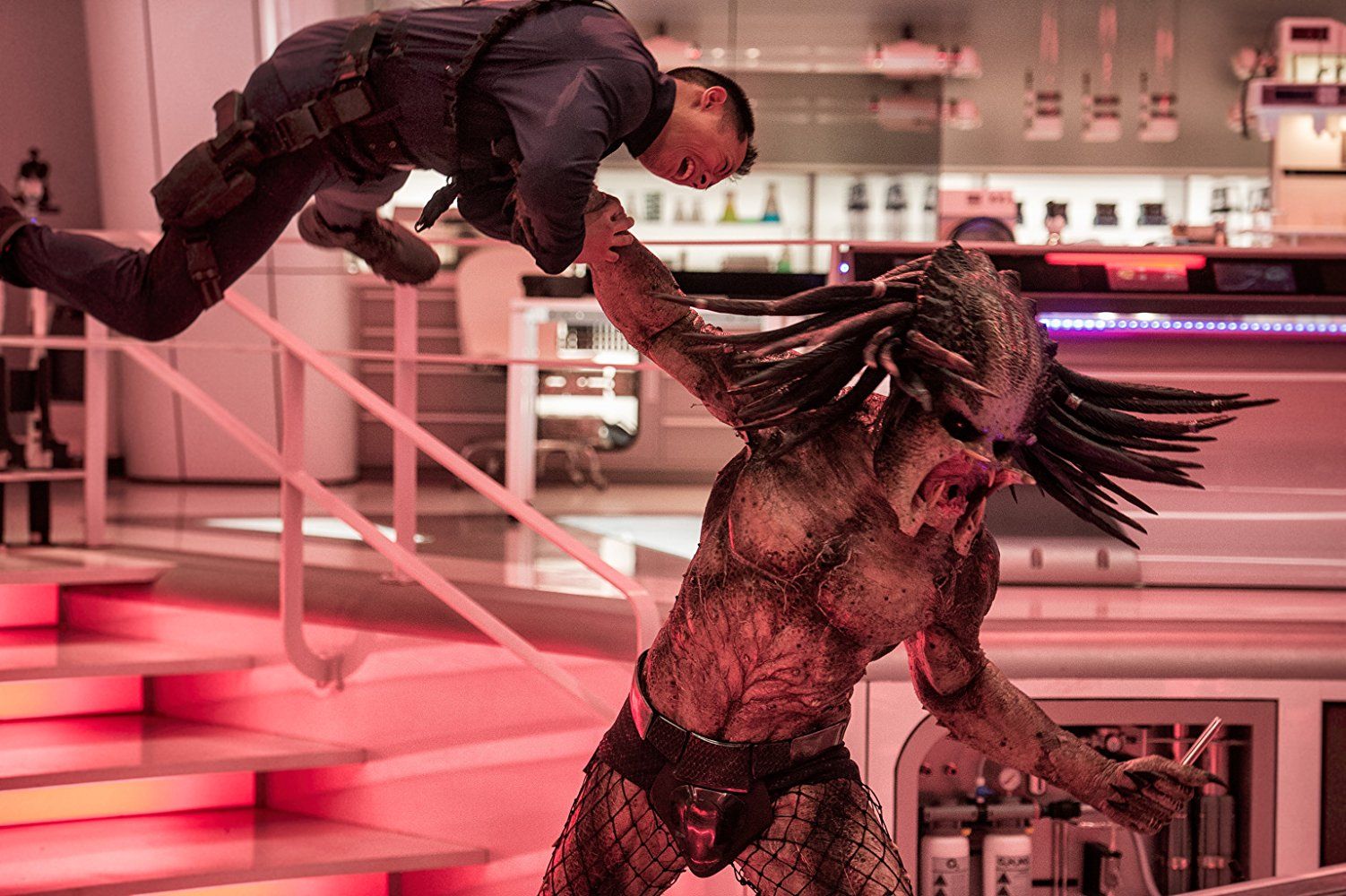
The Predator is a movie of ridiculous cornball machismo, dirty wisecracks, exuberantly gory violence, and the familiar visual trappings of a dusty sci-fi franchise in a screenplay meant only to move its stereotype characters through scenes edited to within an inch of their life for a pace cut to the bone. I suppose that’s a success. It’s the sort of movie where one guy can get speared on a branch and his buddy gets his guts blown out and then they look sagely at one another in grisly understanding as they point their weapons at each other’s heads, their eyes saying, it's been an honor fighting this alien with you, my man. I guess you end up there when your opening scene has a dead man hanging upside down and cut in half, trickling blood revealing an invisible creature beneath. It's nasty like that, but awfully breezy, too. Writer-director Shane Black has been one of our more consistent practitioners of this sort of thing, even if this one’s toward the lower rung of his films (way under his last, a hugely entertaining screwball 70's buddy detective movie The Nice Guys). Here he builds an homage to 80’s action, a tip of the hat to his Hollywood origins writing Lethal Weapon and acting in the 1987 original Predator. That movie was a fairly straightforward Schwarzenegger-fights-an-alien-hunter picture. This one’s a tough-guys-on-a-mission, secret-government-laboratory, moppet-in-danger picture, an 80's throwback in inspiration if not style. It somewhat productively crossbreeds a modern franchise sensibility with the old property's eccentricity. Boyd Holbrook is a covert ops sniper who has a close encounter with a Predator. Jacob Tremblay is his estranged middle-schooler son who is unknowingly harboring alien tech. Sterling K. Brown is the military researcher chewing over his gleefully transparent villainy who wants to shut the witness up. Olivia Munn is the civilian scientist (and one of the two (marginalized) women in the cast) who wants to get to the bottom of this, even questioning why it's called a Predator and not a Hunter. And Trevante Rhodes, Keegan-Michael Key, Thomas Jane, and assorted others are a quipping band of misfits who will become fast friends as they run through the woods and suburbs and whatnots killing or being killed by the eponymous extraterrestrial. The plot is exactly that simple, motivation and personality whittled down quite literally to easily exploited ticks and trinkets — one guy has Tourette’s, another smokes, the kid has autism, Brown chews gum — and gaps in the hurried plot are filled in only if you’ve seen a movie like this before. Yeah, yeah, Black seems to be saying, you know how a scurry-around, bad-dad, scared-son, government-conspiracy, alien-gore shoot-‘em-up goes. He doesn’t feel the need to draw the lines between all the dots for you. Blink and you’ll miss the connective tissue. It’s all about setting up enough reason to show off gun parts sliding and clicking, heavy cars accelerating, helicopter blades whirring, spaceships beeping and clanking, Predators growling and slashing, bullets rattling, character actors shouting, creature effects oozing and barking, and explosions set off like fireworks going ka-buh-buh-boom! Hey, it’s diverting enough if that’s all you want, and certainly not the worst Predator movie out there.