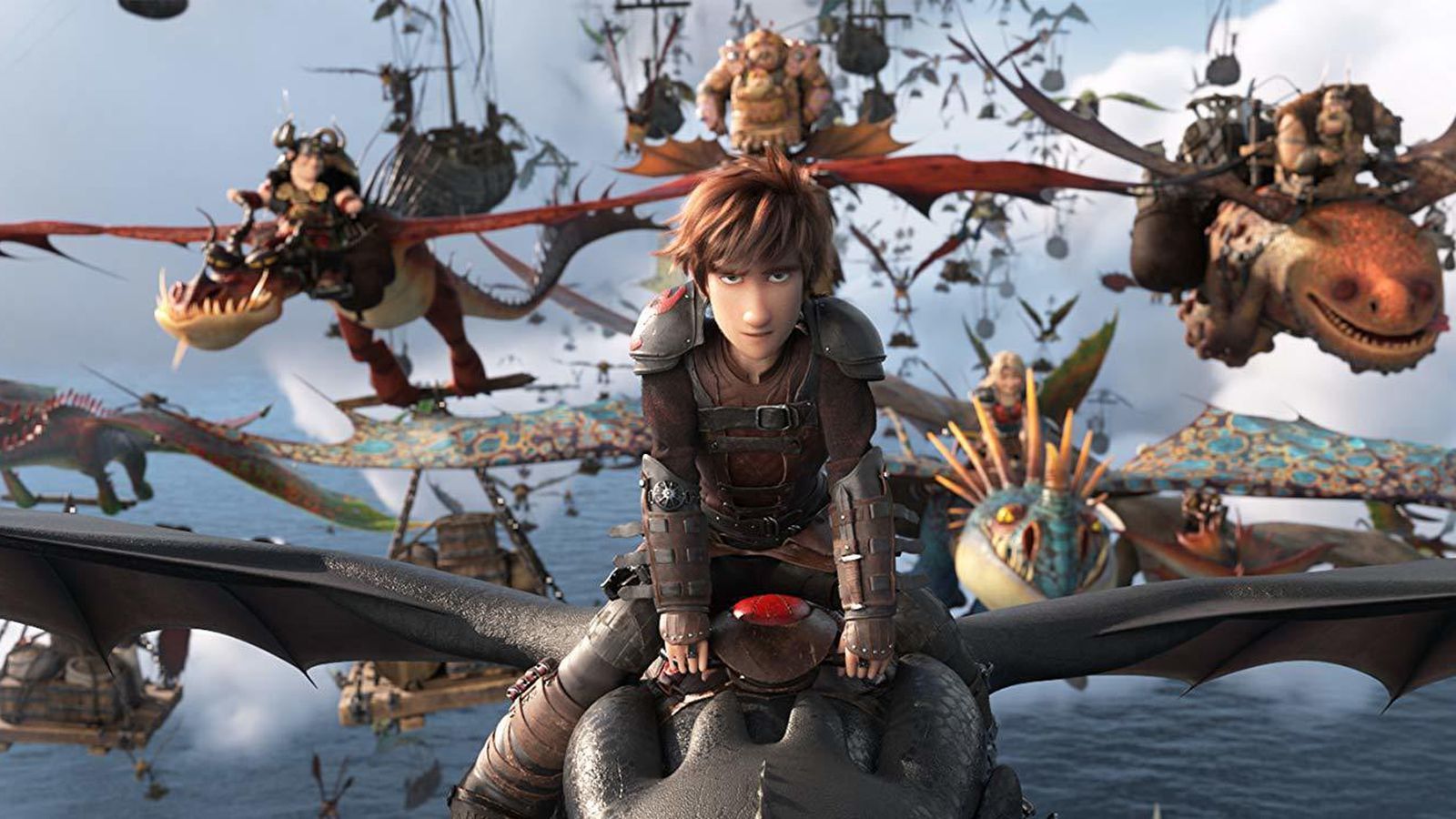
Dreamworks Animation’s finest franchise comes to a rousing end with How to Train Your Dragon: The Hidden World. This trilogy capper is as robustly animated and deeply felt as its predecessors, brimming with detail and invention, welling with emotion satisfying and earned. If some of its adventure plotting seems thinner and more perfunctory this time around, its expansive heart and moving generosity towards its characters’ conclusion more than makes it an overall worthy finale. Writer-director Dean DeBlois and his creative partner Chris Sanders return us once again to the tiny village of Berk, where live the only Vikings who’ve learned to peacefully coexist with dragons. Because of this, they’ve been targeted by others who still view the beasts as pests to be eradicated, a direct challenge to their philosophy and to their still-untested young chief Hiccup (Jay Baruchel). As he makes moves to improve his people’s lives — and hopes to convince his sweetheart (America Ferrara) to marry him — a new enemy arises. The sinister villain (F. Murray Abraham) happens to be the very hunter who has killed off all but one of the Night Furies, the species of Hiccup’s beloved jet-black dragon Toothless. (That there may yet be hope for the Night Furies, in the figure of a pure-white female counterpart, is a fine reflection of the human hero’s romance.) So the plot of the film concerns the Berk-ians attempts to secure safety for themselves and their dragons once and for all, and the full finality of the machinations lend the film a sturdy weight as it approaches its climax. Moving quickly, it drifts behind and builds upon the foundation of the first two films, wringing all the suspense and affection out of the boy-and-his-dragon relationship as they have grown and changed and may yet find themselves going their separate ways — to grow apart, yet not alone, and hopefully not forever. Amidst the characters’ empathetically told developments, the action is swift and visually appealing. The production design remains a CG dazzlement of richly lit and staged computer images overseen by visual consultant Roger Deakins. The sweeping epic score by John Powell booms and floats with triumphant grace. Far more than merely the surface pleasures, and not only a warm nostalgic victory lap in a lovable fantasy world, the film finds a stirring and fitting end point for three films, taking its ensemble, and its core man-and-beast bond, to a suitable end at once surprising and natural. It’s a worthy final chapter indeed. What a relief to find a series that took off well, and then soared to even greater heights, come in for a fine landing.
Sunday, February 24, 2019
Saturday, February 9, 2019
Brick to the Future: THE LEGO MOVIE 2: THE SECOND PART
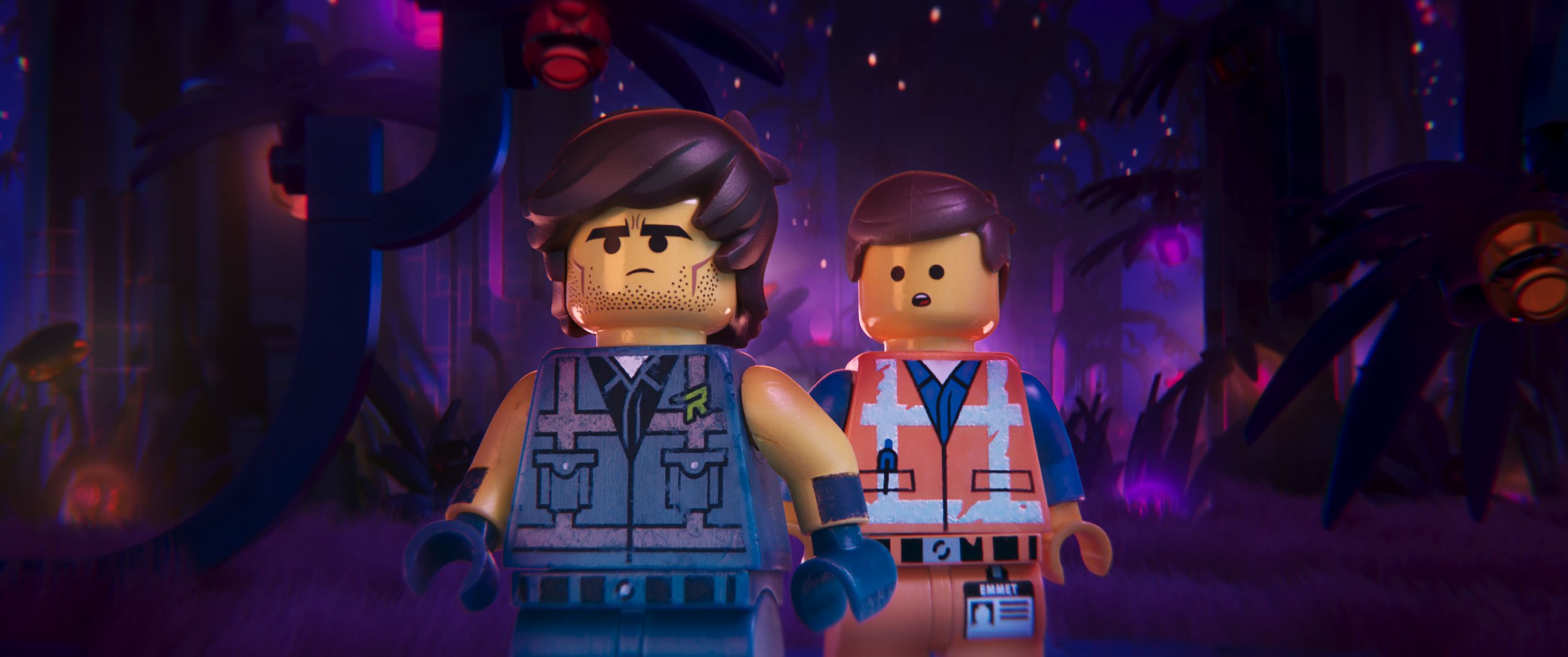
To make one LEGO Movie that’s a surprisingly sharp, cleverly constructed laugh-a-thon doubling as a sweet-tempered message about creativity is surprising enough. To do it again is some kind of miracle. In The LEGO Movie 2: The Second Part, returning screenwriters Phil Lord and Chris Miller, handing directorial efforts to Trolls’ Mike Mitchell, have built a pleasant and perceptive commercial comedy about sibling relationships. It’s couched in the garb of a post-apocalyptic parody, jumping off from the central metaphor of the first movie — a boy’s playland saga rendered in tiny bombast and Chosen One pastiche — and its winning final joke — his younger sister’s toddler-voiced Duplo blocks invading Bricksburg. Now, 5 years later, the first film’s characters are wallowing in young male adolescent fantasy, shirking the bright colors and poppy music for something more stereotypically brooding. The wasteland of destruction in which dopey Emmet (Chris Pratt), punkish Wyldstyle (Elizabeth Banks), and surly egomaniacal Batman (Will Arnett) now live is a broad parody of the stunted mindset that views grim and gritty and self-consciously dark as inherently more mature storytelling. Trouble comes when the Sistar system sends alien invaders to capture all but Emmet, taking them through the Stair-gate to see their Queen Whatevra Wa’nabi (Tiffany Haddish) who has plans involving the impending Ourmomageddon. (Subtle, the movie ain’t.) So it’s Pratt to the rescue, though he’s so hapless he’s quickly greeted and assisted by a galaxy-defending, raptor-training doppleganger (get it?). The whole thing becomes a goof on dark sequels with bleak cliffhangers while doing its darnedest to actually dig deeper into its central premise. It’s definitely less surprising and clever on a moment to moment basis — mostly for the obvious ways it can’t replicate the original’s surprise factor — but is a sharper, wiser, cleverer, and more empathetic moral vision than before, baked into the very structure of its plot. It becomes a movie about a boy who needs to learn growing up doesn’t mean giving into toxic masculinity, like hiding behind a false rough exterior that can’t let his little sister in, and that it's okay to embrace complicated emotions. That the message is carried about by a zippy, flashy, colorful adventure movie filled with bouncy action, loopy sight gags, loony non sequiturs, and a handful of supremely catchy songs is all the better for its intended audience. It’s all of satisfying complete vision, a fun kids' movie with a moral that’s truly centered instead of tacked on. Unlike, say, The LEGO Batman Movie spin-off, which was only a clever self-referential Russian nesting doll of product placement, The LEGO Movie 2 manages to repeat the feat of its predecessor by being funny and sweet and low-key sentimental enough to achieve escape velocity from mere crass commercialism, by being a movie first and toy ad second. If we have to have these, they might as well be this much fun.
Friday, February 1, 2019
Desolation Rows: THEY SHALL NOT GROW OLD
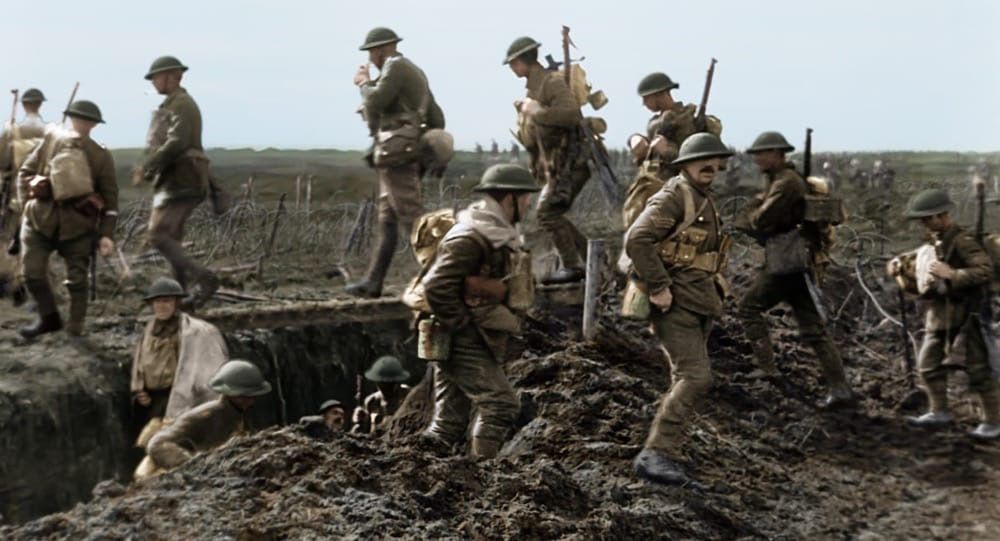
They Shall Not Grow Old is a film of uncanny and quotidian horror, of great sacrifice and great staggering normalcy in a time of nigh incomprehensible conflict. It’s also about film’s ability to capture history and its inability to ever really resurrect what is irretrievably lost. It’s an often staggering technical accomplishment because of and despite of its capacity for running up against technical limitations. Commissioned to commemorate the centenary of World War I’s end, Peter Jackson’s haunting documentary weds a trove of source materials into a transportive eerie exercise in historical footage. He takes a beautiful collage of first-hand interviews with elderly British Great War veterans, recorded by the BBC in the middle of the twentieth century, for a narration, the average experience of a soldier in this conflict described in vivid, lively memories. He lays it over film largely taken at or near the front, a steadily accumulating montage of documentary footage woven into a trench-side view of the war: large stretches of boredom and squalor punctuated by sheer terror, all held to the terrifying backbeat of irregular explosions — often in the distance, but one never can tell when it’ll smash into one’s position. The film starts powerfully, and yet as a rather standard exercise, nothing Ken Burns couldn’t do as good or better on an off day. There’s a square little nitrate-grey frame that shows us early days of enlistment and patriotic fervor. But then Jackson, in warfare filmmaking as intimate on out as his Tolkien adaptations are epic on in, introduces a visual conceit that blooms into unnatural life as the army ships out. The frame fills the screen, in subtle 3D and hushed, respectful colorization. Far from the Turner-produced classic-Hollywood-defacing crayon jobs of the late 80’s, this soft dusting of studiously researched color brings the crisply and carefully restored footage out of the distant past and into a collision with the present, a dusty history book blearily drawn through a scrim of modern technology creating the effect of an old memory clawing back to life. Sometimes the images are startlingly real, tactile muck and flashes of personality cracking and crackling on century-old images accompanied with invisibly convincing Foley and ADR. Other times the movement has a slight haze, the color and the grain — joined and often slightly above the image in a light, barely-perceptible dance of pans and zooms — creates a fortuitous ghostly dance. It’s a documentary of haunted immediacy, at once real and unreal, a researched recreation layered over a moving-snapshot memory, that tells a story of young men sent off to die. They are now forever stuck in the past, caught in the moment of bravery, camaraderie, fear, injury, and death. (This is an unblinkingly gruesome movie at times, uncensored and unflinching.) Jackson brings them to life through the words of men who are still astonished to have survived, and through film that, too, survives. It can be restored. They can not.
Saturday, January 19, 2019
Broken: GLASS
For most of its runtime, Glass is an absorbing oddball genre effort. Would you expect any less from M. Night Shyamalan, who can so expertly keep a straight face and hushed tones in patiently developed high-concept dramas, horror and the uncanny slipping in around the edges? Here is a double sequel bringing two old hits together in one Franken-franchise, with James McAvoy's multiple-personality serial killer from 2017's Split chased by Bruce Willis's indestructible David Dunn from 2000's Unbreakable. They're fine twin pictures, the earlier one a slow-burn superhero origin tale told with uncommon depth of feeling and tremulous uncertainty in tense, unbroken long takes, the latter a jumpy, base, needlingly itchy supervillain reveal in a sweaty basement psychological bestiary. In the film's opening, the two fit together nicely, with Shyamalan near the peak of his filmmaking prowess, framing humane and sensitive performances from Willis and Spencer Treat Clark (returning as Dunn's son). It's a natural extension of Unbreakable's themes of loneliness and familial connection fractured through the burden of being blessed with unusual gifts. In the years since we last saw Dunn, he has remained a low-key vigilante, sensing the misdeeds in passerby's minds and taking action when necessary, emerging from moonlit shadows shrouded in a simple rain poncho. He has a sense of duty, doing what he can to make the world around him a marginally better place. He's searching for The Horde, the split serial-killer who has continued his abductions since the end of his movie. Bringing the characters together extends the themes of brokenness that one's innate capabilities can not heal, how damage of one's past inescapably informs the traumas of one's present, even and especially in forming relationships. It's nifty in classically Shyamalanian fashion, deliberate and precise frames, foreboding yet warmly orchestrated score, fastidiously cautious pacing. He's a consistently intentional filmmaker; even his missteps come from a place of earnest attempts at signaling his story's intentions.
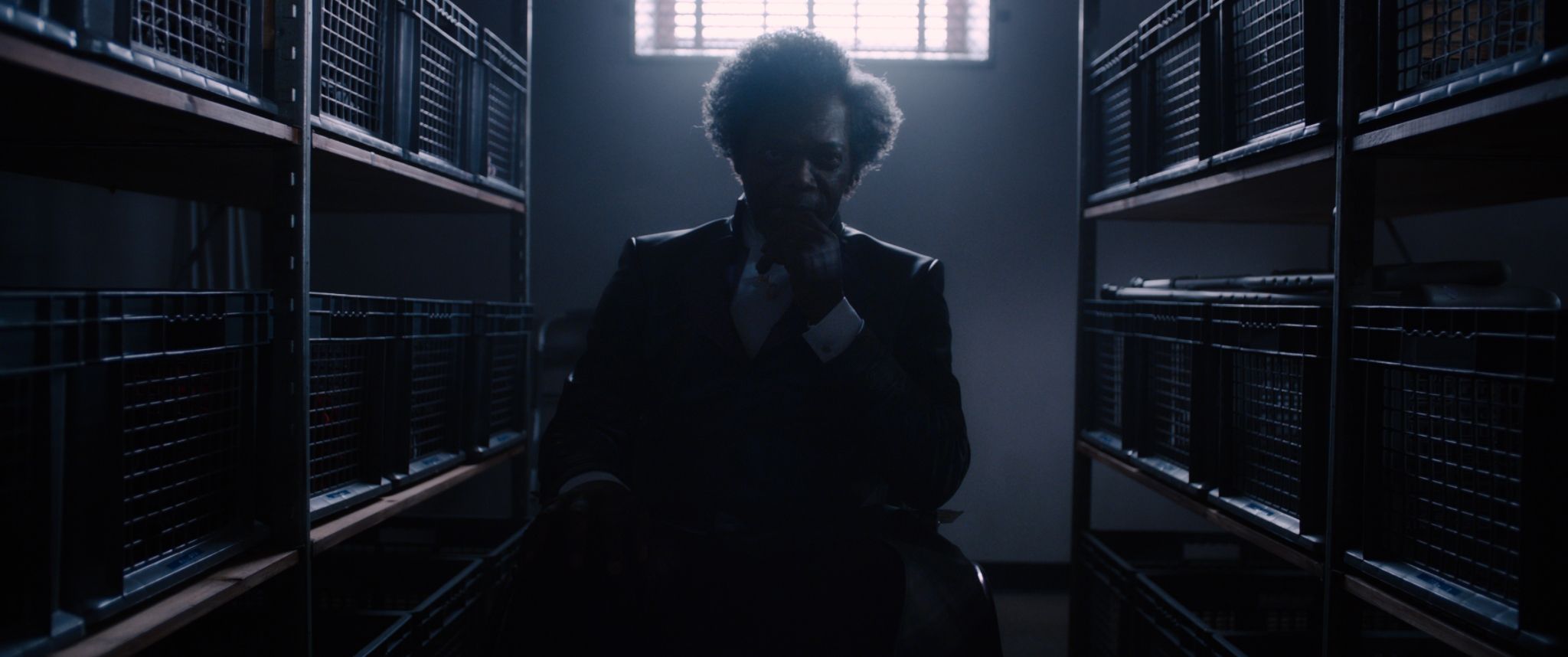
Then Glass moves into its lengthy second act set entirely in a mental hospital (an impressively sturdy facade imbued with Shyamalan's usual great eye for spacial suspense) where a specialist in delusions of grandeur (Sarah Paulson) treats the villainous genius mastermind Mr. Glass (Samuel L. Jackson) by bringing in the other two characters for unconventional group therapy. There the movie's absorbing melancholy mystery slowly fades in the face of a script that starts to spell its comic-book-101 cultural criticism a little too overtly and broadly. Though remaining a stellar directorial showpiece throughout, and featuring some engaged and thoughtful acting from all involved, the movie becomes self-conscious, with characters comparing themselves to superhero tropes and intoning seriously about silly details like turning to these pages as reflections of reality or instructions for planning. It's especially difficult to square with Shyamalan's ultimate conclusion for his film, which appears to tidily resolve its thematic concerns, both emotional development and cultural commentary, in a purposely upsetting underplayed subversion of our expectations, only to pull back in its own delusion of grandeur that ultimately flatters its characters' flimsiest ideas about real-world superhero potential. It kills any idea that reflecting real life through comic books is a productive exercise, only to tease the idea's resurrection. It's why the movie is a gripping acting and style exercise undone by a wish-washy final ten minutes that retroactively empties it out. Still, it remains a movie of fascinating choices right up through the end.
Tuesday, January 1, 2019
Playing THE FAVOURITE
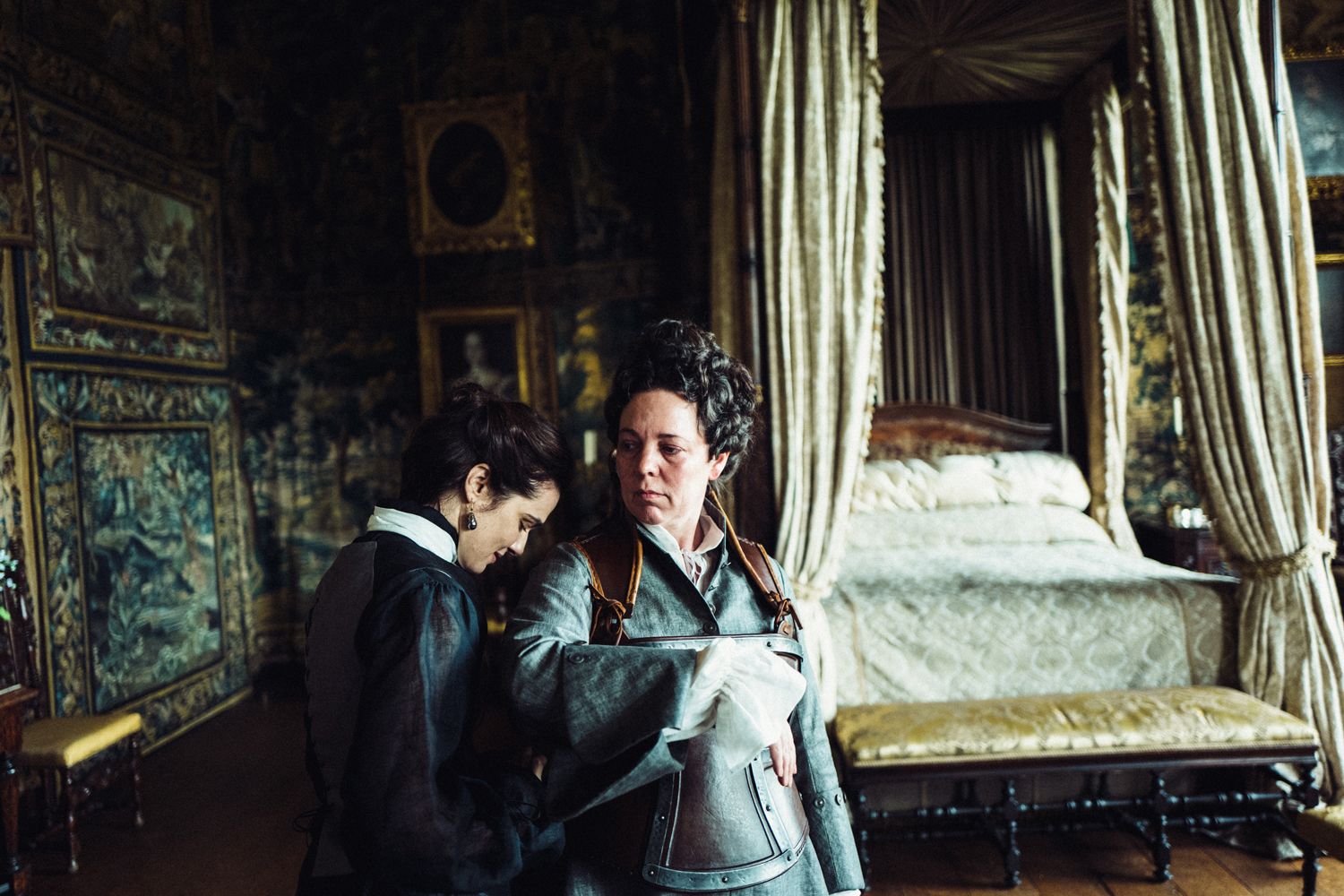
The Favourite is a fabulously catty portrait of courtly power plays — one part seduction, one part poison, all calculation. Set in the court of Queen Anne at the height of England’s war with France, the ice-cold plot concerns a wicked love triangle in which sex and power are equal opportunity uses for domination and pleasure. The Queen (Olivia Colman) is a gout-wracked, alternately pathetic and powerful woman, a figure of ego and appetite. She’s floundering, lost in illness and a haze of emotional traumas, clinging to the tether provided by the powerful Duchess of Marlborough (Rachel Weisz), a confidant who firmly guides her decisions. There’s a love there, but the Duchess also enjoys proximity to power and the way it can bend to her benefit. Enter a new woman in the palace: an ambitious young chambermaid (Emma Stone) whose aristocratic family connections weren’t enough to keep her from careening to poverty, but did provide a foothold to climb back to the top. She’s obviously sizing up the competition and angling to become indispensable by any means necessary. Together the three of them jostle about, looking for avenues to dominate the others, securing their place at others’ expense, and seeking to fill yawning voids in their lives with authority and control, all pawns in games within games. The film is imbued with grotesque interpersonal gusto, like All About Eve let loose in Barry Lyndon as retold by a drunk historian.
Casting off any stiff or dusty sense of stereotypical period piece import, director Yorgos Lanthimos guides the proceedings with a sharp eye and quick pace, fish-eyed distortion in opulent rooms, charting the women’s ambitions and triangulations. He’s always good with morbid bleak humor in closed-system social claustrophobia — the imprisoned offspring of Dogtooth, the Kafka-adjacent singles scene of The Lobster, the doom-laden body horror-inflicted family of The Killing of a Sacred Deer. But in this latest film we find a beating dark heart with an extra charge of writerly flourishes and crisp clatters of prickly quotable wit. Under his style, showing Robbie Ryan's cockeyed cinematography reflecting a fastidiously warped insular world of dark corners and devious plotting, there is a deliciously acid screenplay (written by Deborah Davis and Tony McNamara) carried off with deadpan-droll fastball-curveball-screwball mania between poised ornate title cards. Dialogue is daggers. Sharp wit drawing blood. Every scene a perfectly dark jewel. Accompanied by token men — a beautifully bitchy, bewigged Nicholas Hoult; a charmingly, vacantly pretty Joe Alwyn — the precisely charted emotional and political territorialism in these vicious, guarded, snapping performances maps out a vivid and literate display of power corrupting absolutely, until all human connection erodes into dissolves and rabbits. It's the sort of whip-smart darkly funny true story that lingers with a mirthful melancholy sting.
Monday, December 31, 2018
30 Favorite New-to-Me Movies of 2018
30. Cabin Boy (1994, Adam Resnick)

28. The Church (1989, Michele Soavi)
27. Sisters (1972, Brian De Palma)
26. The Walker (2007, Paul Schrader)
25. Benny's Video (1992, Michael Haneke)
24. Went the Day Well? (1942, Alberto Cavalcanti)
23. Seeds (1968, Andy Milligan)
22. Spin (1995, Brian Springer)
21. Ms. 45 (1981, Abel Ferrara)
20. Sebastiane (1976, Derek Jarman and Paul Humfress)
19. Shaft (1971, Gordon Parks)
18. La Cienaga (2001, Lucrecia Martel)
17. Images (1972, Robert Altman)
16. Original Cast Album: Company (1970, D.A. Pennebaker)15. Torch Song Trilogy (1988, Paul Bogart)
14. The Devils (1971, Ken Russell)
13. The 4 Horsemen of the Apocalypse (1962, Vincente Minnelli)
12. Star 80 (1983, Bob Fosse)
11. On the Town (1949, Stanley Donen and Gene Kelly)10. High Noon (1952, Fred Zinnemann)
9. Juvenile Court (1973, Frederick Wiseman)
8. Affliction (1998, Paul Schrader)
7. Mo' Better Blues (1990, Spike Lee)
6. The Band's Visit (2008, Eran Kolirin)
5. Blue (1993, Derek Jarman)
4. Lust, Caution (2007, Ang Lee)
3. He Who Gets Slapped (1924, Victor Sjöström)
2. Maurice (1987, James Ivory)
1. The Secret Lives of Dentists (2003, Alan Rudolph)
Wednesday, December 26, 2018
No Virtue: VICE
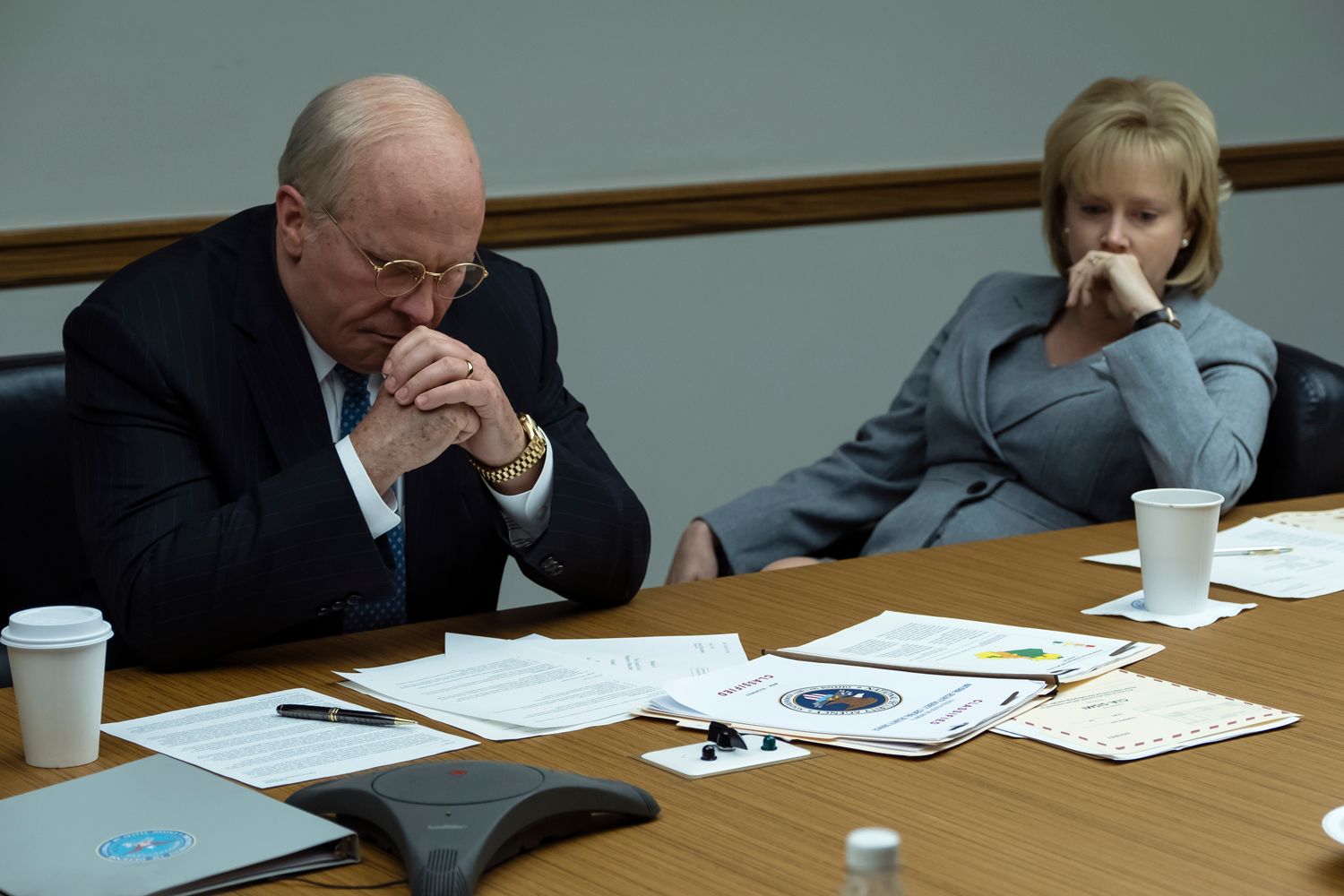
Vice is a smug smirk with a burn-it-all-down cynicism fitted to the times. That may make it fleetingly, darkly satisfying from time to time. But it certainly doesn't make it a good movie. As written and directed by Adam McKay, the film is a bleakly jokey docudrama that rehearses a few decades of GOP governance, culminating in the disastrous George W. Bush administration. It does so through the life of one Dick Cheney, a man who has used a lifetime of proximity to power to make the world a worse place every chance he got. He, and his many helpers and collaborators, destabilized the Middle East, expanded the surveillance state, grew the size of the executive branch and judicial department’s unchecked power, loosened environmental regulations, coaxed partisan rancor and propaganda apparatus, ran an oil company, increased inequality, and quickened the advance of global warming. As played by an astonishingly transformed Christian Bale -- his often trim and muscular frame bloated and balding, shrinking in on itself even as he swaggers with confidence of a power-hunger greed monster convinced he's on the winning team -- the movie takes great pains to hit the major points of the biography and controversy sections of his Wikipedia page. He's up to no good, and the movie rattles about with all the energy of someone excitedly repeating someone else's muckraking. At least it has a point of view and digs in hard. No joke that the movie takes a late beat to underline the irony that at a certain point Dick became literally heartless. We see the heart slowly cooling and drying on a surgical table. It's wickedly apt.
Yet overall it is as jittery and anxious as McKay's prior irritating sojourn into recent history, The Big Short. It's wall to wall snarky voice over and chatty collages of contemporaneous pop culture and news detritus. Full of convincing performances doing a mix of mind-boggling transformative impersonations and recognizable faces doing re-enactments, Sam Rockwell does a fine W, while Steve Carell yucks it up three notches from Brick as Rumsfeld, Amy Adams clenches tight for Lynne Cheney, and LisaGay Hamilton and Tyler Perry nicely underplay Condaleeza Rice and Colin Powell. But it never escapes a feeling that it's manic sober Drunk History or an extended collision between the History Channel and SNL. Free floating derision and contempt is a wail of helpless fury at the steady erosion of our culture, a chain of events that led us almost inevitably to our current low point. But a checklist of scandals is an unsatisfying replacement for analysis. Instead of using Bale's transformation for real psychological profiling or vivid melodrama or jangled political despair, it's simply a sloppy, thin, chuckling, hectoring, ain't-this-just-the-way superficial bromide. Only occasionally does it whip around to sting the audience — the last line of the picture, quipped in a credit cookie, is the worst condescension, so you might already be out the door. Elsewhere it assumes you’re outraged already about this recent history or, if not, need only a small nudge of education or reminding to get there. It is an attempted dark comic exorcism that leaves the demons in the plain sight.
Subscribe to:
Posts (Atom)