F1 is an agreeably human-sized big-screen spectacle getting all of its excitement and thrill out of revving engines, squealing tires, and the intense effort of merging and passing on the race track. The movie is as sleek and aerodynamic as the F1 race cars zooming past. It’s director Joseph Kosinski’s first theatrical effort since Top Gun Maverick and, fittingly, extends his interest in professionalism, process, turning gears, and speed. It’s also a fine blending of a few reliable sports movie storylines: the underdog rookie, the old-man’s-still-got-it, and the unlikely comeback of the last place team. It knows that that’s the same blend that made Maverick such a crowd-pleaser, and invests in a high-gloss aesthetic that highlights the tensions and delights inherent in such high-velocity earnest expressions of such well-worn tropes. It helps that the plot lines are inhabited by charismatic Movie Stars who match the movie’s aims. The old timer is Brad Pitt at his most reliable craggy modern mode, with a sly charm and a grizzled grumpiness. He brings a magnetic screen presence to a fidgety confidence, and agitated stillness. His character used to be a hot shot F1 driver before flaming out 30 years hence. He’s called back to race at the behest of an old teammate turned tycoon, a slick and strutting Javier Bardem. The team he owns is the last place one, under threat of a hostile takeover unless he can run up some wins. The underestimated underdog is a firecracker up-and-comer, all hustle and muscle, a winning smile and a need to prove himself. It’s his first time called up to the league and he’s afraid he’s on the precipice of blowing his big break. That role goes to Damson Idris, in a similar spot in his career as a TV lead (John Singleton’s FX drama Snowfall) making his first jump to leading a blockbuster. Because the star personas fit so neatly into the characters, it adds a jolt to what could be shallow cliches as the old man and the young man arrive with competing energy and must learn to drive as a team if they hope to accomplish their goals. The supporting cast of pros, from charming engineer Kerry Condon to sleazy suit Tobias Menzies, bring a charming believability to stock roles. It’s lively and lived-in even when it's familiar. Kosinski’s too good at the rhythms of pros hard at work. Even his firefighter tragedy Only the Brave, mad scientist thriller Spiderhead, and programmers-in-the-program sequel Tron Legacy get that right. F1’s up there with his best efforts. It’s a movie of smooth and propulsive energy because of Kosinski’s camera’s steady gaze and the buttery editing between sleek shots. It has Top Gun velocity and thrill, minus the militarism, to the ways a car hurtles around a curve or glides aerodynamically past screaming crowds and gleaming skylines. And it gains its suspense and wit not just from spectacle, but from the endless work, good strategy, and fluke luck it takes to win.
Showing posts with label Kerry Condon. Show all posts
Tuesday, July 22, 2025
Sunday, December 11, 2022
Why Can't We Be Friends: THE BANSHEES OF INISHERIN
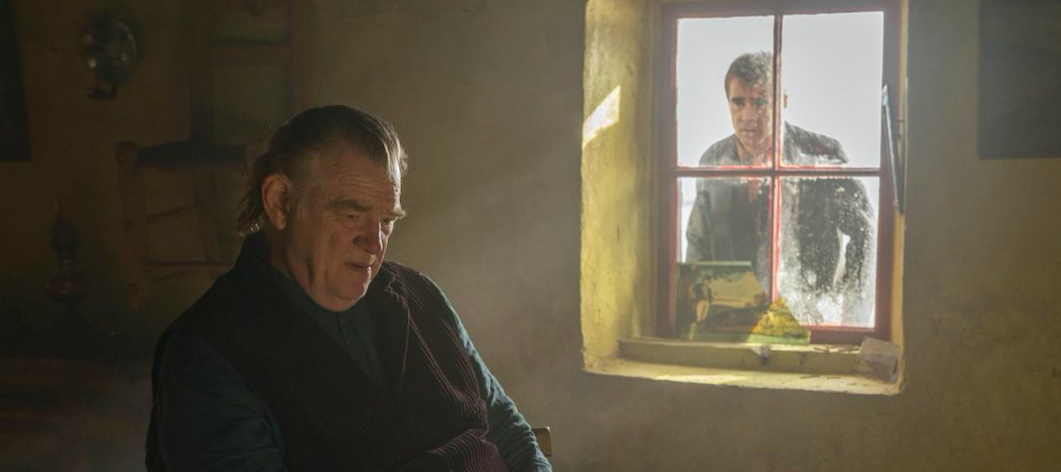
It can be difficult to make friends in adulthood, and even more difficult losing one. Sometimes that prospect can result in a friendship coasting on routine, someone you hang around just because, well, you have for too long to stop it now. And what would happen if you did? That’s the emotional crux of Martin McDonagh’s The Banshees of Inisherin. It’s set in 1923 on a small island off the coast of Ireland. Not a lot of options for socializing there, so the locals take what they can get. Sometimes they can hear cannon fire on the mainland—the Irish Civil War. That distant rumbling is a fine underlining of the story’s main civil strife: one man (Brendan Gleeson) suddenly deciding he doesn’t want to be friends with another (Colin Farrell). He doesn’t really have a reason. He just doesn’t want to talk with him anymore. For years, they’ve met every afternoon at the pub for a drink and a chat. But now, it’s abruptly over, and the man doesn’t even feel he owes a reason. From this simple—almost adolescent playground—declaration, this falling out is gossiped about and talked over by the whole tiny town. Word travels fast. But the facts of the case rest most heavily on Farrell’s befuddled loss. He’s desperate for his friend back, or at least an explanation.
McDonagh, the playwright-turned-filmmaker whose In Bruges was also a good blackly comic showcase for these two actors, gives this sure-footed narrative the purity of a folksy tale. It’s gnarled with colloquialisms and a straight-faced dark humor. And it’s carried along by a slow-rolling matter-of-fact shock—a then-he-did-what?—as the men’s interactions escalate. At one point Gleeson calmly says that if Farrell talks to him again, he’ll go home and cut off one of his own fingers, just to prove how serious he is. Unmoored from their only meaningful friendship, they both drift off into middle-aged melancholy. And McDonagh balances the story’s sympathies as it becomes a portrait of this kind of loneliness of adulthood, where connections can strain and fall flat or grow mercenary. Where time starts to weigh heavily through sheer inertia of habits, a dawning awareness of time slipping away every day creeps in with a sense of waste. The windswept fields and dirt paths and icy ocean views make a stark backdrop for this romantic—in the classic intensity of emotion sense—ennui, and the chattering daily grind of whispered rumors and stormy escalations. The characters are often separated by windows and walls, or going for long walks across chilly landscapes, and always fumbling to ruminate over the mysteries of their lives.
We get a sense that the smallness of life in the vastness of the terrain is brewing an insular despair. In this town, there’s an abusive constable and mean old ladies and well-meaning bartenders and docile animals and the town idiot and a firm-but-fair sister. Barry Keoghan and Kerry Condon, as those last two, are especially sharp counterpoints to Farrell’s befuddled pity. Gleeson, for his part, plays one long exasperated sigh, as a man whose depressive clanging against the bars of his own mortality drags out his potential harm to himself and others. With this steady orchestra of personalities, McDonagh creates a grimly generous work, then, with a bleakly Irish ending. It reaches a logical conclusion like a short story that snaps shut with the most pleasingly logical ambiguity. The potent sadnesses and frustrations at the core aren’t exactly exorcised, but, like a local legend retold and embellished, they have revealed something real and true about the darkness lurking for the unfulfilled and the unsatisfied. That’s why it’s nice to have a friend. And nicer still to keep one.
McDonagh, the playwright-turned-filmmaker whose In Bruges was also a good blackly comic showcase for these two actors, gives this sure-footed narrative the purity of a folksy tale. It’s gnarled with colloquialisms and a straight-faced dark humor. And it’s carried along by a slow-rolling matter-of-fact shock—a then-he-did-what?—as the men’s interactions escalate. At one point Gleeson calmly says that if Farrell talks to him again, he’ll go home and cut off one of his own fingers, just to prove how serious he is. Unmoored from their only meaningful friendship, they both drift off into middle-aged melancholy. And McDonagh balances the story’s sympathies as it becomes a portrait of this kind of loneliness of adulthood, where connections can strain and fall flat or grow mercenary. Where time starts to weigh heavily through sheer inertia of habits, a dawning awareness of time slipping away every day creeps in with a sense of waste. The windswept fields and dirt paths and icy ocean views make a stark backdrop for this romantic—in the classic intensity of emotion sense—ennui, and the chattering daily grind of whispered rumors and stormy escalations. The characters are often separated by windows and walls, or going for long walks across chilly landscapes, and always fumbling to ruminate over the mysteries of their lives.
We get a sense that the smallness of life in the vastness of the terrain is brewing an insular despair. In this town, there’s an abusive constable and mean old ladies and well-meaning bartenders and docile animals and the town idiot and a firm-but-fair sister. Barry Keoghan and Kerry Condon, as those last two, are especially sharp counterpoints to Farrell’s befuddled pity. Gleeson, for his part, plays one long exasperated sigh, as a man whose depressive clanging against the bars of his own mortality drags out his potential harm to himself and others. With this steady orchestra of personalities, McDonagh creates a grimly generous work, then, with a bleakly Irish ending. It reaches a logical conclusion like a short story that snaps shut with the most pleasingly logical ambiguity. The potent sadnesses and frustrations at the core aren’t exactly exorcised, but, like a local legend retold and embellished, they have revealed something real and true about the darkness lurking for the unfulfilled and the unsatisfied. That’s why it’s nice to have a friend. And nicer still to keep one.
Subscribe to:
Posts (Atom)
