Showing posts with label Mark Wahlberg. Show all posts

Sunday, March 6, 2022

Good Boys: UNCHARTED and DOG

I distinctly remember reading an article in Newsweek pretty much exactly 20 years ago bemoaning the lack of viable old fashioned Movie Star men. Back then, when we didn't know the Movie Star was on the way out, it was pretty easy, if unfair, to argue that the likes of, say, Matt Damon and Will Smith and Ben Affleck weren’t exactly Harrison Ford and Denzel Washington and Robert Redford. I liked all those guys at the time, but in retrospect, those younger stars actually were among the last of the great Movie Star men, right? We’d love to have someone of their charisma and popularity ruling the box office charts again, able to take a fandom with them to new standalone programmers and prestige projects and would-be franchises alike. That all of the above names are still working to some extent is further proof that we keep relying on the old at the expense of the new. Now, it seems, for a newer actor to reach that top tier, he needs to wed his persona to a superhero to keep the audiences flowing. Just glance at the grosses for a non-Marvel movie for a Marvel star and you’ll get the idea.

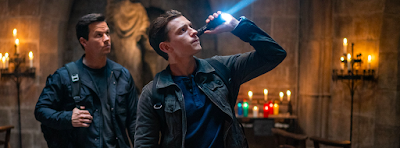
Even someone like Tom Holland, fresh off a Spider-Man movie so insanely popular that people were willing to get COVID to see it, is more of a media figure than a marquee star at this point. Audiences love Spider-Man in any iteration. And people like Holland as a social media figure—interviews with his current girlfriend Zendaya (an actual compelling star, the main reason he’s a tabloid staple) and that gender-blurring lip sync dance he did to Rihanna's “Umbrella” some years back are probably as shared as, if not more than, clips of his film work. (The latter’s more memorable and visually appealing, too.) But just put him alone in a cringe over-reaching crime picture like Cherry or half-baked (and off-trend) YA sci-fi Chaos Walking and hardly anyone shows up, while those who did aren’t exactly brewing the cult classic status. He’s a likable bloke, to be sure, with an on-screen energy that comes across as part Tom Cruise hustling charm, part Michael J. Fox smirking underdog. But if audiences don’t give those like him a chance to grow beyond popular characters into their own reliable stardom, we’ll be starved of stars of the future. So far, even Holland’s Spider-Man efforts recognize he’s not his own draw yet, pairing him in each with an actual movie star of some sort—Samuel L. Jackson, Robert Downey, Jr.—or another—Benedict Cumberbatch—or another—Jake Gyllenhaal—to carry the load.

So now we have him in Uncharted, a long-gestating video game adaptation that’s sure to have Sony dreaming of sequels already. It pairs Holland as a boyish orphaned Magellan enthusiast with Mark Wahlberg as a jaded treasure hunter. Together, they each need the other to find a cache of lost gold before Antonio Banderas’ scheming rich guy does. The movie, directed with usual bright pop sturdiness by Ruben Fleishcher of Zombieland and Venom and scripted by a typical flotilla of writers, isn’t exactly reinventing the form. It’s an amiable globetrotting adventure with a bit of National Treasure family destiny, some Tomb Raider puzzle-solving, and a splash of Indiana Jones escalating stakes. But the combination makes for a diverting fetch quest, complete with faded maps, missing ships, interlocking MacGuffins, and preposterously elaborate centuries-old scavenger hunt clues. (I would’ve said an even less believable detail is a Papa John’s in Barcelona, but I googled it and, hey, there is one.) The plot has the usual good guys, bad guys, and some who go both ways, and action sequences that are just the right side of entertainingly outsized. I liked best a shootout in and out of a cargo plane, and later a climactic fight between two airborne pirate ships dangling from helicopters—my kind of modern spin on swashbuckling tropes. The whole production is simply a string of passably entertaining adventure sequences spackled together with pleasantly predictable plotting. And the whole thing hangs together on the decent buddy chemistry it whips up between the two leads, with an established star lending his appeal to bolster a fledgling one, a dynamic that mirrors the characters’. Wahlberg’s reluctantly affectionate gruffness balances out Holland’s relentlessly overeager puppy-dog acting, and gives their scenes a low-key charm. Sometimes that, amidst some busy action, is enough to get by.
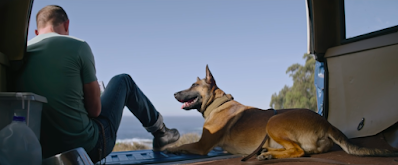
Speaking of stars: Channing Tatum. He has that whole effortlessly-holding-the-screen thing down perfectly. Like the best Movie Stars past and present, he can simply exist in a frame and have our attention. He has unforced naturalism and shaggy off-handed charisma, the sensitive soul behind the muscled features, a melting heart in a block head. It makes him an interesting presence—and a surprisingly adaptable one. He works as a dancer from the wrong side of the tracks—Step Up—or an action figure—G.I. Joe—or an Olympic wrestler—Foxcatcher—or a Gene Kelly-type hoofer—Hail, Caesar!—or a stripper with a furniture-making hobby—Magic Mike. He hasn’t had a live-action role since 2017, so it’s a great welcome return to see him back on our screens with Dog, a movie built almost entirely around him. Tatum co-directs with his Mike screenwriter Reid Carolin and together they know just how to use what Tatum can do. Posed against a sunset, leaning on the hood of a pickup truck, beer bottle in hand, with his solider past haunting an uncertain future—he’s the complicated state of modern American masculinity at a glance. The character is an alcoholic brain-damaged vet desperate to get his life back on track. His former commanding officer offers a trade: a letter of recommendation in return for driving a troubled military dog to the pup’s deceased handler’s funeral. The idea is clear, the goal is plain, and the plainly framed, unshowy style Tatum brings to the look and feel is a straightforward showcase for what he does best.

The result is a simple, sentimental, and corny movie that finds Tatum and a Belgian Malinois on a road trip from Oregon to Arizona and back again. It’s a one man show, with meandering detours and episodic stops along the way at a variety of eccentric characters populated with quickly sketched character actors at work. Those vignettes never quite lift off the way they should, but the overarching emotional spine of the thing—a “who rescued who?” bumper sticker come to life—is sold entirely on the strength of Tatum’s performance. His humanity shines through, and it’d be hard not to feel for him as his tough exterior and in-his-own-head moping starts to sympathize with the poor dog’s troubles—war, after all, leaves these scars on all involved, man and beast alike. It’s a throwback to the sorts of movies that made stars in the middle of the last century, a simple concept hung on the appeal of a performer, and tailor-made for his skill set. There’s something to this wandering, sight-seeing, small-scale character piece that, even in its predictability, remains totally watchable. One wants to see how this isolated, lonely, frustrated, wounded jock can find his way to heal, even a little bit, by reconnecting to his buried emotional intelligence and recognizing something of himself in another—even if that other is a dog. You have to start somewhere.

Thursday, August 6, 2020

The Wind Will Carry Us: THE HAPPENING

Then, one spring, a strange blight crept over the area, and everything began to change. Some evil spell had settled on the community; mysterious maladies swept the flocks of chickens, and the cattle and sheep sickened and died. Everywhere was the shadow of death.
    — Rachel Carson, “Silent Spring”

An early image in The Happening: construction workers casually stepping off towering scaffolding, raining down, plummeting to their deaths. It really sets the stage. We’ve already seen a woman stab herself in the neck, and later will see a man splayed out in a field awaiting an approaching industrial lawn mower. Still elsewhere we will see a cozy suburban street with lush, verdant trees, and corpses hanging through their branches. These are indelibly frightening images, memorably staged and haunting in their lingering impact and implication. Here’s the deal with M. Night Shyamalan’s oft maligned The Happening, which merely had the misfortune of being released at a time when his artistic reputation was on a downswing — a nasty course correction from the “Next Spielberg” hype he’d been getting from his great early films like The Sixth Sense and Signs. That wasn’t fair. But The Happening is a good thriller, and an even better work of deep dread. It’s a vision of society suddenly falling apart, in which a damaging pandemic sweeps across the land and no one knows what to do or how to stop it. No one can weigh the risks, and no leadership emerges to contain the threat. There’s just a primal sense of escape, and even then despair. The characters are running, knowing it has to be futile. And yet they run anyway, even as the world falls down around them, as groups splinter and squabble over how to survive, as conspiracies bubble up as no one has enough information, as people turn cruel, selfish, and violent, sometimes out of desperation or fear, but scarier still, sometimes inexplicably.

When the film first arrived in 2008, and ever since, its loud detractors have scoffed at its twist. Spoiler: plants are emitting toxins that are causing people to kill themselves. Ha, they laugh, isn’t it funny to think nature is the big danger in this movie? But this isn’t a twist. It’s a reveal. (This is the case in more of Shyamalan’s films than his reputation commonly asserts, and leads to uncharitable readings of his other unfairly dismissed efforts, too.) Besides, can’t you do that belittling with every monster? Take the movie at its word, and it is scary, truly scary, to imagine a world of ecological horror, in which humanity is revealed once and for all to be at the mercy of nature and its wrath. Shyamalan sharply sees the terror of our vulnerability to nature’s whims. As our world reckons ever more acutely with the ravages of viral infection and climate change, here is a movie that grows only more unsettling. A scene where the fleeing humans race through a field, the wind whipping through the vegetation, is not about outrunning danger, but the overwhelming hopelessness of thinking you can. It takes something that can be normal and soothing — the noise of wind through leaves on a brisk day — and turns it devastatingly dangerous, an all-encompassing sense that we can’t hide from something we can’t see.

In Shyamalan’s vision, characters’ personal problems pale against the enormity and the unknowability of this scenario. So when the central relationship conflict between Mark Wahlberg (admittedly he’s not quite right for the role of a science teacher, but sells confusion and stress) and Zooey Deschanel (whose wide-eyed confusion matches the situation with the right befuddlement) doesn’t quite work, it’s at least partially because of course the larger trauma is overpoweringly the main concern. (And this is hardly the only effective horror movie with an undercooked subplot.) More evocative is John Leguizamo, who brings palpable real tension and pain when confronted with a danger he can’t confront, a situation he can’t control, for the benefit of himself and his family. All through the film are these sometimes absurd (the lions!), sometimes peculiar (the lemon drink!), sometimes recessive, quickly-sketched observations of all manner of people reacting to the unknowable dilemma. Some grow hysterical. Some say stupid things. Some go boldly in the wrong direction. Some are suspicious others want what little they have. Some have selfishness that brings others doom. Maybe they should try wearing masks? (You should.)

Shyamalan’s filmmaking remains controlled here. His camera is typically patient, with the great Tak Fujimoto’s cinematography catching the horror precisely, as shocking for elisions as it is for gore—think a chain of suicides the camera follows just out of frame, following instead the dropped gun as it passes from person to person. The suspense is set against James Newton Howard’s score going evocatively wild with simmering, swirling strings right out of a 1950’s sci-fi chiller. Maybe this is a Day the Earth Stood Still, scarier for having no interlocutor from the heavens to translate the moral. It's exactly as straight-faced a B-movie idea as that, flatly earnest about its points, using its concept to draw big fundamental horror about how little holds our modern human society together when you get down to it. When the film reaches its conclusion, a genre beat with ostensible safety leaving hints of the real danger lurking and lingering, ready to explode again, it’s totally clear this is a movie about how humanity’s short-term thinking and short-term memory will inevitably doom us. Even when nature fights back—revealing how we are literally killing ourselves by ignoring its warnings—we will too quickly race back to normal, inviting the danger’s resurgence.

Wednesday, June 21, 2017

Here Comes the Boom:
TRANSFORMERS: THE LAST KNIGHT


Now five films deep, it’s hard to call the Transformers series anything more than “barely narrative.” Sure, there are recurring motifs and a familiar ensemble of returning characters, but any sense of a coherent story or mythology capable of being grokked stopped in the end credits of the first – and best – installment. With Transformers: The Last Knight, director Michael Bay seems more than ever invested in the movie only insofar as it allows and affords him the ability to stage whatever kind of bombastic set piece he wants. This is franchise filmmaking as a bajillion-dollar playground where he can build, play with, and blow up anything: a submarine, a castle, a small town, Stonehenge. Why not? He can get away with this because he’s such a great imagemaker. There’s nothing like seeing his brand of spectacle – the grade-A Bayhem – carted on screen by the metric ton. Frame by frame this movie sparkles with sunsets and vast vistas and impressive effects and awestruck hero shots. But, of course, it’s also in service of a series that’s long since passed into irretrievably convoluted gobbledygook. This iteration doesn’t reach the heights of its predecessors, but it doesn’t scrape the barrel’s bottom like their lows, either. A middle of the road Transformers it is then.

At least the screenplay cobbled together by four writers recognizes that the Transformer destruction playing out over the last four films would leave the world rattled. We join the story in progress, with the world terrorized by all the gigantic alien shapeshifting automotive robots who have landed and continue to arrive on a seemingly unstoppable basis. With Optimus Prime (Peter Cullen) missing, the Autobots just roam the planet doing whatever, getting into scrapes with Decepticons who still have their leader, Megatron (Frank Welker). That Transformers are sufficiently mindless to need their strong leaders to give them purpose is certainly strange, and makes them dangerous. Humans have decreed them illegal, and deputized an international paramilitary force to hunt them and anyone helping them. The conflict is that, once again, there’s a world-ending calamity coming, provoked by bad ‘bots, and the humans must allow the Transformers to fight it out for the fate of the planet. Tagging along with the junkpiles gurgling crass one-liners in the voices of beloved character actors (John Goodman, Ken Watanabe, Steve Buscemi, Jim Carter) are the token humans: last movie’s hero (Mark Wahlberg’s hilariously named Cade Yeager), the military liaison from the first three movies (Josh Duhamel), and new characters like a scrappy orphan teen (Isabela Moner), a scatterbrained Englishman (Anthony Hopkins), and a supermodel, in good looks and frequent inexplicable wardrobe changes, historian (Laura Haddock). Bay needs these human-sized caricatures to sell the plot’s stakes and scale.

There’s no need to recap the nonsense except to say it hurtles through frantic globe-trotting (Chicago! South Dakota! England! Cuba! Africa!) and alternative history digressions (Bay squeezes in a lengthy King Arthur prologue and a World War II flashback) on its way to the expected oversized explosive finale with alien floating weapons and enormous energy pulses and endlessly complicated competing schemes to destroy and/or save the planet. It’s cut together with manic editing and an eardrum-quaking sound design. Get Bill Hader’s Stefon to describe it. This Transformers has everything: fire-breathing baby dino-bots, a potty-mouthed steampunk robo-butler, a floating alien tech witch, comic relief characters played by funny guys (like Jarrod Carmichael and Tony Hale) for whom no one wrote jokes, the United States freeing evil robots on a Dirty Dozen work program, bean-bag-shooting drones, a three-headed dragon built from a dozen interlocking mechanical Knights of the Round Table, John Turturro. Any movie that starts with Stanley Tucci playing Merlin (and yet he’s not an ancestor of the character Tucci played in the last movie?) and gets to Mark Wahlberg sword-fighting a Transformer (and that’s before Stonehenge blows up as the nexus of ancient robot evil) is certainly following its own bizarre id. The movie is all hollering and hurtling, cleavage and calamities, in between Bay’s usual aggressive humor and loud exposition and leering camera ramping up even small dialogue scenes as concussive clattering exertions. 

By the end I stumbled out dazed, deafened, and defeated by the volume (in noise and dimension) of the experience. But it was not entirely unenjoyable to sit back and allow the pummeling. Bay’s genius, and it is genius, is as one of the only modern blockbuster filmmakers who has figured out how to make digital and physical effects work together to create a sense of weight and scale. (Just look at any given Marvel movie, which will be competently handled, and maybe even a better coherent story most of the time, but will have all the tangible qualities of a CG laser light show.) Bay places figures – or spinning bodies, clouds of debris, blasts of fire, and so on – in frames arranged to provide contrasts, to accentuate size and scope, to emphasize motion and speed. Then he sets out sealing the deal with stomach-churning heights and dips, awe-filled low-angle shots of towering monstrosities, precision chaos. He makes the IMAX screen a massive mural tribute to action cinema. A car chase is filmed from as low to the pavement as possible, feeling the grit of the roadway as a character hangs out the door while Bumblebee shoots an evil cop car. A squadron of drones are placed just so to allow a character to leap from one to another, saving himself after getting thrown out the glass back panel of an elevator. A massive structure rising from the ocean drips waterfalls human figures must dodge as they, soaked, run to the aid of their robotic allies. Though not as memorable as the series’ high-water marks, these are sights you might find worth seeing and feeling, but only if you’ve already committed to sitting through the whole jumbled pandemonium anyway.

Wednesday, October 5, 2016

Welled Up: DEEPWATER HORIZON


Peter Berg’s Deepwater Horizon is a compelling, workmanlike, gearhead recreation of a tragedy that was a prelude to an ecological disaster. He’s not so much concerned with artificially inflated human drama or even in the resulting fallout from the 2010 deep sea oil rig explosion that left several BP employees dead while millions of gallons of crude gushed into the ocean. Berg’s films (from Friday Night Lights to Battleship) are always most interested in group efforts. This one’s about systems failing, and a group who must survive as best they can when it blows up in their faces. There’s the usual disaster movie opening acts which introduce a variety of recognizable actors showing up to work on the rig and the various tensions slowly straining between the men who are there to put in hard work and the men who are there to cut corners. The sharply drawn division between the laborers and the money men put me in mind of The Towering Inferno, while the somber just-the-facts tick-tock of daily routine felt more in line with the grim United 93. The synthesis of these two approaches is compelling enough, but the movie really comes alive when it all blows up.

Because Berg and screenwriters Matthew Michael Carnahan (World War Z) and Matthew Sand (Ninja Assassin) take such an interest in the mechanics of the Deepwater Horizon in the movie’s throat-clearing beginning, with loving looks at the machinery including a camera sliding up the main pipe’s muddy buildup like a colonoscopy, there’s no need for belabored explanation later. Because they let us know how it’s supposed to work, they can let the pressure build until the rig erupts. We know what’s wrong. The way there provides human stakes, letting us watch good average capable workaday guys trying their hardest to make the task of seemingly impossible corporate orders – personified by meek dopes in polo shirts – work anyway. There’s Mark Wahlberg doing his earnest best, and Kurt Russell commanding attention and respect (and rocking a fine mustache). There’s no-nonsense Gina Rodriguez and sweet Dylan O’Brien and kind Ethan Suplee. They’re likable, but then there’s John Malkovich, bald and chewing through a splendid accent as the guy from the head office willing to push forward without completing all the necessary safety checks. Even if you didn’t know where this is going, you’d know where this is going.

You’d certainly know something’s about to blow if you paid attention to the heavy-handed foreshadowing. Before leaving for the rig, Wahlbeg and his wife (Kate Hudson) watch their adorable moppet show off her visual aid for a career day explanation of her dad’s job. It’s a Coke can she manipulates like it’s underground undersea oil. As the scene ends, the can ominously explodes. Later, Russell is handed a safety award by visiting company men, a scene crosscut with Malkovich barking at underlings to ignore a warning about unsafe pressure in the pumps. So the movie lays it on a little thick. But when the danger flares, the movie’s ready to turn its eye on knobs, dials, gears, switches, buttons, keys, screens, alarms, propellers, tubes, signals, readouts, levers, and more into watching every one fail. As the whole oil rig comes crashing down around the characters, they spring into action, trying to contain the mess or, failing that, getting themselves and their co-workers to safety. Everyone on screen is coated in grease, mud, and blood. It becomes a loud, cacophonous series of explosive sequences, one perilous development leading inexorably to the next as everything falls apart.

There are political points to be made through a story like this, but Berg keeps that ambiguous. It’s a celebration of hardworking human spirit and a condemnation of heartless profit motives driving them to doom. It’s a business calamity with bloody casualties, bailed out by civic good. We see the coast guard fly into action (an echo of Sully, the other recent-event-turned-movie of the moment), and the people on board the rig do all they can to help their fellow workers. There’s a thrill to watch such dramatic life-and-death circumstances play out on the big screen, the effects large and convincing, the booming sound design rattling the theater seats with every new blast of the inferno. But there’s also sadness to the spectacle. When one man sacrifices himself to stop a piece of equipment from falling on others, Berg holds close on his wincing face, then watches as he’s blown out a window, smacking into a bulkhead on his way out of sight. I fleetingly wondered what it would be like for the real man’s family to see this movie, and I hoped they wouldn’t. And yet the movie is so effectively produced, I was fascinated by its every development, as the best laid plans of men go horribly wrong in spectacular fashion.

Sunday, June 28, 2015

Un-Bear-Able: TED 2


Less a film, more a long string of failed scenes limply strung along by an offensively puny wisp of story, Ted 2 is the sort of movie you’d never want impressionable youngsters to see. Not simply because it’s relentlessly vulgar and casually mean-spirited, but because they might get the wrong idea about what constitutes a joke. Nothing but bad vibes and cheap jabs, jokes here are lazy swipes at stale targets, insults, cultural references, and mind-in-the-gutter gags spat out in a painful patter with no sense of pacing or timing. It’s stiffly assembled and flatly delivered, a long, punishing excursion filled with lifeless shots and awkward pauses. Lacking even the sliver of imagination and energy that made the first Ted, our middling introduction to the eponymous R-rated sentient teddy bear, this sequel begins with no reason to exist and makes no case for itself.

Ted 2 has desperate desire to offend, nakedly condescending. It shouts out names of recent tragedies (in obvious ADR), insults oppressed minorities at every opportunity, and is wallpapered in casual racism, homophobia, and sexism. An equal opportunity offender only lazily upholds the status quo, without a perspective to make any real points. It’s boring to watching such flailing irreverence, chasing empty shocks towards irrelevance. Writer-director Seth MacFarlane’s comic stylings are recognizable from his rancid Family Guy and flop western spoof A Million Ways to Die in the West. He thinks standing back from his material spouting off random garbage is equivalent to wit, but it’s a bullying approach, smirking and slapping at an audience while talking down to his own characters. And then he asks us to care about their plights.

Unlike its predecessor, which fell back on a predictable man-child comedy structure asking its characters to grow up, this new Ted asks us to love them even though, and often because, they’re unrepentant jerks. Mark Wahlberg returns as the man whose childhood toy became Ted (voiced by MacFarlane), and they proceed to rampage through a movie that has them make fun of black men and gay people, destroy a barn, steal weed, molest Tom Brady, start a fight at New York Comic-Con, and knock over a shelf of samples in a sperm bank without consequences. (No good movie has ever featured sperm bank shenanigans.) All that happens because Ted and his wife (Jessica Barth) want to adopt a baby, but are told they can’t since the bear isn’t legally a person. Makes sense to me, but MacFarlane wants us to be outraged enough to care about a protracted court battle as the uncouth bear decides to fight for his nonexistent civil rights.

Between unfunny tomfoolery and insult comedy, long scenes play out mostly straight as characters earnestly discuss Ted’s consciousness, determined to prove his personhood to a jury. How am I to care about this bear when the movie’s so fundamentally unserious, and he’s totally, irredeemably, purposelessly unlikable? We’re supposed to feel suspense waiting for the verdict, after a plucky young lawyer (Amanda Seyfried) delivers sincere speeches and Ted compares his trials to the plight of slaves (he watches Roots and references Dred Scott) and gays (or, as he tells the court, denying his equal rights “is just like what you’re doing to the fags! I’m sorry—homos”). The joke is that Ted uses a slur and then corrects himself to a different impolite term. The effect is an insult – hurtful words so dismissively tossed off – wrapped in a bigger insult – that anyone expected a laugh out of it. It takes a particular kind of social blindness to make a movie that’s both a metaphor for civil rights battles and an insult to anyone who’s fought for them.

It’s lazy and hateful, with sincerity cut only by stale attempted humor the very definition of “punching down.” By the end, two bullies have dressed up in costume to menace nerds at a convention, a wise old civil rights attorney (Morgan Freeman) tells the jury to remember the Emancipation Proclamation and vote pro Ted, and Jay Leno has appeared as himself pretending to be “gay” in the most awkwardly silent thirty seconds I’ve spent in a theater this year. And I saw Paul Blart 2. MacFarlane shows no desire to shape a scene or whip up momentum. With the deadliest pacing, every gag is dead on arrival. There’s no inner drive, nearly two hours spent just clunking along from one patch of dead air to the next. He takes lazy jabs at Bieber and Kardashians (hardly the freshest, or most deserving, of targets), stops scenes cold for fumbled cameos (poor Liam Neeson), and displays a preoccupation with male virility as if it’s an inherently funny topic.

This movie is superfluously backwards and overwhelmingly dull, too slapdash in its story and comfortable in its hypocritical and unchecked assumptions about what’s funny, as if anyone that’s not a straight white bro is worth pointing out and picking at. But, yes, by all means, let’s respect a stupid teddy bear. Yeesh. It’s agonizingly clear how grating and deadening MacFarlane’s hodgepodge approach is. I think he loves movies – he stages a straight-faced joke-free Busby Berkeley-ish musical number as his opening credits – and maybe genuinely wants to make a case for equality. But he’s too tone deaf to be funny while doing so, or control the real messages his Ted oozes.

Sunday, December 28, 2014

Know When to Fold 'Em: THE GAMBLER


The Gambler stars Mark Wahlberg as a gambling addict. He doesn’t know when to hold ‘em or fold ‘em. He’s chasing that next payout, sinking more and more money into his habit, unable or unwilling to quit. The movie starts in an underground casino where he’s stuck to the blackjack table. At one point he’s up tens of thousands, but quickly sinks back in the red. He now owes six-figures in debt to some shady characters, some of them lurking about this very establishment. He’s given an ultimatum: pay up in 7 days or he’ll risk, at best, certain death. This is the start of an addiction drama and character study crossed with a glum thriller about a man who’s dug himself a mighty deep hole and can’t help but keep digging, hoping against hope he’ll find a way out.

In this reworking of Karel Reisz’s James Caan-starring 1974 film of the same name, screenwriter William Monahan gives us a good understanding of the man’s life. He’s an English professor who resents his nonstarter novelist career. He bitterly tells a class his mantra: “If you’re not a genius, don’t even bother.” He comes from a wealthy family, but his recently deceased grandfather (George Kennedy) left him nothing in the will and his socialite mother (Jessica Lange) has cut him off. He’s a man born into privilege who has just about exhausted its supply. He’s smart, published, has a good job and makes decent money. He just so happens to be in over his head, owing more than he could possibly scrape together in a week. The movie tightens the grip of this scenario, counting down the days, watching as every lucky break leads him to relapse, gambling away much needed cash. Dangers creep closer.

This is one of Wahlberg’s best performances. He’s playing a tired, frustrated, unhappy person, a man of talent and intelligence who has long since given in to his worst habits and tendencies. Wahlberg is one of those actors easy to miscast because, though he has plenty of skill, it’s in a narrow range. He’s perfect with goofy charm or eager determination in his great roles – Boogie Nights, Three Kings, The Other Guys, Pain & Gain – but easily goes wrong in a part that doesn’t ask for those attributes. Here he plays depression and addiction with stillness and hollowed out blank stares. Wahlberg constantly appears exhausted, a tad disheveled, a little out of breath. Addiction has taken its toll. Bad decisions beget bad decisions. He’s finally backed himself into a corner. He wears the burden of depression and anxiety heavily, compensating with sarcasm masked as truth telling and moping. It’s a glossy star vehicle with a deliberate pace, and his weary presence owns it, but for the moments he turns over to the supporting cast.

We meet his black market creditors, a diverse but menacing bunch played by a fine collection of character actors. There’s a grandfatherly soft-spoken Korean (Alvin Ing), a chummy but deadly gangster (Michael K. Williams), and a scary deep-pockets moneyman (John Goodman as a bald, glowering mountain of intimidation). In between nervous one-on-one confrontations with the dark side of his life, he’s back in his respectable teaching career. We see him meet with students both troubled (Anthony Kelley) and promising (Brie Larson, making the most of the film’s worst aspect which makes her a clichéd object, pure feminine ideal symbolizing a light in the darkness). But mostly his students are bored as he prattles on, lecturing on literature as his troubles lurk in the back of his mind. This lurking infects the filmmaking, every catchy rock song on the soundtrack abruptly cut off by the next development.

A slick, steady, confident film, The Gambler is the third feature from Rupert Wyatt. His previous directorial effort resurrected the Planet of the Apes franchise (with Rise of the…). He’s used the clout earned there to make a muscular studio drama, a lean, tough, modest little self-contained character-driven thriller built out of crackling conversations and sharp, writerly dialogue. The screenplay is wordy and tense. No one talks like this, but isn’t that one of the pleasures of the movies? Characters here are always ready to hold forth on life philosophies and armchair psychiatric opinions of each other. Scenes of talky negotiation and high-stakes gamesmanship create a picture of a man who’s smart enough to know better, is well aware of that flaw, and gambles on his ability to get out of trouble anyway. It’s involving to watch the plot develop, humming along its downbeat groove until the last bets are made and the results are in.

Saturday, June 28, 2014

Robo-Schlock: TRANSFORMERS: AGE OF EXTINCTION


Non-stop noise of the auditory and visual kind, Transformers: Age of Extinction is the fourth in Michael Bay’s growing franchise of movies about extraterrestrial robots that turn into vehicles and back again in order to fight each other, destroying major human cities in the process. This time involves two new factions of bad Transformers and a complicated mythology that’s both important and completely incomprehensible. It makes me yearn for the comparatively small 2007 original, which at least paused for some quieter moments and crafted stock human characters you could almost care about. Extinction is nearly three hours long and makes not a lick of sense, preferring instead to hurtle sensations at the screen in an overpowering display of digital pyrotechnics that grows monotonous and assaultive. At least it's not as bad as Revenge of the Fallen.

The good alien robots, Autobots, who fight the bad alien robots, Decepticons, last time left the Chicago Loop thoroughly crumbled in a terrific hour-long battle sequence – the franchise’s best – that redeemed that film’s lousy opening 90 minutes. Naturally, the humans weren’t too happy about all that death and destruction. They’ve begun a campaign to destroy all the robots. A grumpy CIA man (Kelsey Grammer) glowers in dark rooms and sends his black ops team (led by Titus Welliver) to hunt the robots down. Meanwhile, Mark Wahlberg is a small-town Texas inventor who happens upon a busted semi, takes it back to his shop, and discovers that it’s really the Autobot leader Optimus Prime (voiced by Peter Cullen). When the Feds storm his house in scary black SWAT vans looking for the robo-leader, Wahlberg, his 17-year-old daughter (Nicola Peltz), and her racecar-driving boyfriend (Jack Reynor) go on the run with the Autobots.

The problems of three little people don’t amount to a hill of beans in the crazy Transformers world, but they sure hang around anyway. They are mere connective tissue, putting a human face and scale on what is really a conflict between Transformers. In Ehren Kruger’s dumb script, the latest Decepticon iteration is still out there, along with a new kind of Transformer that flies in on the most massive robot spaceship yet, carrying a MacGuffin cargo, hunting the Autobots for some reason, and threatening the end of the world. Their leader turns into a gun with legs, so you know they’re dangerous. There’s also a bunch of ancient Transformers who turn into dinosaurs. They show up late in the picture, just to escalate the size of the destruction all the more. It should be fun, but it’s endless and exhausting.

I’ll confess to not remembering what brought these robots to Earth in the first place or understanding why, after people don’t want them around, they don’t just leave. “I swore never to take another human life,” Optimus intones at one point, apparently forgetting about the thousands of deaths in the previous 3½ films up to then. I don’t get it. Here they fight across a small town in Texas, then to Chicago (again), before the whole calamity ends up in Hong Kong for the climactic conflagration, leaving a trail of rubble and corpses behind them. The Autobots have a Randian insistence that they’re good because they say so, and anyone who says otherwise is an enemy. It’s off-putting. The convoluted plot involving various factions of robot-kind and competing human interests makes very little sense, but the action keeps rolling on and on, never pausing to catch its breath. Dialogue comes in staccato shouts buried in the sound mix so as to register only as exclamatory grunts and screams.

Rarely is the end-credit disclaimer “Any resemblance to actual people is coincidental” so apt. At least national treasure Stanley Tucci shows up as an energetic wild card. He alone holds his own as an interesting and enjoyable flesh-and-blood presence amongst the computerized jumble. Wahlberg is earnest, but swallowed by the spectacle around him. The camera slobbers all over Peltz’s long tan legs and short shorts, cutting away periodically to flustered reactions from various people, trying to wring sex appeal and pearl-clutching Puritanical humor out of the same character. She’s in the movie to be ogled and protected, either way treated as property. At one point, she’s caught in a bad robot ship and the two men in her life have this exchange. Wahlberg: “You’re helping save my daughter.” Reynor: “No, you’re helping save my girlfriend.” Forgive me if I didn’t care which man wins the right to own her.

I could mostly track the human motivations. But the robots? I was lost. I couldn’t tell them apart, had no idea what their end goals were, and couldn’t figure out why an alien space robot would look vaguely like a samurai and sound like Ken Watanabe, or appear to be inspired by Walter Sobchak with the voice of John Goodman to match. Not only dehumanizing in its endless nonsensical destruction and post-human in its outlook, the movie was, to me, beyond comprehension. That’s not to say I wasn’t entertained. It has its moments of crazed fantastic imagery of spinning doodads and magic hour car chases. Its two truly thrilling moment of danger involves our human leads walking above the former Sears’ Tower on thin cables and, later, dangling on the side of a towering apartment complex in Hong Kong. Falling. Now there’s a threat I get.

In typical Michael Bay fashion, the movie is a long, excessive display of a boyish arrested adolescent id, all machinery, explosions, machismo, flashes of skin, and libertarianism. He’s a bullying filmmaker, pushing intensity upon the audience at headache-making speed, always ready to throw hate on nerdy characters for a throwaway gag. Bay works without a filter. He’s always putting his whole messy, hypocritical, weird, cutting-edge/retrograde, complicated self up on screen, for good and bad. But he has an undeniable eye. He’s capable of making fun entertainments with his anything-goes, over-the-top, amped-up, explosive, glossy style. His gigantism is impressive. In another time, he would’ve made underrated Poverty Row B-movies, Grindhouse cult classics, beloved midnight movies. But he arrived at a time when Hollywood was looking for just his kind of gigantic indulgence for their biggest pictures, spilling noise and spectacle in indiscriminate clamor and cacophony.

I’ve liked as many of his movies as I haven’t, but when his action works it is because the goals make sense, the characters are vividly drawn, and the imagery snaps together with pleasingly chaotic momentum. Bay’s always making thunderous pop art nonsense, but increasing freedom with his spectacle has led to films that are out of control. Last year’s dark caper Pain & Gain, an overblown, almost-subliminal, autocritique, is a clear outlier. At this point, his hyperactive deadly asteroid disaster picture Armageddon, all the way back in 1998, seems almost an example of narrative economy. And about that one critic Bilge Ebiri wrote, “Its awesome gratuitousness borders on the experimental.” Extinction is big and dumb, but his heart doesn’t seem to be in it. Loud, crass, violent, obnoxious, and a complete narrative and thematic mess, it’s cut together with supreme sloppiness and grindingly empty in all respects.

I’ve seen the trailer for Extinction quiet a chatty crowd instantly with its compelling imagery and intensity of motion. But string together shots of clattering junkheap machines slamming into each other while humans flee and fight below for three hours with only a flimsy plot and nothing characters behind it and it grows hard to take. There are real thrills here, fascinating shots and terrific effects work, but he’s a director who never knows when enough is enough. It’s what makes him so compelling and repelling, even in the same film. This one can be exciting and ugly, but is mostly grindingly dull. It’s unmodulated ear-splitting confusion. For a movie with nothing to say, it sure spends a long time loudly saying it.

I get the feeling the ultimate Bay film would do without plot altogether. It’d be Victoria’s Secret models on an American flag runway at an auto show, a bad standup comic ranting about women and immigrants, and fleets of helicopters fighting a sentient factory in the middle of a Linkin Park concert. Then, fireworks.

Tuesday, December 24, 2013

All for One: LONE SURVIVOR


The true story Lone Survivor tells is inherently mournful, but the film is too slickly pumped up and narrowly focused to communicate much of it. The story follows a SEAL Team on a mission to kill a Taliban leader in the mountains of Afghanistan that went wrong, trapping the men in a firefight that ended with all but one dead. This sad story of sacrifice is presented simply as an extended action sequence that envelops at least half of the runtime. Focused on one moment of pain and death, the film traps its characters, boxed in by the inevitability of their story. We don’t get to see them as living people so much as we sit around waiting to see how they die. It’s a film happy to play with broad types, sparsely characterized, quickly sketching in their specifics in cheap and easy ways. One’s a rookie. Another’s getting married. We should care about them as people – the better to make the lengthy bit of action filmmaking impactful – but instead we’re to care about them as the same standard crew war movies have had since they’ve been an identifiable subgenre. It’s not fair to them, and it’s not fair to the audience.

Writer-director Peter Berg (Friday Night Lights, Battleship) easily creates a sense of what it might be like to be in the middle of a gun battle in Afghanistan if Hollywood filmmakers staged them. It is loud, repetitive, chaotic, and a chance to show off squibs and pyrotechnics as the SEALs are slowly picked off one by one by a largely faceless enemy force. Before we get there, though, we sit with these men through their briefing and then as they set up a stakeout of a mountain village, spying their Taliban target below. Because the actors are likable – Mark Wahlberg, Taylor Kitsch, Emile Hirsch, and Ben Foster – it’s easy enough to sit through their macho militarism. Because Berg and cinematographer Tobias A. Schliessler have a fine sense of thriller-y procedural nervous energy, the scenes in the command bunkers with Eric Bana – as their commanding officer – and Alexander Ludwig – as an overeager rookie – play out with some surface sleekness. It’s all so very professionally done.

In these early moments the film is full of gleaming glamour shots of hardware and camaraderie right out of a recruitment ad. The SEALs are buddies who jog around the base and haze each other (gently, of course) and listen intently as they’re told their target is a “bad guy” in an info dump briefing that has more in common with a video game cut scene than anything more convincing. We don’t know who these characters are, but they sure look the part. They seem to know what they’re doing. The movie doesn’t have time to slow down otherwise. By the time they’re sitting in the mountains, staring down at their target, it’s been a pretty successfully rosy picture of war that’s about to be shot down. But it’s not like the movie has much of a point of view. It’s bad luck that gets them into their doomed mission and good luck (and a kind deed returning unexpected dividends) that gets one out.

Two kids and an old man herding their goats back to their home accidentally infiltrate the stakeout. Here the film finds an interesting moral dilemma briefly entertained. Let them go and risk being found by the Taliban in the village? Or kill them and be sure of completing the mission without exposure? They do the right thing after brief debate, which leads the Taliban fighters right up the hill to find them. (It’s unclear if their decision directly led to this, but that’s certainly the implication.) What follows is the hour of tense bloody conflict up and down the mountainside, crouching behind branches and rocks as the dead pile up on both sides of the conflict.

I’m reminded of the famous quote from Francois Truffaut about the impossibility of making an anti-war film because of the action’s inherent exciting qualities. That’s certainly a problem for Lone Survivor, with its endlessly exchanged rounds of gunfire, overeager effects work – look at that exploding helicopter and its lovingly CGI carnage – and gunsight crosshairs killshots right out of a first person shooter. Or rather, it’d be a problem if it seemed to be a film interested in being anti-war or anything at all.  (Or if it didn’t grow less exciting the more attempts are made to thrill.) It’s a film that’s not thinking about any sort of big picture. It doesn’t see any further than the barrels of its guns. It tries to sell heroism, but seems perversely uninterested in the characters it’s selling as representative of some larger ideal of patriotic machismo or something. The final moments, which shows photos of the actual SEALs killed in this mission, is more moving and respectful than the two hours that came before. It’s a serious subject tackled in a self-defeating manner, utterly lacking the weight it deserves.