Friday, December 31, 2021

30 Favorite New-to-Me Movies of 2021


30. Highwaymen (2004, Robert Harmon)
29. What About Your Friends (1995, Gina Prince-Bythewood)
28. The Pit & the Pendulum (1991, Stuart Gordon)
27. Just Me and You (1978, John Erman)
26. Hard Rain (1998, Mikael Salomon)
25. Indiscreet (1958, Stanley Donen)
24. The Best Little Whorehouse in Texas (1982, Colin Higgins)
23. Julius Caesar (1953, Joseph L. Mankiewicz)
22. Strike Up the Band (1940, Busby Berkeley)
21. Ladybug Ladybug (1963, Frank Perry)
20. The Secret Invasion (1964, Roger Corman)
19. Daughter of the Nile (1987, Hou Hsiao-Hsien)
18. Hester Street (1975, Joan Micklin Silver)
17. Public Speaking (2010, Martin Scorsese)
16. The Tall Target (1951, Anthony Mann)
15. While the City Sleeps (1956, Fritz Lang)
14. Mad Love (1935, Karl Freund)
13. Riot in Cell Block 11 (1954, Don Siegel)
12. Joint Security Area (2000, Park Chan-wook)
11. Blue Car (2002, Karen Moncrieff)
10. Some Came Running (1958, Vincente Minnelli)
09. The Major and the Minor (1942, Billy Wilder)
08. Never Take Sweets from a Stranger (1960, Cyril Frankel)
07. Five Graves to Cairo (1943, Billy Wilder)
06. The Assassination of Jesse James by the Coward Robert Ford (2007, Andrew Dominik)
05. Selena (1997, Gregory Nava)
04. Police Story (1985, Jackie Chan)
03. Faust (1926, F.W. Murnau)
02. Persona (1966, Ingmar Bergman)
01. The Long Gray Line (1955, John Ford)

Thursday, December 30, 2021

Broken Homes: ENCANTO and FLEE

Encanto is an atypical Disney animated musical. Sure, it has the twirling and singing and magic and cute kids and animal sidekicks. But it’s also curiously interior—literally and psychologically—concerning itself mostly with feelings of anxiety and insecurity among the enchanted family nestled safe, but not so sound, in a fantastical house in a small Colombian village. The usual Disney lively likable misfit protagonist is middle daughter Mirabel (Stephanie Beatriz), a plucky, curly-haired, bespectacled do-gooder who feels left out of the family specialness, since she’s the only one who wasn’t bestowed a magical power. The grandmother matriarch presides over their home with a glowing miracle candle gifted her out of the ether upon the death of her husband at the hands of marauders fifty years prior. Since then it’s filled their home with sentient floors and banisters, cupboards, counters, and stairs. And every other member has a gift to share—super-hearing, power-lifting, shape-shifting, plant-sprouting, medicinal cooking, weather-controlling, animal-talking, prophesying. 

The plot of the movie concerns Mirabel’s attempts to make herself valuable to the family by saving their flickering flame, suddenly vulnerable for the first time in decades. To do so, she’ll need to grapple with discovering various family member’s own insecurities, and learns along the way that she’s not the only one who feels pressure to live up to the family name and expectations that come with it. Each song, provided by Lin-Manuel Miranda with his usual rat-a-tat wordplay and love of rhyming rounds and recurring motifs, returns to this theme, with several characters given numbers that express their internal struggles, and a few group numbers full of family gossip about others’. This is strangely rocky territory for a bustling, busy animated musical—at once cramped and complicated—and it never really takes off like a Moana or Frozen. But what it has in spades is personality, bursting to the seams with side characters and flowing with seemingly authentic Columbian style—food and language and clothes and flowers exploding in colorful flourishes. It’s a thoroughly well-intentioned picture.

Flee is a far different animated experience in form and content—although, oddly enough, it treads some similar thematic grounds. It’s a story of a family threading to be splintered, and yet bound together by love. It’s about generational trauma, how good fortune in the face of long odds can become the root of insecurity. This one happens to be true. It’s a documentary animated out of necessity as it’s the testimony of an Afghan refugee who wished to remain anonymous. Because he’s an old friend of director Jonas Poher Rasmussen, he’s willing to give his testimony to the project. Provided the name Amin for the purposes of this film, he narrates the story of his happy early years in Afghanistan, and the sorrowful reasons his family decided to leave their homeland for Europe. Amin details a harrowing journey of a displaced child sent off from the only place he knew, tossed into the unknown. It gets all the more isolating when the family is splintered out of the necessities of various border crossings and asylum claims. Eventually he ends up a young person alone in Denmark, carrying so many painful memories and secrets that must be kept to ensure he stays and survives in this new country. 

Rasmussen sketches out the details by guiding in lovely, spare hand-drawn animation—fluid and simple, with soft colors, precise personal details, and evocative gestures—that conjures the gentle spirit and sensitive memories of his subject. The conversation on the audio stays at a relative even-keel, with Amin’s soft-spoken precision, and some subtle stumbling over the most difficult moments, carrying the narrative along. As he grows into himself, the journey of self-discovery is not only a refugee’s double-consciousness, but as a budding intellectual, and a gay man, he’s filled with reasons to feel apart from the others. Rasumussen helps to bring these complications to a full flowering, and the film becomes less a catalogue of struggles, and more a tribute to his friend’s resilience. Here’s a loving portrait of man’s ability to bloom where you’re planted, and to find strength in the very roots that might also be the source of one’s regrets and anxieties.

Sunday, December 26, 2021

Child's Play: C'MON C'MON and PETITE MAMAN

Children, as the old song goes, are the future. But that’s not quite the case, right? The children are also now. They exist in the present, too. And yet to see a child is also to see a future, the potential not just for that person’s life, but for humanity itself. This recognition is one that can drift easily into sentimentality, shaving away the uncomfortable elements of childhood into a purity of progress. Far better to also recognize children’s humanity, in all the mess that implies. Tennessee Williams once wrote that kids are “precociously knowing and singularly charming, but not to be counted on for those gifts that arrive by no other way than…experience and contemplation.” (I might quibble with this quote, too, but I’ll get to that later.) Some movies about children try too effortfully to pile on the experience and contemplation. I usually prefer those that more artfully let young lives take their course.

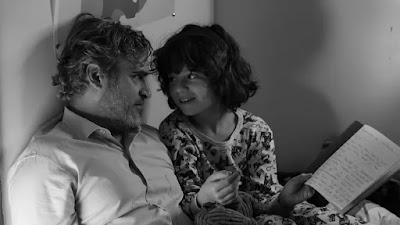
Writer-director Mike Mills tends to understand this. He’s made lovely films about growing into the person you’re always becoming—a short documentary Paperboys; a late-in-life coming-out in Beginners; and his best, 20th Century Women, a deeply-felt 70s’ ensemble piece about a teenage boy and the various influences in his life. His latest is C’mon C’mon and it has the gentle rhythms and tones of an episode of This American Life. It stars Joaquin Phoenix as a cuddly, bearded, well-intentioned New York intellectual out collecting interviews with children for his public radio program. He goes to Detroit, Los Angeles, and New Orleans with his producers finding participants. How do these kids see the world? How do they see their future? Each kid, in a real interview, gives answers that seem honest in their unfussy plainspokenness, though one wonders if they think it’s also what he and his audience wants to hear: parents just don’t understand, the dangers of our world weigh heavily on them, and so on. But Phoenix presents such an open and earnest listener that it’s clear he draws something natural out of them as their subtle interlocutor. They also talk about their dreams and aspirations, and the real difficulties and obstacles in their way. Phoenix warmly guides them toward comfort in these exchanges, promising nothing more than a sympathetic ear.

Into this project arrives his precocious grade-school-aged nephew (Woody Norman), left in his care as the boy’s mother (Gaby Hoffmann) has to see to the institutionalization of the boy’s troubled father (Scoot McNairy). Phoenix clearly loves his nephew and wants what’s best for him. He’s delighted by his creativity and impressed by his thoughtfulness. But he’s also worn down by the daily demands of child care and tending to the emotional needs of a boy still learning how to regulate himself. (He also has some ritualized flights of fancy that can grate on his caretaker.) The movie is patient with both characters, allowing them the space to challenge each other as well as grow in mutual understanding. That makes for a small, delicately crafted movie perched on the same soft-spoken NPR assumption that it’s worth hearing what others have to say. It has not a perspective so much as an attitude, stubbornly sentimental and loaded with references to books and art spoken and shared reverently by its cast of characters. In simply observed black-and-white frames, the film blends documentary and fiction for a small, close story of cross-generational understanding. And in this style it finds a real familial warmth and charge in the scenes between Phoenix and the boy, a tentative and tender forging of meaningful memories in fleeting everyday moments. It doesn’t push to make its child characters beyond-their-years clever, and resists turning anyone into a mere symbol. This can sometimes give the movie a meandering focus. But at its best, it has the observational insight to simply let its performances play out and develop in something close to life-like dimensions.

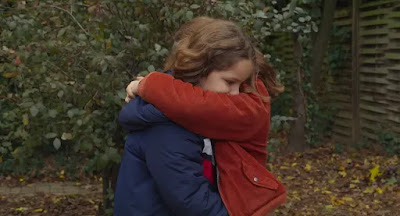
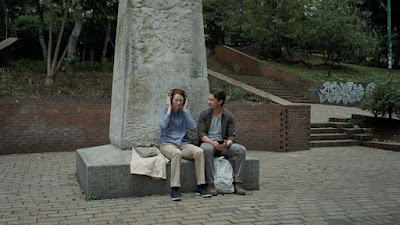
An ever more delicate and mysterious vision of childhood is CĂ©line Sciamma’s Petite Maman. It proceeds like a fragile spell, a magic trick, a fable. And even that doesn’t do justice to the ways in which its fantasy just happens, casually, without fuss, with barely a flicker of the unreal. Sciamma’s films—the observational likes of Water Lilies, Girlhood, and Tomboy forming a triptych of perspectives on formative years in lives of young women—are typically cast in a realist light. Here she uses the same techniques to make a film built entirely out of a high concept, but anyone watching a random clip might never guess it. A little girl goes with her parents to a small house in the woods, the home of her recently deceased grandmother. The adults have the task of cleaning out the place, which gives the kid plenty of time to occupy herself. She wanders off into the yard, through some trees, and arrives at what she thinks is the neighbors’ house, where there’s a little girl her age inviting her to play. There’s something sweet and real about how a child can just make a friend, form a bond, in a blink of a simpatico eye. What a viewer will notice right away is that the girls look suspiciously alike. (They are played by twins, so that explains that.) Their houses, through subtle cues of set design and prop placement, are similar, too. As the girls meet in the woods for playtimes multiple times, it’s clear: the daughter has made friends with her own mother as a child—her petite maman.

One could imagine this twinning time-travel conceit in lesser hands heading for antics or silliness—maybe The Parent Trap by way of Back to the Future. Sure, if done right, that could be fun. But Sciamma approaches this picture with supreme restraint and total straight-faced matter-of-fact seriousness and commitment. She’d understand that Tennessee Williams shortchanged a child’s capacity for contemplation. In the faces of the two girls at the center of this film, she locates all the gentle severity of such an occurrence. As they realize their relationship’s time-bending qualities, they ponder and reflect on what it might mean. The future mother looks into the face of a child she now knows she’ll have, and can learn when, exactly, her own mother will pass away. The younger (if one can call her that) can now see concretely the tangible childlike qualities that surely still sit buried within her mother. Together, though, they just are who they are. Sciamma lets them be, playing politely and sensitively together as little girls can do—tromping through the woods, making plans for little imaginative games and skits, plotting the best way to get a sleepover. There are moments nestled within these quotidian affairs, though, that catch one’s breath in a simple, hushed expression of fantasy cross-generational connection. Typical of its effect is a gift from the future—music played on a pair of headphones we don’t hear, but the girl in the past hearing this unknown song out of time smiles an inscrutable Mona Lisa smile at the sound, a private preview. Most striking, though, is a softly murmured admission from mother to child—I’ve always wanted you. Here’s a movie that appears to do very little—and accomplishes so much. It respects a child’s capacity to take things as they are, and to engage in a sense of wonder that’s perfectly natural—deep thinking taking place in growing minds.

Thursday, December 23, 2021

Version Control: THE MATRIX RESURRECTIONS

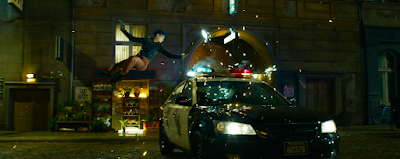
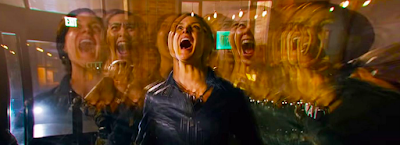
There’s something romantic amid The Matrix Resurrections’ bafflements—a grasping, yearning, swooning desire for connection—that might surprise those who remember the original trilogy mostly for its trench coats, machine guns, mind-bending reveals, and nu-metal soundtrack. But wasn’t this always a series about learning to reconcile the parts of oneself, and one’s world, and to hold close those whose love holds the key to The Truth? Like so many franchise pictures these days, Resurrections is a reboot about reboots, a movie about itself. But unlike other properties doomed to grow ever-more airless and walled off from real emotion, here’s one that explodes out the emotional world of its predecessors in big, bold, busy ways, growing more overtly expressionistic and sentimental. Writer-director Lana Wachowski lovingly, yet not uncritically, returns solo to the world she and her sister Lilly created over twenty years ago and finds that it’s changed in passionate, provocative, and confusing ways.

She, co-writing with screenwriter Aleksandar Hemon and novelist David Mitchell, decided that Neo (Keanu Reeves), the self-sacrificing hero of the super cool, genre-busting, paradigm-shifting originals has found himself, post-death, recreated and plugged back into The Matrix. He doesn’t remember the events of those movies, or rather remembers them incorrectly, or rather thinks of them in the wrong category entirely. Almost. That’s when it’s clear Wachowski is making no mere remake or legacy sequel only drifting off nostalgia, although it is. Even more it’s a recreation and refutation, a continuation and complication. Once again characters are separated from their true selves, and true loves, and true worlds. Machines strain against their coding and people struggle to reconcile the paradoxes of a buggy program called life. Thus the movie’s thrillingly dense and bafflingly never quite what you think it’ll be, steering hard into philosophical and psychological dilemmas that always formed the structure of this series’ sensational action spectacle. It makes for a heady trip.

You see, instead of Neo once again learning that what we think is reality is, in fact, a digital construct fed to us by a ruling class of advanced robots to keep humans captive in pods of goo that are their energy source, he’s a coder for a tech company who thinks that story is the plot of their most famous games. A trilogy of them. What better way to make a people forget that they’re in that simulation than make them think The Truth is mere fiction? When Neo’s boss  (Jonathan Groff) calls him in to say the moneymen want to exploit the I.P. again he’s told “Warner Brothers is making Matrix 4 with or without” them. Here’s a sequel spinning games within games, in which a focus group is called in to stand in for Matrix fans discussing theories about what it was all about, man. It’s about trans self-actualization; or it’s about simulation theory; maybe it’s all about the bullet time. All of the above, Wachowski says. And wait’ll you see where it goes from there. Neo’s therapist (Neil Patrick Harris) is concerned that his patient’s reality is blurring—we see flashes of the earlier movies, echoes of sequences past that rattle around in moments of tingling deja vu. There’s something real and unreal at the same time, ripples from conflicts and debates in the so-called real world shaking the foundations of the green lines of code.

Neo is more lost than ever, imbued with the knowledge he needs yet all the more resistant to the truth for having buried it in plain sight. Trinity (Carrie-Anne Moss), his soul mate in kung-fu, and love, is also resurrected in the Matrix. But she’s been pushed even deeper into the computer’s fiction. As they find themselves drawn by destiny, by programming, by happenstance, by fate to reconnect with each other and themselves, a host of returning characters and new faces (coolest has to be the blue-haired Jessica Henwick as rogue freedom-fighter Bugs—“like Bunny,” she quips) and some returning characters in new faces (Yahya Abdul-Mateen II, making a habit of that sort of thing) line up along scrambled battle-lines leftover from the old revolution. The proceedings get ever more complicated. But even in the long stretches where I wasn’t quite sure what was happening or what outcome to root for, there’s that central yearning. That’s what makes it romantic—that strong surge of emotion, that plaintive push toward greater understanding of oneself and one’s loved ones. Reeves and Moss haven’t missed a step from their earlier performances, slipping easily into the human avatars of the fake world and the broken real humanity beneath—synthesized in the eventual uneasy steps back toward digital superheroes. It’s still a world of point-and-click prophecy and computerized spirituality, of shifting perspectives and cyclical conflicts. And Wachowski clearly loves her characters—and wants to see them reawaken to their full potential as much as we do.

The result is just as much a knotty puzzle of a head-fake, mind-bender as the originals—but woolier and more static, with a meandering central drive that’s sometimes as lost as its characters. In its long scenes of exposition spoken intently by the large cast, it pays off the intense, long-lived conversations from those who undertook the amateur field of Matrix studies seriously those decades ago. (Remember the philosophers’ commentaries from the DVDs? I hope that roundtable is reconvened for this one.) The movie can be playfully meta-textual, and even knowingly self-parodic, as it relentlessly plays with expectations. I didn’t always find it as immediately gripping or legible as the originals. It’s less self-consciously cool and stingier in action, but it’s still rich in ideas and has swelling heartfelt expressions of human (and inter-human) connection, and shot with a warm energy in sumptuous light and slick effects. And some stuff blows up. When in motion, the movie’s a shock of recognition but, successfully and unsuccessfully, chopped up, remixed, edited to ribbons, and smoothed out in new and bewildering ways. It may not always be legible, and lacks the immediacy and palpable visual pleasures of its progenitors, but its heart is in the right place.

This is the distinctive work of a filmmaker who has stylishly, entertainingly drawn out these ideas—of humans caught in a system built to grind them down, and who assert their passions and humanity against all odds—with her usual co-writer/director sister through Speed Racer’s masterpiece of hyperactive anime homage, Cloud Atlas’s six-fold cross-cut reincarnated melodramas, and Sense8’s dazzlingly sensual sci-fi poly-psychic mind-blender series. So it should be no surprise to find her returning to The Matrix with a totally earnest extension of the originals’ cyberpunk Plato’s cave. It meets our moment of accelerated techno-dystopian alienation and confusion with its own, and lets some love shine through the cracks. How romantic.

Sunday, December 19, 2021

Tangled: SPIDER-MAN: NO WAY HOME

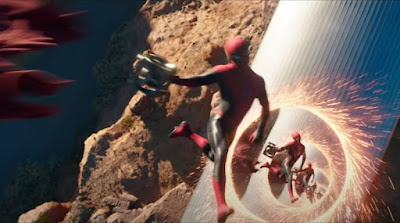
Here’s a Spider-Man movie about how much fun earlier Spider-Man movies were. Sure, it’s also about second chances (for Spider-Men) and learning from your (Spider-Man) mistakes and finding the people who truly love you for who you really are (Spider-Man). But I guess that makes it all the more a movie that begins and ends with nothing but Spider-Man and references to Spider-Man and cheap hits of nostalgia for Spider-Men we’ve loved and lost before. By the finale of Spider-Man: No Way Home, which brings together a cavalcade of cameos for web-swinging acrobatic action and pretends it built (or re-built) characters along the way, it made me, as someone who, I’ll admit, would call Spider-Man my favorite superhero, want the impossible: less Spider-Man.

This oddly flat and clunky project, the latest in the ongoing Marvel Cinematic Universe, opens up a live-action Spider-Verse to tromp around in. Peter Parker (Tom Holland) asks Dr. Strange (Benedict Cumberbatch) to help the world forget he’s the friendly neighborhood superhero. The spells goes wrong and results in characters from previous Spidey pictures stumbling in disoriented and wondering what to do with themselves. There’s Doc Ock (Alfred Molina) and Green Goblin (Willem Dafoe) and Sandman (Thomas Haden Church) from the Tobey Maguire movies and Electro (Jamie Foxx) and Lizard (Rhys Ifans) from the Andrew Garfield ones. The movie’s best idea is also what saps it of energy: these guys are way too confused to be much of a real threat. Instead, Strange and Spidey argue over how best to solve the problem. The wizard doctor wants to zip-zap them back from whence they came where they’ll meet their doom, while good ol’ Peter thinks he can save them. They’re scientists, after all, victims of one misfiring experiment or another. (This movie thinks their villainous natures can be subsumed under the audience’s affection for the characters and performers.) Practically, however, it’s a movie going around in circles, hoping to keep an audience’s interest by trotting out these cameos and lingering long enough for applause breaks before giving each returning face pretty much nothing to do.

And, for how befuddled they should be, and are at first, about getting ripped out of their universe and into another, these villains quickly get pretty casual and blasĂ© about the situation. In typical MCU fashion, there are long scenes of actors standing around trading quips, smirking and giggling at the outsized sci-fi suspense whipping up around them. There’s nothing so heavy—not even the death of a major character—that can pause the deflating jokes for too long. And these have to be the cheapest and emptiest cracks, as Peter’s pals picked to help present possible solutions to this whole mess—MJ (Zendaya) and Ned (Jacob Batalon)—find themselves scoffing in disbelief at names and powers from these inter-dimensional interlopers. It want to both play off how much people love the earlier Spider-Man iterations and set itself up as the best one. (That they start calling Holland “Spidey 1” gets a little funny in that regard when he’s literally sharing the screen with people whose movies worked way better than this one.) No Way Home wobbles between these two modes: reverent celebration of what came before, and goofy puncturing of any possible seriousness. The entire multiverse is threatening to collapse on itself, and it feels about as monumental as channel surfing. That leaves vast swaths of the movie to clunk along in scenes that aren’t shaped so much as plugged into place, and moments of real high drama played off so abruptly and drearily—there are deaths and magical amnesia that’d hit harder with better track laid for it—that one forgets these are supposed to be real characters to care about and not just action figures clattering around.

Worst has to be the movie’s total lack of interesting style. Much has been made of the MCU’s bland house style, closer to network procedurals than cinema spectacle during downtimes between animated action. The style can be pushed here and there—one could parse the fine gradations between a Johnson, Gunn, or Waititi and a Russo bro—but often settles into a bland TV-style over-the-shoulder conversational tone mixed with quick-cut action in sets that trend to muddy grey. (That this year has found the theatrical and TV sides of the universe ever more immeshed makes this homogenized smallness ever more apparent.) This one’s pretty ugly most of the time: photographed with rarely more than three or four actors in frame together, and dialogue often in alternating tight medium or close up shots. Maybe it’s the fact the whole thing was shot last fall taking COVID precautions, but the look ends up cramped—few extras, smallish sets, and tons of flat blocking that has performers so separated from each other that they might’ve been green-screened in separately. When it comes to Big Names swanning in trying to steal scenes in this airless environment, it feels all the worse.

This ill-fitting sense of where to put people in the frame and how to track their behavior extends to the larger sense that nothing much matters herein. When any character can be whatever the plot needs and come flying in on magic sparkle dust from any other movie of which they want to remind you, it doesn’t much matter what happens to them. There’s something hollow at the core, and no amount of emoting can fill it. There’s a silly scene where characters from three different universes seriously compare iterations of advice from dead mentor figures, all tearing up and nodding sagely and talking about how meaningful the franchise’s triplicate pop psychology is. It goes for heavy meaning, but instead piles up comic cliche until it triple-underlines the silliness because the story’s only connection to anything real or human in its movements are to what it means for Spider-Man. And the collision between different visions of the character ends up highlighting how directors Sam Raimi and Marc Webb, for whatever missteps one might concede, were making real movies with their earlier versions, and Jon Watts, on his third go around, is stuck making a product. When characters from the earlier pictures arrive it’s from a different world entirely—one where these superhero movies weren’t only about themselves and pitched for a blandest possible homogeneous outcome. They interact awkwardly with the MCU world because they carry with them messy tendrils of style and substance that can’t entirely get polished away by the shallowness they’re asked to play.

Monday, December 13, 2021

Do You Hear What I Hear? MEMORIA

How do you describe a sound you’d never heard before? In Thai director Apitchatpong Weerasethakul’s Memoria, his latest entrancing and low-key magical realist film, a woman (Tilda Swinton) is awoken from uneasy sleep to the sound of a distant…something. Is it a boom? A rumble? A crash? A thunk? A pop? She wrestles with the description. Was it even real? Was she dreaming? Maybe it’s a hallucination? The film begins with this moment of destabilization, the sudden alarming blast of a noise—somehow loud and soft at once—forcefully awakening her to the soundscape around her. What must it feel like to be so aware of one of your senses, and yet simultaneously having suspicions of it creeping in? The film is tantalizingly stuck in that headspace with her. She, and the movie, are delicately adrift in and deeply aware of their world. She’s lost in a strange state, and a place unknown to her as a visitor to Columbia, and so primed to be receptive to all manner of new experiences and sensations anyway. Long sequences of aural contemplation and sonic destabilization follow, with the woman’s exhausted inquisitiveness a slow-motion implosion of energy and concentration. Throughout the course of Swinton’s career, she’s been a game avatar for all manner of art house director’s themes and tones. Here she matches up with Weerasethakul for his first non-Thai film. She fits perfectly into his attention and focus, somewhere between dreamy and precise, as she adjusts her posture and countenance to communicate a bone-deep weariness sinking into her determination to muddle through her days with this sound worming around her consciousness.

Weerasethakul’s made a career out of blurring the lines between reality and fantasy, concrete and abstract. Within the trappings of a distinctive art house style—a slow painterly photographer quality to his images, and a persistence of vision and tone sensitively balanced—he slips past the bounds of the expected and into the magic of the uncanny, the surreal, and sublime. His most famous Cannes-winning Uncle Boonmee Who Can Recall His Past Lives is somewhere between a living wake and a grieving paranormal hallucination, or are its unreal encounters instead a poetic realism? A sleeping sickness drenches the haunting Cemetery of Splendor’s reveries. Tropical Malady’s shaman and Syndrome and a Century’s repetitions across space and time are further examples of the slipperiness of his worlds, with a porous boundary between the believable and unbelievable, the known and the unknown. There’s magic here. You’d never call one of those films predictable; they ask and reward patient attentiveness.

He’s a filmmaker whose every decision seems to come down to simple and powerful questions: Did you know a movie could show you this? Did you know a movie could make you hear this? Did you know a movie could make you feel like this? One emerges from his films like some of his characters: more attuned to the mysteries and potential in the world around us, on screen and off. In Memoria that’s especially true of the sound design surrounding the audience with an inviting, hypnotic lulling effect. It generates a heightened sense of sound, noises usually buried in the mix surfaced and made specific and legible. Breathing. Shuffling paper. Crinkling plastic. Objects placed on tables with soft thwacks. Buttons clicked. Wind in trees. Rain drops. There’s a tingling ASMR sensation underlying the film’s scenes, enhancing the effective envelopment of its design. Every sequence is a new aspect of character—Swinton meets people, has long conversations, learns new things. But each is also, in its way, a new meditation—on music, sleep, relationships, art, nature, anthropology, memory, and more—wrapped in the most tantalizing, engrossing relaxed tone.

An early highlight is a scene with a sound engineer who has agreed to help Swinton try reconstructing and identifying what she heard. We sit with this process as audio is played, looped, manipulated, repeated, tweaked, adjusted. He takes notes. They breathe slowly. We watch deep engaged listening and are drawn into the state ourselves. Later the boom will interrupt other scenes, a doctor will try to diagnose it, and, eventually, a magisterial moment of surrealism will sweep away your expectations of an easy answer. But for this early scene, Weerasethakul trains you to lean in, slow your breathing, focus closely, and let the sound surround you, consume you, as it brings you into its spell. By the time the film arrives at its astonishing final moments—an unassuming am-I-seeing-what-I-think-I’m-seeing? low-key dazzlement—I was marveling anew at his ability to make one think the world is full of deep magic ready to casually intone its signals in our lives, if only we open ourselves up to the possibility.

Friday, December 10, 2021

Got a Feeling There's a Miracle Due: WEST SIDE STORY

Now this is a movie. I’d almost forgotten they could still be like this: thoughtful and heartfelt, big and bold, theatrical and emotional, expertly, sturdily made at every level of craft and soul. In re-adapting the Broadway classic West Side Story, Steven Spielberg has made a widescreen spectacle full to bursting with intelligence, energy, and ideas. Watching it, I couldn’t help but think that Spielberg is one of the very few left working on this level in Hollywood. He knows what to do with the camera at every moment—to express, to surprise, to reveal, to move. Take the opening shot, for instance. Unlike the bird’s-eye view of a skyline that greets audiences in 1961’s Robert Wise take on the material—a classic in its own right, if more proficient than exceptional—Spielberg’s starts on debris. A building has been torn down. It’s 1957, the same year the musical debuted. What was once a tenement building has been leveled for a new complex. Lincoln Center for the Performing Arts, a sign announces. Immediately we’ve been given a richer context for this Romeo and Juliet amid the gang clashes on city streets between new immigrant Puerto Ricans and the slightly older immigrant ethnic Whites. The cauldron of racial intolerance has been set to boiling by the encroaching economic and real estate displacement. And how poignant, too, that what will take over this neighborhood will be the same places that would perform projects of the kind we’re watching now.

I found this adaptation almost indescribably moving, even on simply the craft level. How sadly rare to be at a major studio release and find it overflowing with ideas and emotions communicated visually in every moment, to hear a soaring musical score robustly arranged and conducted to swell and underline and develop. Spielberg’s a master craftsman, no doubt. He has his usual crew—cinematographer Janusz Kaminski, editor Michael Kahn, and so on—up to their usual best. So of course it’s an untrammeled success on the technical level. Ah, but then there’s the justice they do to the material. What could be stale or overfamiliar is instead enlivened anew. As it unfolds I suddenly saw it for the first time in all the fullness of style and sentiment that audiences must’ve felt when it first appeared on stage. More than the original adaptation’s robust technical skill, Spielberg draws out the deep wells of emotion, the crisp cleverness of the late, great lyricist Steven Sondheim’s precociously poetic rat-a-tat puns and rhymes standing at pleasing angles from the sumptuous Leonard Bernstein jazz-and-Latin rhythmic symphonic score. Spielberg, with screenwriter Tony Kushner (the Angels in America writer who wrote Munich and Lincoln for him), also does justice to the Shakespearean dimensions, and knows the musical’s book by Arthur Laurents is best played like other pieces of mid-century modern melodramas a la Arthur Miller or Tennessee Williams. The result is a movie that’s in constant fluid motion and boisterous feeling, an effortlessly complex crowd-pleaser that never feels the need to stoop or slow for simplicity’s sake.

It helps, I’m sure, that the story is so strong and clear, and Kushner’s writing is perceptively and sharply adapted. He doesn’t push overmuch on the original, and instead surfaces and shines light anew on ideas and tensions already present in this classic work, as well as restoring some of the grit to the language. With vivid period details in all their glorious colors and textures, the movie has the social conditions of the times through the benefit of hindsight, with a great sense of historical context and cultural space. There’s that opening with the gentrification in progress. It introduces the gangs—the Sharks and the Jets—tussling over signs and paintings and flags—signifiers of shifting demographics amid the construction sites on blocks where fresh Spanish-language signage is side-by-side with rusting, fading Irish clovers. It’s a place where people are feeling muscled out by some Other or another. They’re all dwarfed by and forged in class resentments, but have turned to racial recriminations to feel a sense of futile control. The white gang is a simmering rage machine, puffed up with false superiority and dripping in presumptuous racist and misogynistic impulses. The Puerto Ricans have pride of their place and people, and feel justified outrage at the pushback they’re getting from some of their neighbors. The movie gives them greater voice—lots of colloquial Spanish and Spanglish in the dialogue is left unsubtitled and perfectly legible through powerful performances—and understands without excusing the gang’s sometimes-violent territorialism. The two gangs are on a clear collision course. That opening shot pushes past a wrecking ball on its way to revealing its characters in the midst of the muck. We know something’s coming.

Into this is introduced romance that structures the swooning early sequences and the weeping tragedy of the finale. After all, Tony, a white boy leaving the gang and hoping to make good (Ansel Elgort), is the Romeo to the Juliet who is Maria (Rachel Zegler), a Puerto Rican teenager looking for more in her life. They meet at a community dance, and their desire to dance becomes a flashpoint between the hot-headed Jets (led by Mike Faist) and the Sharks, whose leader (David Alvarez) is Maria’s boxer brother. The performers are universally wonderful, with Alvarez matched well with Ariana DeBose as his strong-willed long-time girlfriend playing fine counterpoint to the main couple. They get the centerpiece number “America,” with its bristling satiric syncopation, a classic back and forth that Spielberg films first through courtyard clotheslines that become clever shifting curtains, then spills out into the street with vibrant colors and sensations.

Tony and Maria’s love is softer, simpler, filmed in longing duets and yearning ballads—from “Maria” and “Tonight” to “One Hand, One Heart”—each given a full flowering of adolescent intensity. Zegler, in her first professional role, has a wide-eyed freshness, a dreamy gentility and innocence behind which sits a backbone of steel. Elgort, for his part, takes the baby-faced pathos that made him sympathetic in The Fault in Our Stars and Baby Driver and gives it the slightest Brando-adjacent edge of softened danger. Their love-at-first-sight is believable, and their desire drives and heightens everything that follows. Their balcony scene uses the bars of a fire escape to keep them separated—so close and yet so far—while other moments find streetlights turn a puddle into a gleaming spotlight of stars from overhead, or a stained-glass window lending a wooing an impromptu sense of something holy and right in the face of so much potential strife. Their friends and families are fighting because of them, and as the stakes grow deadlier, the drama around their potential future tips near bittersweet, and then on toward doomed.

Spielberg knows how to balance and build in interest and mood, with songs and sequences light and dark, characters raw and real in heightened drama bursting forth in snappy and soaring song. The film has a complexity in style and tone that’s so easy and entertainment so pure that it looks effortless. His filmmaking in every single moment—every note, every frame, every shot—communicates and imposes without showing off. He’s in total control, a virtuoso maestro of his collaborators behind and in front of the camera. His style is always like this at his best (and he so often is at his best), a strong hand with a light touch, what Pauline Kael compared to “a boy soprano singing with joy.” At 75, his movies have all the visual wit, sumptuous long takes, briskly blocked movement within the frame, clever cutting, and exuberant energy of a young cinephile enthused by the very prospect of making a movie and playing an audience. And yet he has the grandfatherly storyteller’s beneficence to engage deeply in the feelings and perspectives with subtly and nuance. It can make for one beautiful cohesive piece, so expertly accomplished and modulated. Played loud, there’s music playing. Played softly, it’s almost like praying.

It sings the most tenderly in quiet intimate moments and gruff arguments alike, and it comes alive in the kind of big, bustling group numbers that put any musical since MGM’s Freed Unit to shame. They impress with their energy, velocity, and shape, building in momentum with muscular screen choreography designed in homage to Jerome Robbins’ athletic approach. Showstoppers all, they’re refreshingly photographed to appreciate every step and gesture, to emphasize the skill and expressiveness, to highlight the unencumbered precision and joy. (He’s such a great director of action, from Indiana Jones to Jurassic Park, it’s no surprise.) Spielberg has this studio classicism in his bones—building these sequences with a pulse and an eye, every image somehow both snappy and propulsive and long, loving looks at physicality and movement. They’re so exceptionally involving and delightfully transporting, I almost felt swept up into the dancing myself despite sitting still. As the dancers join together in musical pleasure or collide in eventual despair even the drama—right down to its striking, tearful, symbolic conclusion—gathers the same sense of perfectly timed motion and expression.

Spielberg builds up the dynamics and conflicts and desires as if it was the first time anyone had played it—and somehow makes old new again. By highlighting these characters with even greater specificity in their time and place, and setting them against a backdrop of social upheaval, immigration, and construction equipment, he’s made a movie about America as a work in progress, with a definition up for grabs. A key figure is a reimagined shopkeeper role made into an even stronger conscience of the piece through the presence of Rita Moreno, star of the first film. Here she’s a wise elderly woman, a Puerto Rican who married a white man and  together ran a corner store for decades. She loves her entire neighborhood, and feels deep pain at their divisions. She wishes she could help bridge that divide. And Spielberg’s bridging a divide, too, having made an old school Hollywood musical epic, elegantly shot on film, brimming with talent and passion in emotion and skill in every second. I found myself brought to the edge of ecstatic tears by the sheer aesthetic pleasure—overwhelmed by the attention and care to the original musical brilliance, and to the undeniable vision of one of our last great moviemakers proving, even for just a few hours, that there’s still a place for this.