Monday, January 30, 2023

Hollywood is Burning: BABYLON

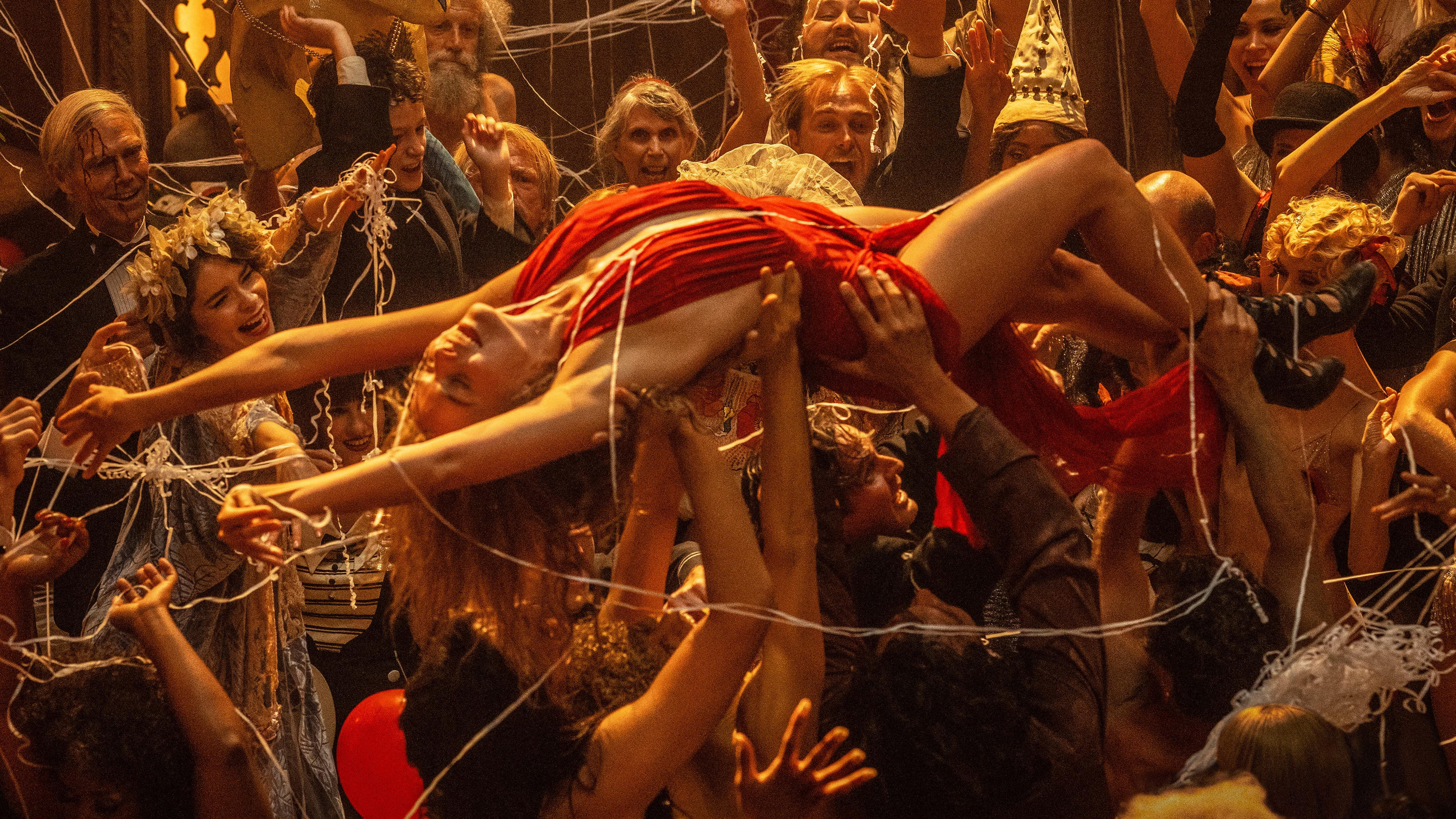
Damien Chazelle’s approach to Hollywood history in Babylon is right there in the title. He’s clearly winking toward Kenneth Anger’s gossipy book Hollywood Babylon, known for salacious rumor-mongering that cemented all manner of misinformation and falsehoods in certain corners of cinephilic imagination. Chazelle, like Anger, is interested more in the shock value, in the hurtling sensations of exposition and exhibition, than in getting the detail right. In this new three-hour epic of depraved farce and nihilistic sentimentality, Chazelle is piling on the excrement of scandal and sensationalism. It opens in the late 1920s, with an elephant pushed up a hill by a lowly assistant at the request of his hitherto unseen studio boss. We get an extreme close up of the frightened animal loosening its bowels. The sound design goes all in on the wet plops as enormous turds rain down onto the poor man below. Hollywood, the movie says in this opening sequence, is a lot of wading through muck to get to the top. It’s also, as we see in the next scene, with cavorting partiers engaging in kinky sex and snorting drugs and wailing to cool jazz trumpets, about having such a wild time it’s a wonder the movies ever get made at all. By the time the elephant literally crashes the party, distracting the revelers from the dead woman carried out the back door, it’s clear this is a movie about how sordid Hollywood can be. But Chazelle’s style, in its amped-up whip-pans and pretty people and pounding score and opulent period design and constantly forward-chugging montage, is so intoxicated with the slick surface pleasures of the movies that it practically says any human destruction or scatological peril in the cause of such spectacle is worth it.

This confusion results from a simplistic story—Singin’ in the Rain without the jokes—spread out over a long, rambling episodic structure—Boogie Nights’ plotting without the well-worn melancholy. The actors almost pull it off anyway. Amid a sprawling ensemble, Brad Pitt plays a Don Lockwood type floating along as a silent idol, drunkenly stumbling around behind the scenes until his cue when lights and camera assemble a perfect take where his eyes smolder and visage cuts through the chaos. Margot Robbie is a fresh-off-the-bus nobody who wiggles and winks her way to sexpot status as a silent comedienne. They’re connected by love and business to a striving Mexican immigrant (Diego Calva) who wants to work his way up to studio executive someday. The stars are burdened with tabloid melodrama lives, and that ends up taking their careers on the ups and downs you’d expect. Ultimately, the only smart characters opt out entirely. (Although, as also the only characters of color, they don’t always take that option by choice.) The others meet nasty ends of one sort or another.

Chazelle views the struggle of old Hollywood from the 20s through the 50s with a grand sweep and cynical eye. He clearly loves the movies—he’s an obvious case of millennial Turner Classic Movies and Karina Longworth love—and his film drinks in a period look, though it sloshes anachronistically from time to time. He also thinks he’s being clever re-staging some Singin’ gags—an extended bit with a talkie’s mic problems, for instance—but in a more protracted, profane way that’s lesser than the original. It’s all a mad jumble—loud and flashy and propulsive, but also thin and trite and tiring. That’s the strange paradox of the project. It’s at once a watchable display of pyrotechnic filmmaking, and a wearisome confusion. Chazelle’s as strong a talent as we’ve had debut in the last decade, as demonstrated in the false glamor of La La Land, the elegiacally technical First Man, and the hard-charging percussive Whiplash (still his best). Here he stages inventive and breathless sequences of excess—parties out of control, sojourns into boozy despair and snakebitten foolhardiness, and behind-the-scenes farce whipped up like Noises Off strung out and tweaked up. He has Movie Stars swanning about with broad vaudeville-by-way-of-Cassavetes performances in striking garb in enormous sets and flashy lights, all set to a booming, driving, jazzy score from his usual composer Justin Hurwitz (easily his best work). It’s all very capital-M Movie in a glitzy show-off display of technique. But his imagination behind the camera outpaces the writing, which dwindles off into the blank-headed pastiche of better pictures before circling the drain.

This confused push-pull is never more evident than the film’s ending. The final stretch—in which a gangster pitching a movie (a goofily committed cameo from a recognizable actor) takes an exec to a near-literal hell, conflating a trite addiction drama’s beats with the showbiz milieu as if moviemaking itself is a drug—finds its rock bottom in a literal geek show in improbably dank quarters. Then it pivots to a future reverie in which a character, years after surviving with his sanity by leaving the business entirely, goes to see the classic movie that the movie’s been aping all along, and, as he weeps at the wonder of it all, Chazelle’s film drifts into an ecstatic montage of “Hooray for Hollywood” proportions like Chuck Workman broke into the editing bay with one of his Oscar tributes. As the score works itself into a clanging frenzy, we see quick flashes of everything from Un Chien Andalou to Avatar. All the pain and abuse and bodily fluids behind the scenes, all the bodies ground up to feed the machine, all the contortions asked for the genius of the system, lead to this. (Somehow, heartbreak feels good in a place like this?) The movie’s exaggerations and excesses add up to nothing but an argument that we might hate the process, but the final products can be transcendent magic. I suppose it’s fitting that this movie feels the same. I disliked a lot of it, and wouldn’t mind seeing it again.

Monday, January 2, 2023

25 Favorite New-to-Me Movies of 2022


25. Quigley Down Under (1990, Simon Wincer)
24. Less Than Zero (1987, Marek Kanievska)
23. So I Married an Ax Murderer (1993, Thomas Schlamme)
22. Witchhammer (1970, Otakar Vávra)
21. The Epic of Everest (1924, JBL Noel)
20. Hooper (1978, Hal Needham)
19. Cleopatra (1963, Joseph L. Mankiewicz)
18. Mrs. Soffel (1984, Gillian Armstrong)
17. When Women Kill (1983, Lee Grant)
16. The Whole Shootin' Match (1978, Eagle Pennell)
15. The Willmar 8 (1981, Lee Grant)
14. Gerry (2002, Gus Van Sant)
13. Sweet Charity (1969, Bob Fosse)
12. Out of the Blue (1980, Dennis Hopper)
11. The Parallax View (1974, Alan J. Pakula)
10. Witness (1985, Peter Weir)
09. Insiang (1976, Lino Brocka)
08. Crossing Delancey (1988, Joan Micklin Silver)
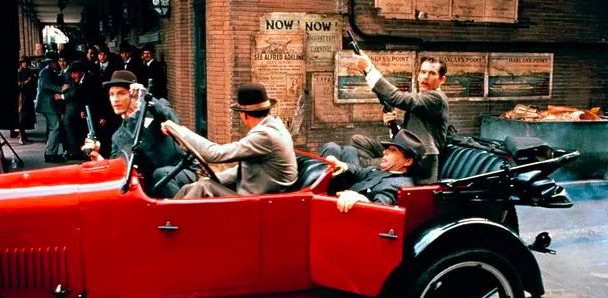
07. The Newton Boys (1998, Richard Linklater)
06. Deep Cover (1992, Bill Duke)
05. The Invisible Man (1933, James Whale)
04. A Streetcar Named Desire (1951, Elia Kazan)
03. The Bride of Frankenstein (1935, James Whale)
02. Nights of Cabiria (1957, Federico Fellini)
01. Paths of Glory (1957, Stanley Kubrick)

Friday, December 16, 2022

Ocean Eyes: AVATAR: THE WAY OF WATER

The great Umberto Eco once reminded us: “Two clichés are laughable. A hundred clichés are affecting.” He was writing about Casablanca, but he might as well have been discussing the films of James Cameron. He’s a filmmaker whose love of towering piles of cliche is the very thing that resolves his contradictions. He’s a precise, technical director drawn to writing sloshing human melodrama. He’s a hard-edged action director with a soft-hearted love of family and romance. He makes gripping, and often intense, genre pictures that turn on protective parents and the warmth of motherhood and True Love. He’s a conceptual, even experimental, hand at pushing the nuts-and-bolts craft behind the camera. (Here, to his use of 3D, he’s added a variable frame rate that’s sometimes distracting, and sometimes enveloping.) And yet he loves pushing this tech in the context of broad, crowd-pleasing, to-the-rafters satisfaction. To do all this at once, and to keep getting away with it at such a high level of success, he simply must make these appealing epics—the Terminators, Titanic, and, yes Avatars that capture an audience’s imagination with the sheer commitment of their tellings, and the total control of one man’s complicated vision. Those cliches that pile up are our way in, and hold us in their thrall, deeper into the earnest plights of the characters on display. To borrow another phrase from Eco, “When all the archetypes shamelessly burst in, we plumb Homeric depths.”

So here we are with Avatar: The Way of Water, a long-awaited sequel to the 2009 original. It picks up over a decade after that one left off, in the far future, with ex-Marine Jake Sully (Sam Worthington) transmogrified into the body of a Na'vi, the blue giants indigenous to the world of Pandora. In that body, he turned against humankind and fought to repel corporate colonists looking to exploit the lush jungles for the minerals beneath the Na’vi’s sacred trees. Quite a feat for Cameron, making a whole new world full of culture and creatures and geography and spirituality, and then staging a rock-‘em-sock-‘em battle that had audiences hooting and hollering for the death of capitalist overlords. But that was then. Now Sully’s a family man, with half-human, half-alien teenagers, two sons and two daughters, he’s raising with his Na’vi warrior wife (Zoe Saldana). There’s also an abandoned human boy (he grows up to be played by newcomer Jack Champion) who dons an oxygen mask and leaps around in a loincloth as an adopted member of the tribe. They all clearly love each other, and enjoy their humble lives mastering their terrain and honoring their cultural traditions. You can tell right away that this is a sequel more intimate and tender, with a smaller interest in a family unit worth preserving even as the larger machinations of their world (and Cameron’s storytelling) are inevitably going to pull them back into the action.

So when the humans arrive for a second attempt at taking the land and its resources, Sully has even more reason to fight. And yet, after all the fighting that settled this issue in the first film, the heroes are reluctant to do it all again. Here’s a sequel about how the heroes would rather not do a sequel, what with life having moved on to more precious concerns. Alas, conflict imposes, and the villains are literal clones of the last ones. And so, what begins as an attempted insurgency becomes an attempt to hide—this time among the water Na’vi who commune with whale-like creatures—even as powerful forces amass to lure them out for the killing. Three acts: Run. Hide. Fight. Simple enough. Cameron knows how to pump up a conflict, stage memorable character moments, and pace a simple story so cleanly and clearly that we are once more drawn into the emotional investment of the world before we even realized that was happening. Of course we want the vulnerable to stay safe, the heroic to prove their worth, and the dastardly to receive comeuppance. There are those archetypes shamelessly bursting in. But Cameron also knows winding them up and letting them go in a fantastical location is enough to get the blood pumping with the earnest emotions and pleasures of the best pulp sci-fi. If you’re going to paint with a broad brush, you need a broad canvas, too.

There’s clear love for this fictional planet in a film that luxuriates in the world Cameron has imagined. First it gets exposition out of the way in the first hour or so. That’s all plot mechanics catching us up on the state of Pandora and its conflict. The middle hour simply wanders the ocean, meeting new tribespeople (Cliff Curtis and Kate Winslet) and creatures while learning their ways. I especially liked the whales that understand sign-language and whose murmurs are subtitled. That’s where Cameron once more surfaces his ecological concerns and real empathy for the environmental erosion that accompanies corporate oppression on the march. As he sees the displaced Sully family try to integrate in this potentially safe space, we see the inextricable ties between these people and their home. And it’s communicated through fluid sequences that dance across and underneath the water that generously allow the audience to study the topography and the tides, the flora and the fauna. Watching these Na’vi swim around their tropical paradise, I found myself remembering the Avatar super-fans who reportedly experienced real depression and withdrawal upon exiting the theater after repeat viewings of the original. They were distraught knowing this wonderful planet wasn’t a place they could actually visit. Here’s a movie that’ll repay that interest, dwelling in that long central passage of pure vibes, setting, and design.

I was also so bought-in to the artifice of it all—the motion-capture performances of the bewitching blue characters, the all-encompassing depth and detail to the landscape and the way the sunlight breaks across a clear blue sea—that I would occasionally step out of myself and remember, with real awe, that I was basically watching animation for vast stretches. It’s an impressive technical achievement. But none of that vivid imagination—a cleanly designed comic-book fantasyland excursion—would matter if the story itself, and the characters within it, didn’t come to life, too. That’s the final Cameron contradiction to consider: the elaborate falseness, the enormous machine-tooled fakery, bringing forth ideas of sensitive smallness. Here’s a big-budget business casting its eye on the joys of close community with others and with nature, the restorative pleasures of family, the spiritual sustenance of the wilderness, and the nobility of standing against the calculating profit motive and doing the right thing. So once more he’s made a concussive epic concluding with explosions and gunfire—and this time includes a self-quoting climactic sinking ship to amp up the watery danger—but he’s populated it with such patient archetypical love for nature and these fantasy people that those depths are worth plumbing. Homer, it’s not. But Cameron’s good enough to fill the screen with spectacle straight from the heart of this ocean.

Sunday, December 11, 2022

Why Can't We Be Friends: THE BANSHEES OF INISHERIN

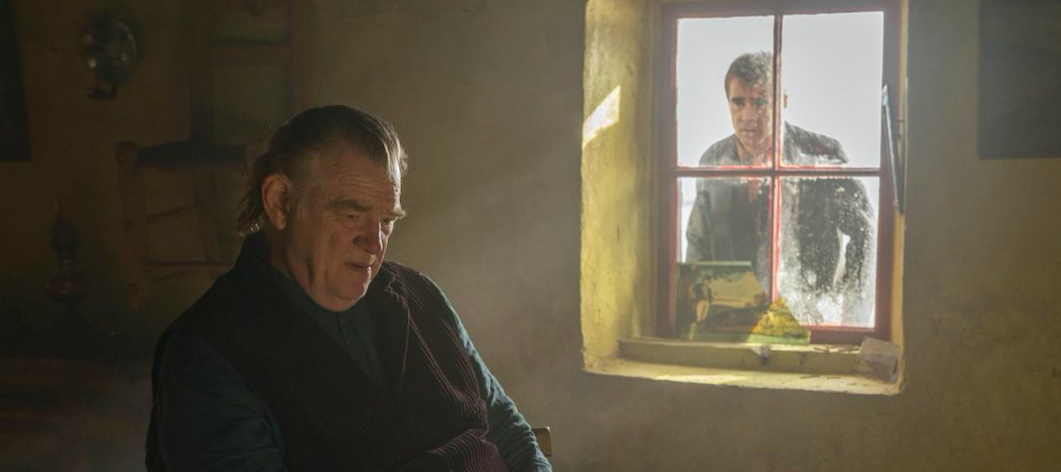
It can be difficult to make friends in adulthood, and even more difficult losing one. Sometimes that prospect can result in a friendship coasting on routine, someone you hang around just because, well, you have for too long to stop it now. And what would happen if you did? That’s the emotional crux of Martin McDonagh’s The Banshees of Inisherin. It’s set in 1923 on a small island off the coast of Ireland. Not a lot of options for socializing there, so the locals take what they can get. Sometimes they can hear cannon fire on the mainland—the Irish Civil War. That distant rumbling is a fine underlining of the story’s main civil strife: one man (Brendan Gleeson) suddenly deciding he doesn’t want to be friends with another (Colin Farrell). He doesn’t really have a reason. He just doesn’t want to talk with him anymore. For years, they’ve met every afternoon at the pub for a drink and a chat. But now, it’s abruptly over, and the man doesn’t even feel he owes a reason. From this simple—almost adolescent playground—declaration, this falling out is gossiped about and talked over by the whole tiny town. Word travels fast. But the facts of the case rest most heavily on Farrell’s befuddled loss. He’s desperate for his friend back, or at least an explanation.

McDonagh, the playwright-turned-filmmaker whose In Bruges was also a good blackly comic showcase for these two actors, gives this sure-footed narrative the purity of a folksy tale. It’s gnarled with colloquialisms and a straight-faced dark humor. And it’s carried along by a slow-rolling matter-of-fact shock—a then-he-did-what?—as the men’s interactions escalate. At one point Gleeson calmly says that if Farrell talks to him again, he’ll go home and cut off one of his own fingers, just to prove how serious he is. Unmoored from their only meaningful friendship, they both drift off into middle-aged melancholy. And McDonagh balances the story’s sympathies as it becomes a portrait of this kind of loneliness of adulthood, where connections can strain and fall flat or grow mercenary. Where time starts to weigh heavily through sheer inertia of habits, a dawning awareness of time slipping away every day creeps in with a sense of waste. The windswept fields and dirt paths and icy ocean views make a stark backdrop for this romantic—in the classic intensity of emotion sense—ennui, and the chattering daily grind of whispered rumors and stormy escalations. The characters are often separated by windows and walls, or going for long walks across chilly landscapes, and always fumbling to ruminate over the mysteries of their lives.

We get a sense that the smallness of life in the vastness of the terrain is brewing an insular despair. In this town, there’s an abusive constable and mean old ladies and well-meaning bartenders and docile animals and the town idiot and a firm-but-fair sister. Barry Keoghan and Kerry Condon, as those last two, are especially sharp counterpoints to Farrell’s befuddled pity. Gleeson, for his part, plays one long exasperated sigh, as a man whose depressive clanging against the bars of his own mortality drags out his potential harm to himself and others. With this steady orchestra of personalities, McDonagh creates a grimly generous work, then, with a bleakly Irish ending. It reaches a logical conclusion like a short story that snaps shut with the most pleasingly logical ambiguity. The potent sadnesses and frustrations at the core aren’t exactly exorcised, but, like a local legend retold and embellished, they have revealed something real and true about the darkness lurking for the unfulfilled and the unsatisfied. That’s why it’s nice to have a friend. And nicer still to keep one.

Friday, December 9, 2022

Tender is the Night: AFTERSUN

They say poetry is about the words that aren’t written, music is the notes that aren’t played, and sculpting is a matter of carving away everything that isn’t the intended shape. Aftersun is a movie like that. It is precisely told. It builds up the unspoken and the unsaid so fully and so evocatively that its pinpoint emotional turns hit all the more overwhelmingly for having been suggested instead of stated outright. Writer-director Charlotte Wells, in her debut feature, here tells the story of an 11-year-old girl on a vacation with her thirty-something father sometime around the most recent turn of the century. (My, how quickly our present became past.) We gather she spends most of her time with her mother in Scotland, so this summery week at a mid-range resort in Turkey is clearly meant for a rare sustained moment of father-daughter bonding. The movie is exactly that simple: an anecdotal story that observes these two characters in a tender moment. It’s also delicately perched on a precipice—a last fleeting moment before tipping over into something new. She’s naturally on the edge of massive change—curious in tentative ways about the opposite sex, about her place in the world, about how others perceive her, and how she sees others. She’s trying to figure out how people relate to each other, and how she can, too. Her young dad is similarly in flux, with plans for the future, a desire to maintain a healthy relationship with his daughter, and sublimated emotional currents, symbolized by the cast on his arm, that are held back for her sake.

I’ve been trained by decades experiencing stories of melodrama and misery to fear an explicit tragic turn with this setup. Indeed, there is a certain suspense hanging over some of the proceedings—an ear for the potentially ironic. A line about birthdays, or scuba diving, or the passage of time, or a stray reference to sexuality or substance abuse, can press with the weight of expectation. But the movie’s too sensitive and circumspect and real to push toward such explicit drama. Instead, it finds a genuine love between father and daughter, and a casually-worn insight into the spaces between the world of an adult and a world of a child. To the eyes of a grown-up audience, a certain fragility and danger can sit in scenes where the father allows his child to wander the resort, or adolescent figures crowd near as specters of looming diminution of innocence, or a momentary lapse in judgement leaves the pre-teen to fend for herself for a brief span of time. But the girl’s remaining childhood innocence is both a protection and vulnerability—neither quite needed, but the scrim of retrospection hangs heavily. Threaded throughout are scenes shot from a camcorder. The first, in fact, is also the last—a heavily pixelated goodbye that’s then rewound. Here’s a movie dreamily, melancholically, past-tense. It’s nostalgic in the purest sense of the term in its original Greek: the pain of returning.

This rewind—punctuated with the pop and whir of old tech punctuating intuitive remembrance—leads into a memory poem of a film that delicately folds back in on itself by the end. Its diaristic, impressionistic structure isn’t a mystery to solve, but clarity that slowly comes into focus in soft lighting and gentle observation. Scenes in their room, at meals, games, pools and sightseeing, unfold with the precision imagery and sounds of the most frangible memories. There’s such lovely, low-key attentiveness in performance and staging and sound here—a glance, a gesture, a murmur of affectionate advice, a slow slipping mistake, an earnest apology, a song, a smile, a dance, a helping motion. It’s a child’s hair softly teased with a kind hand. It’s a shared satisfaction in a game, or a view. It’s a sudden frosting-over of interactions and a slow, inevitable thaw.

In the performances of Paul Mescal (Normal People) and Frankie Corio (a winningly natural debut), we see how much unspoken import passes between parent and child—the longing for connection, the imbalance of power, the loving, the imperfections, and the loving despite and because of those imperfections. It’s about the slow shift in dynamics, and the circular nature of their mutual sympathies. What makes the movie especially special, moving, haunting, is its attention to detail—a keen eye for physicality, a sharp understanding of the weight a word—or its absence—can have in the memory. The movie’s approach is built around the loneliness they feel together, a slowly widening self-consciousness, and looming sense of aging and loss. There’s a feeling that this is a Final Moment, though it never tips its hand for why, exactly, it feels these two might never meet again. We return at the end to the beginning—a goodbye, except, as the camcorder closes, this one feels like forever, and like a memory to which she, and we, will need to return.

Monday, December 5, 2022

Listen Up: SHE SAID and WOMEN TALKING

“Everything is sex, except sex, which is power.” — Janelle Monáe

Never underestimate Hollywood’s ability to turn any true story into a movie, even, or maybe especially, its own scandals. How quickly the shock of the new turns into the grist for the content mill. Here it’s She Said, a dramatization of the reporting of the 2017 New York Times story that exposed the decades-long abuses of producer Harvey Weinstein. That he was a bully and a bad boss had been widely known the whole time. Whispers of his sex crimes floated, too, usually on the margins of gossip reports and blind items. But it took this reporting, and others, to break a culture of silence around such shameful practices. This then became one of the first sparks that lit the #MeToo fire, a rolling bonfire of stories outing predatory men in a variety of industries. I wish we could, five years later, point to something more systematic that’s changed other than the ousting of various bad men from prominent positions they held. Still, that’s better than nothing. What we have with this new movie, from director Maria Schrader (Unorthodox) and screenwriter Rebecca Lenkiewicz (Ida) could’ve easily been a major Hollywood studio simplifying the case and building to a false triumph. Instead, it achieves a kind of unsettled cumulative force. Gathering sources, fact checking, finding corroborating evidence, and eventually clicking publish has a certain tension, and knowing it is only one step toward justice and not justice entire.

There’s definite inspiration from Spotlight in She Said. There’s the just-the-facts approach to interviews and collecting information. There’s the flatly honest glimpses into the home life of reporters. There’s the tone and style—serious, direct, plain, with accumulative force—much like the reporting it portrays. But where the former movie took a story an audience knew the general outline of, and used the specifics of the procedural undertaking to draw deeper understanding as the layers of secrets were peeled back, this one seems to proceed from a point of assumed knowledge on the part of the audience. Some of the names that are dropped and stories that are referenced are mentioned as if we already have that understanding. But there’s still that sense of unfolding discovery, as two reporters (Carey Mulligan and Zoe Kazan) are tasked by their editor (Patricia Clarkson) of getting the story in publishable shape. The sleuthing elements make for a sturdy, simple studio drama, with lots of talky sequences, some flatly expositional and others with a bit more personality, bringing to life something like a convincing portrait of the import job it reenacts.

Because a good journalism movie is also a detective story, it’s notable that the movie starts with the assumption that the guy who is suspected of committing the crime is absolutely the one who did it. The tension becomes not so much learning new information about the story—although impactful one-or-few-scene performances from Jennifer Ehle and Samantha Morton, along with Ashley Judd as herself, go a long way to dramatizing the pain of their persecutions—but the moral weight of asking the women confiding in them to go on the record. Mulligan and Kazan, inhabiting casually credible portrayals of working mothers, feel acutely the potential pain they’re leading these victims toward, and the sensitivity needed to get them to all agree to take uncertain steps toward outing their powerful victimizer. Its best scenes are ones that drive relentlessly into the process of doing so, in tandem with running through the necessary steps to draft, approve, and fine-tune a major article. The newsroom scenes of shop talk and phone calls and long meetings is a fine conclusion to all this hard work—and the final shot, of a cursor hovering over a button, makes an interesting counterpoint to the whirring presses of newspaper movies past. It’s a culmination of hard work that’s deceptively simple. What happens next is more difficult.

An even talkier exploration of this sort of abuse, and the consequences of speaking out, is writer-director Sarah Polley’s Women Talking. It’s set in a repressive Mennonite community—a few families on a secluded stretch of farmland—where the men keep the women uneducated and under their control. The story starts with the men off to town, leaving the women alone and able to discuss the sexual abuses to which they’ve been subjected. We see haunting flashbacks—quick cut images, really—of bruises on thighs, blood on mattresses. It is upsetting material handled with a soberness and lack of exploitation. Thus Polley keeps most of the film’s action to one meeting where the women gather to talk out their options. Should they stay and fight? Should they stay and forgive? Should they leave? There are few easy answers, and little agreement, at the start. Polley’s filmmaking is typically engaged with such questions, like her best work, autobiographical documentary Stories We Tell which most explicitly sees the ways in which people can thrive on false assumptions about themselves and those around them. That, too, sees the benefits of exposing the truth and talking it out. So here the women are in pain, expressed in different ways, and stand up the arguments that flow from these perspectives.

Throughout, there’s a collection of great actresses—Rooney Mara, Claire Foy, Jessie Buckley, Judith Ivey, Frances McDormand, Sheila McCarthy—ventriloquizing differing points of view, talking points brought to life. They’re partly real, convincing people, partly imagined inhabitations of their thorny debate. Adding to this incomplete sense of reality, the movie is shot in a sickly digital pallor—a super-wide frame with a stretch of wan color correction that seems to bleach out all sense of specificity. It feels like a well-cast experiment, in unforgiving digital that washes out the light and leaves the figures in the frame stranded in a smudge of pale fuzziness. It convincingly makes what could’ve been pastoral, and maybe even a rural ideal on the surface, into something that looks as uninhabitable as an alien planet. This emphasizes both the discomfort of their position, and the difficulties of seeing a way out. But it also emphasizes the conceit of it all—a sense of otherness and remove that heightens the dramaturgy and flattens the debate. I found myself wishing the movie was as powerful as its subject matter and, though it is respectful and an engaged intellectual exercise, the form and function never quite click into place for the transcendence of purpose for which it’s searching. Still, as reality continues to prove, there’s value in the talking, and we’re better off not letting such abuses fall under the powerful protection of silence, even if the results are imperfect.

Saturday, December 3, 2022

Oh Ho No: VIOLENT NIGHT

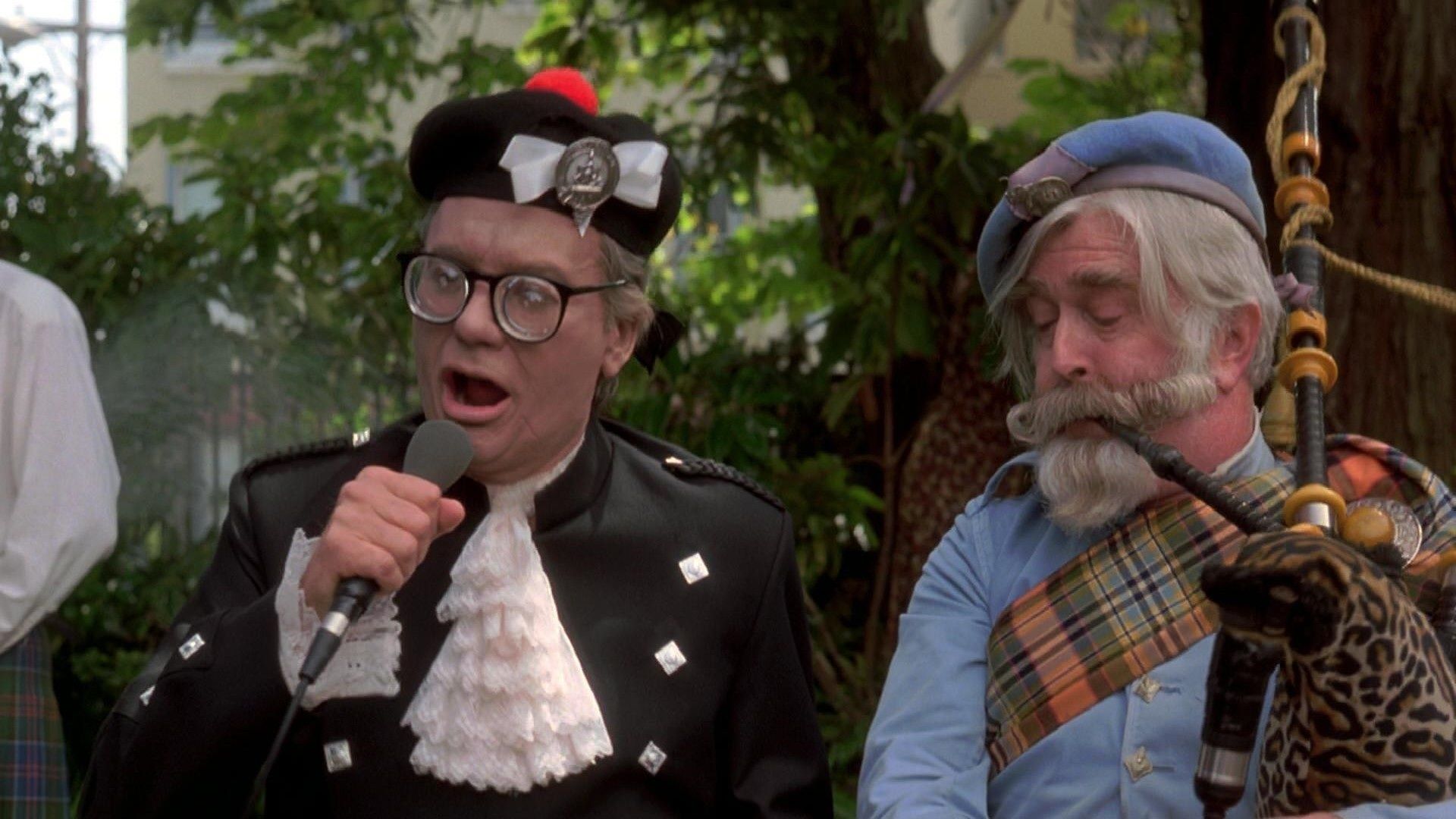
Violent Night is for people who still think it makes them sound interesting to pretend they just noticed Die Hard is a Christmas movie. This hard-R actioner’s one innovation is to have the real Santa Claus (David Harbour) interrupt a home invasion. Alas, this is a noxiously pedestrian effort, lousy with gore and four-letter-words and filled with the unappealing, poorly sketched characters in the most routine plotting. It wants to be winking and transgressive. It tries really, really hard. How boring. It takes a real misanthrope or outsider to understand the undercurrents possible in a dark Christmas story. Put a Christmas Evil or Black Christmas or Dial Code Santa on and you’ll find a cozy Yuletide scumminess in harsher-edged stories of queasy intimate despair and real bloody danger. There’s always something bittersweet and sad about the holidays, a time to reflect on a fall from childhood innocence and domestic happiness. Even a more monstrous take—Rare Exports or Gremlins—plays up the Charlie Brown Christmas melancholy as it excavates clever ways to set scares against the setting. This one, with all its blandly blocked studio gloss, is just dull. It takes its idea’s surface and resolutely refuses to dig even one centimeter into its implications, senselessly colliding stupid fantasy with gooey gunplay over and over. And the thing stretches that thinness over two whole hours. Talk about a lump of coal.

The resulting forced frivolity leaves only mirthless misery where the action and comedy should be. It finds a horrible wealthy family trapped in their mansion on Christmas Eve when a paramilitary heist squad (led by John Leguizamo) shows up to take millions out of their vault. Turns out the family runs a black-ops contractor company and stole their stash from the US government by claiming it disappeared in the Middle East. Since we met the sweater-clad family (which includes Edi Patterson and Cam Gigandet and Beverly D’Angelo) vulgarly sniping at each other around a crackling fire, we aren’t exactly predisposed to like these crooked people. But the villains are never sympathetic either. And the movie lacks the moral or political clarity to actually make something of all that. So it’s just nasty for nasty’s sake. That’s an ain’t-I-a-stinker? move that runs straight into the movie’s actual attempts to make this all about The Spirit of Christmas. The horrible family has one bright spot: an innocent little girl (Leah Brady) brought by her reluctant mother (Alexis Louder). The tot still believes in Santa, and that belief in him will help save them all once Saint Nick himself ends up coming down the chimney and reluctantly reconnects with his Viking roots. Its approach to Claus lore is typically charmless. To see the jolly old elf himself sledgehammer and electrocute and behead the intruders, is, well, something, I suppose. This is all tiresomely tedious, and director Tommy Wirkola (Dead Snow), working from a screenplay by the Sonic the Hedgehog guys, lacks the chops to really make this mess of intentions cohere. The result is an ugly mixture of cringing empty holiday sentimentality and nasty artless violence.